Volkswagen Unveils Longer ID. Buzz Cargo LWB Electric Van for Enhanced Logistics
Volkswagen is strategically expanding its electric commercial vehicle lineup with the new ID. Buzz Cargo LWB, a longer variant offering increased cargo capacity and an extended range of nearly 300 miles to meet growing demands in urban logistics.
✨ This content was summarized and interpreted by AI; it may contain errors — please verify accuracy with the original sources. Learn more
Listen to this story
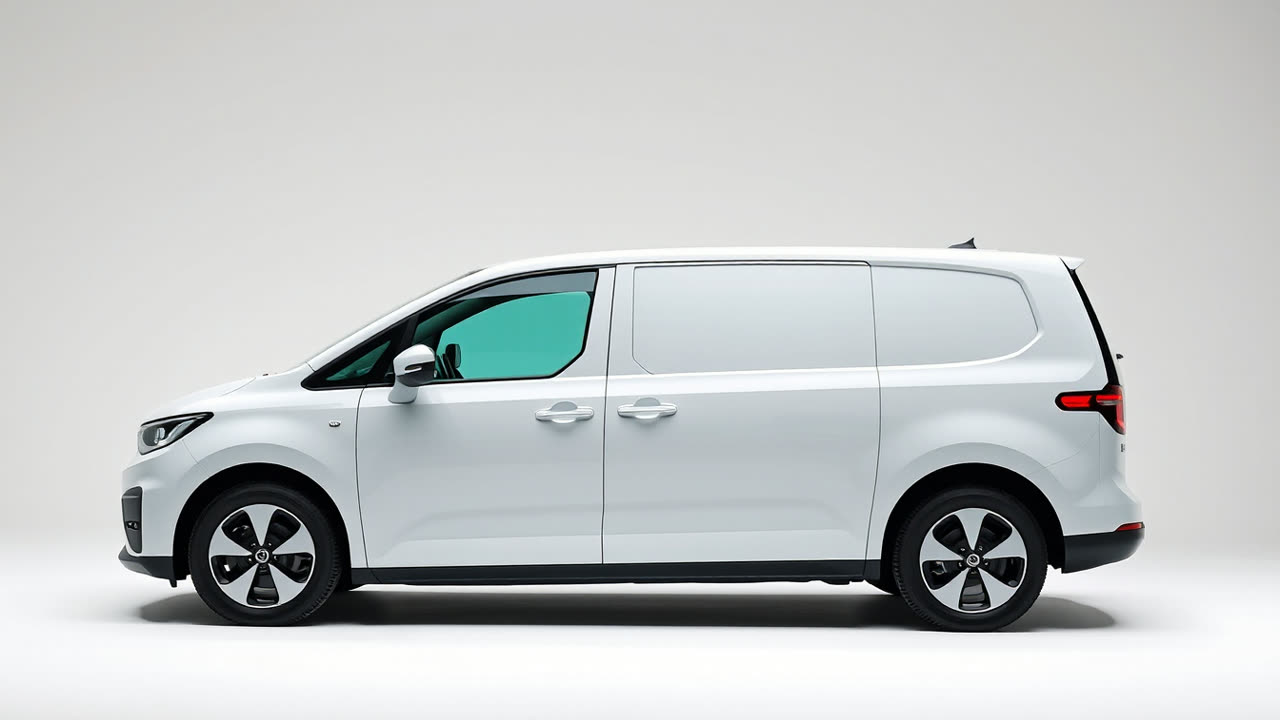
Volkswagen is significantly enhancing its electric commercial vehicle offering with the imminent launch of the longer ID. Buzz Cargo LWB, a strategic expansion poised to reshape urban logistics and last-mile delivery by directly addressing critical capacity and range demands for businesses. This long-wheelbase variant, confirmed for the UK market with an exact launch date pending, stretches the electric van to approximately 5,000 mm in length, an increase of about 300 mm over the standard short-wheelbase (SWB) ID. Buzz Cargo, and features a wheelbase extended to 3,238 mm from 2,988 mm. The additional length translates into a substantial boost in utility, providing up to 4.4 cubic meters of cargo space, a considerable improvement over the 3.9 cubic meters offered by the standard model. Furthermore, the maximum load length extends to 2,405 mm, up from the SWB's 2,208 mm, making it suitable for transporting longer items.
Crucially, the ID. Buzz Cargo LWB is equipped with a larger 86 kWh usable battery, an upgrade from the 77 kWh or 79 kWh usable batteries found in the SWB version. This larger power pack is projected to deliver an estimated WLTP range of nearly 300 miles (approximately 485 km), surpassing the standard ID. Buzz Cargo's 276-277 miles. This extended range is a game-changer for commercial users, mitigating range anxiety and enabling longer routes or more deliveries between charges, thereby increasing operational efficiency. Powering this larger van is an upgraded APP 550 traction motor on the rear axle, producing a robust 210 kW (286 PS/282 hp) and 550 N⋅m of torque. An all-wheel-drive (4MOTION) variant will also be available, delivering a combined output of 250 kW (335 hp/339 hp), enhancing traction and performance in diverse conditions. Intriguingly, despite its increased volume, the LWB version's maximum payload capacity of up to 697 kg is slightly less than the SWB's 750 kg, depending on configuration. This suggests Volkswagen has prioritized cargo volume and range for specific commercial applications over sheer weight-carrying capability, a calculated trade-off for last-mile logistics where bulk often matters more than maximum weight.
This launch arrives amidst a burgeoning electric light commercial vehicle (LCV) market, which is experiencing rapid growth. Valued at $45.12 billion in 2026, the market is projected to reach $82.36 billion by 2030, growing at a compound annual growth rate (CAGR) of 17.7%. Electric LCV deliveries soared by 43.0% in the first five months of 2026 alone, underscoring the accelerating shift towards electrification in commercial fleets. Volkswagen's move with the ID. Buzz Cargo LWB positions it to capture a larger share of this expanding market, particularly appealing to businesses that value a combination of increased cargo capacity, extended range, and the ID. Buzz's distinct, retro-inspired aesthetic. The van's standard features, including a second sliding door, hinged rear doors, a new steering wheel with physical buttons, and an improved Travel Assist ADAS system, further enhance its practicality and driver comfort.
In the competitive landscape, the ID. Buzz Cargo LWB faces rivals like the upcoming Kia PV7, a larger sibling to the PV5 Cargo, which is built on a dedicated electric platform and praised for its modularity and Vehicle-to-Load (V2L) capabilities. Ford's E-Transit Custom remains a benchmark, offering a range of powertrains and high versatility. Even within Volkswagen's own commercial vehicle division, the e-Transporter has seen upgrades in 2026, boosting its usable battery capacity to 70 kWh for a WLTP range of 236 miles and enabling 10-80% DC fast charging in just 30 minutes at 125 kW. The ID. Buzz Cargo LWB differentiates itself through its unique design, which has garnered a four-out-of-five-star rating from Autotrader for its build quality and range. While the e-Transporter focuses on robust utility with its 4MOTION option for rough terrain, the ID. Buzz Cargo LWB carves a niche for businesses seeking a blend of distinctive style, advanced technology, and enhanced volumetric capacity for urban and regional deliveries.
Looking ahead, the trajectory for electric commercial vehicles remains steep, with the global electric commercial vehicle market projected to reach $341.0 billion by 2033. Volkswagen Commercial Vehicles is actively preparing for this future, with plans to integrate V2L functionality into the ID. Buzz range in 2026, allowing external electrical devices to draw power from the vehicle's battery. This innovation could significantly enhance the van's utility for tradespeople and mobile service providers, transforming it into a mobile power source. The ongoing development of faster charging capabilities, exemplified by the LWB's ability to DC fast charge up to 200 kW, and continuous improvements in battery density will further solidify the viability of electric vans for a broader array of commercial applications. As competition intensifies, manufacturers will be compelled to offer more tailored solutions, pushing the boundaries of range, payload, and integrated smart technologies. Volkswagen's commitment to expanding its electric van portfolio, as seen with the ID. Buzz Cargo LWB, positions it as a formidable player in a market that demands both environmental responsibility and practical, profitable solutions for businesses.