Volvo EX30 Unlocks V2L Power via Software Update, Transforming into Mobile Energy Hub
Volvo's EX30, its most accessible electric vehicle, has significantly enhanced its utility with a new software update enabling vehicle-to-load (V2L) functionality, allowing it to power external electronics from a coffee maker to campsite equipment.
✨ This content was summarized and interpreted by AI; it may contain errors — please verify accuracy with the original sources. Learn more
Listen to this story
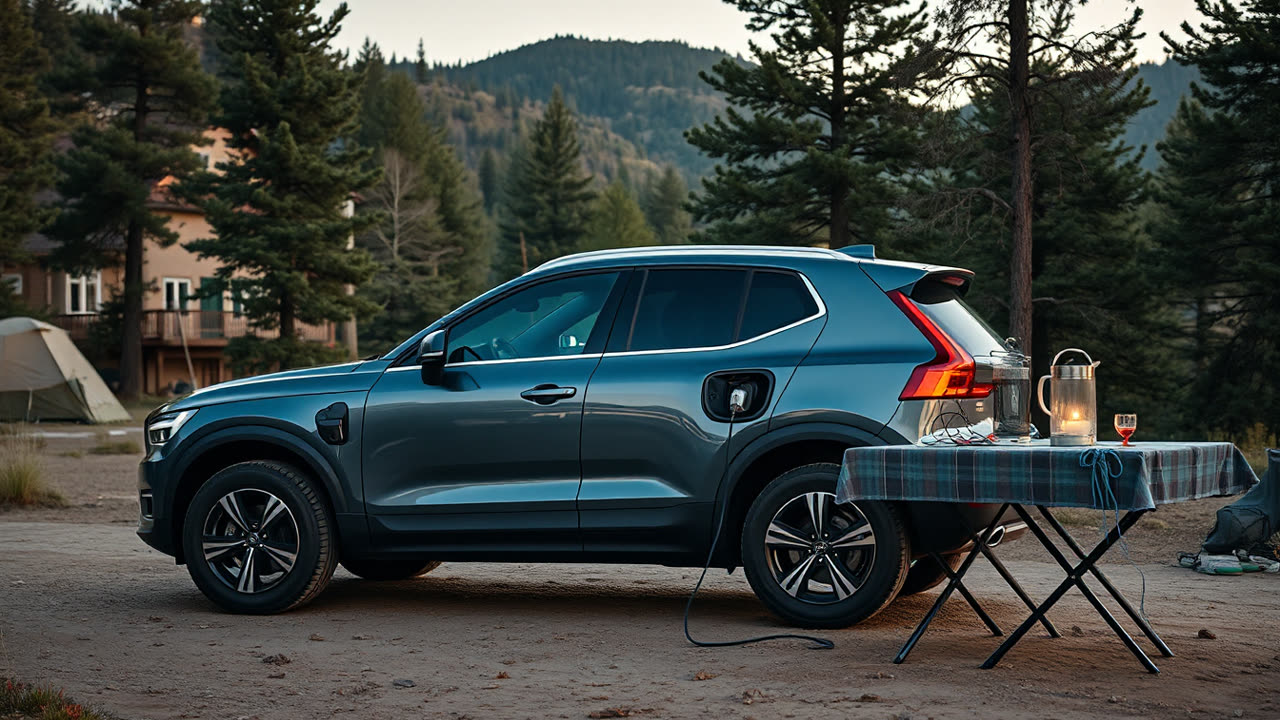
Volvo's EX30, its most accessible electric vehicle, has significantly enhanced its utility with a new software update enabling vehicle-to-load (V2L) functionality, allowing it to power external electronics from a coffee maker to campsite equipment. This capability, rolled out via an over-the-air (OTA) update, transforms the compact SUV into a versatile mobile power bank, a feature increasingly seen as a differentiator in the competitive EV market. The update equips all EX30 variants with the ability to deliver up to 3.6 kW of power through an external adapter, leveraging the vehicle’s substantial battery capacity, which ranges from 51 kWh to 69 kWh depending on the chosen battery option. This power output is sufficient to run most standard household appliances, power tools, or camping gear, making the EX30 a more compelling proposition for adventurers and those seeking emergency backup power.
The integration of V2L into the EX30 is a strategic move by Volvo that extends beyond mere convenience; it fundamentally alters the perceived utility of an entry-level EV. For users, the immediate impact is a newfound freedom and flexibility. Weekend campers can now power induction cooktops, lighting, and entertainment systems without relying on noisy generators or limited portable batteries. Homeowners facing power outages gain a reliable, silent, and emission-free energy source for essential appliances like refrigerators, lights, and charging devices. This capability democratizes access to mobile power, previously associated with larger, more expensive electric trucks and SUVs. By offering V2L on its cheapest model, Volvo broadens the appeal of electric vehicles to a demographic that might prioritize practicality and versatility alongside environmental benefits and running costs. This move aligns with a broader industry trend towards multi-functional EVs, positioning the EX30 not just as transportation, but as a critical piece of personal infrastructure.
Historically, V2L and its more advanced cousin, V2H (Vehicle-to-Home), have been premium features or specific to certain segments. Hyundai and Kia were early pioneers in the mass market with their E-GMP platform vehicles like the Ioniq 5, Ioniq 6, and EV6, which typically offer V2L output around 3.6 kW. Ford's F-150 Lightning elevated the concept with its Pro Power Onboard system, providing up to 9.6 kW (on certain trims) and even full home backup capabilities, albeit at a significantly higher price point and in a different vehicle class. While the EX30's 3.6 kW output matches many of its sedan and compact SUV rivals, its significance lies in its availability on a vehicle with a starting price around $35,000, making it one of the most affordable EVs globally to offer this feature. This contrasts sharply with the higher entry costs of many other V2L-equipped models, which often start well above $40,000. The EX30’s V2L integration also highlights Volvo's commitment to leveraging software updates to unlock new hardware capabilities, extending vehicle lifespans and enhancing value post-purchase.
Looking ahead, the widespread adoption of V2L, particularly in more affordable segments, is poised to accelerate the transition to an all-electric future. As more EVs gain bidirectional charging capabilities, the distinction between a vehicle and a mobile energy hub will blur further. This could lead to innovative business models, such as peer-to-peer energy sharing or the integration of EVs into smart home ecosystems for optimized energy management. Volvo's move with the EX30 sets a precedent for other manufacturers to follow suit, potentially making V2L a standard expectation rather than a niche offering. The next frontier will likely involve higher power outputs, more sophisticated energy management systems, and seamless integration with home energy systems (V2H) even in smaller, more economical EVs. Volvo itself is expected to explore V2H capabilities in future models, building on the foundation laid by the EX30's V2L functionality. This evolution will not only enhance consumer utility but also contribute to grid stability by allowing EVs to act as distributed energy resources, fundamentally reshaping our relationship with both transportation and energy consumption.