Volvo EX60 Electric SUV Deliveries Begin, Boasting Class-Leading 503-Mile Range
Volvo has commenced customer deliveries of its EX60 electric SUV, featuring a groundbreaking 503-mile WLTP range and ultra-fast 800-volt charging, marking a significant leap in EV technology and market competition.
✨ This content was summarized and interpreted by AI; it may contain errors — please verify accuracy with the original sources. Learn more
Listen to this story
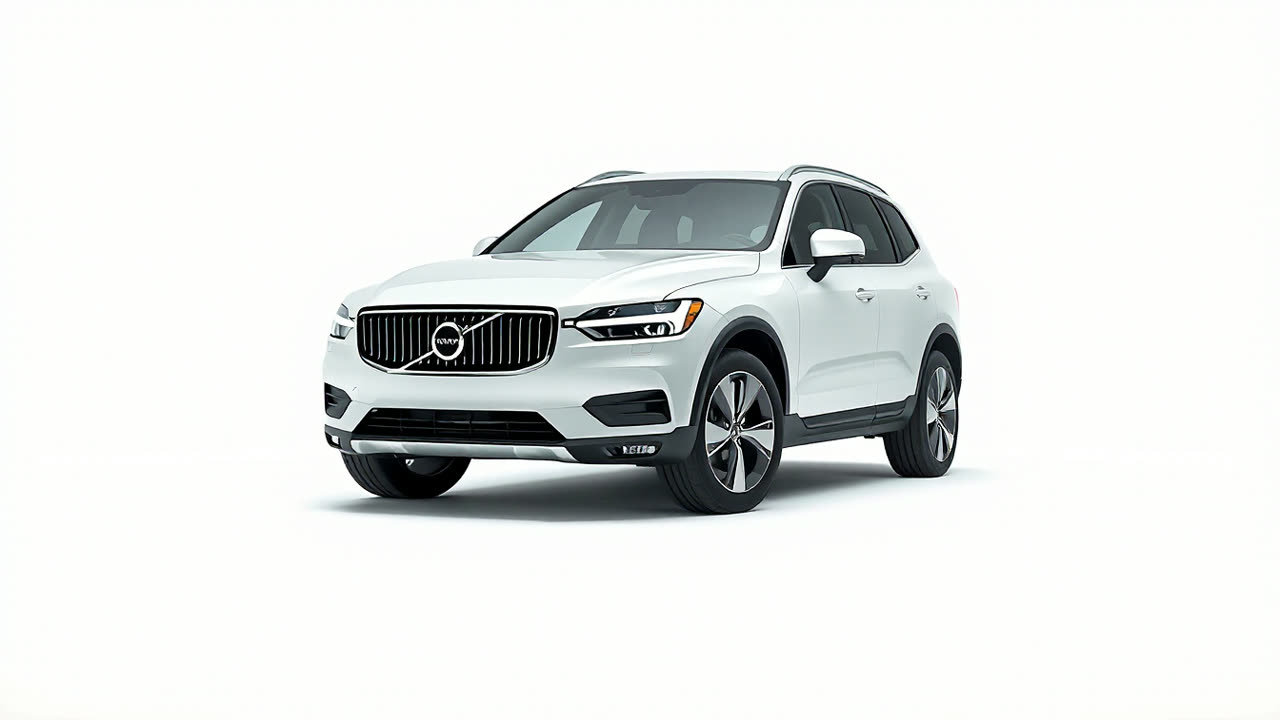
The automotive landscape is fundamentally shifting, and Volvo is at the forefront of this transformation with the commencement of customer deliveries for its EX60 electric SUV, a vehicle boasting a class-leading WLTP range of up to 503 miles (810 km) for its top-tier P12 AWD variant. This significant milestone, with first units now reaching customers in Sweden and a broader European rollout underway, positions the EX60 as a pivotal entry into the globally largest electric segment. The P12 AWD variant commands an impressive 680 horsepower (500 kW) and offers an EPA estimated range of up to 400 miles, setting a new benchmark for practical long-distance electric travel. Complementing this extensive range is an advanced 800-volt electrical architecture, enabling ultra-fast charging that can replenish the battery from 10% to 80% in as little as 16 minutes for the P10 AWD and P6 RWD variants, and 19 minutes for the P12 AWD, potentially adding 211 miles of range in just 10 minutes with a 400 kW charger.
This exceptional combination of range and charging speed is critical, directly confronting one of the primary psychological barriers to EV adoption: range anxiety. For users, the EX60’s capabilities mean fewer charging stops on long journeys and quicker turnarounds when charging is necessary, effectively mirroring the convenience of traditional gasoline vehicles. The five-seater EX60, designed to be a game-changer, also promises a groundbreaking user experience and enhanced safety features through its advanced core computing systems. Priced comparably to Volvo’s best-selling XC60 plug-in hybrid, with the base P6 Plus starting around €54,328 ($62,200) in Germany and $59,795 in the US (including destination), it aims to make the transition to electric more appealing by minimizing the premium typically associated with cutting-edge EV technology.
From an industry perspective, the EX60 represents a bold strategic move by Volvo. It is the first vehicle built on the company's new Scalable Product Architecture 3 (SPA3) platform, a foundational shift that incorporates advanced manufacturing techniques like megacasting, where large parts of the car's body are cast as single pieces. This not only improves structural integrity and crash safety but also streamlines production, potentially reducing manufacturing costs and assembly time. Furthermore, the integration of cell-to-body battery construction, another SPA3 innovation, enhances structural rigidity and optimizes packaging for larger battery capacities. This engineering prowess allows for the impressive battery capacities — 117 kWh for the P12 AWD, 95 kWh for the P10 AWD, and 83 kWh for the P6 RWD — that underpin the EX60's long-range capabilities.
The EX60’s entry into the mid-size electric SUV segment intensifies competition with established rivals. While luxury EVs like the Lucid Air and Mercedes-Benz EQS sedan already offer impressive ranges (the Lucid Air Grand Touring, for example, boasts over 500 miles EPA range), the EX60 brings this level of endurance to a more accessible and popular SUV form factor. Compared to Volvo’s own previous electric offerings, such as the EX30 (with an EPA estimated range of up to 261 miles) and the EX90 (with an EPA estimated range of up to 305 miles), the EX60 marks a substantial leap in battery technology, thermal management, and aerodynamic efficiency. The EX90, Volvo’s larger three-row SUV, also features an 800-volt architecture and fast charging, with deliveries starting in late 2024 for some markets, but its range remains below the EX60's top figures. The EX60’s superior range for a five-seater mid-size SUV could cannibalize some sales from its larger sibling, but it also broadens Volvo's appeal significantly, attracting buyers who prioritize range in a more compact, yet spacious, package.
Looking ahead, the EX60’s launch signals Volvo's unwavering commitment to its all-electric future, aiming for a fully electric lineup by 2030. The emphasis on 800-volt architecture, while currently less common than 400-volt systems, is a clear indicator of the industry's direction toward faster charging and more efficient power delivery. This technology, combined with ongoing improvements in battery chemistry and energy density, will likely become standard across premium EV segments. As production and deliveries of the EX60 ramp up through the second half of 2026, its success will depend not only on its headline-grabbing specifications but also on the continued expansion and reliability of global fast-charging infrastructure. The EX60’s arrival is more than just a new model; it’s a tangible demonstration of how quickly the electric vehicle market is maturing, pushing the boundaries of what consumers can expect from their next emission-free vehicle.