Volvo's Bold EV Shift: Sedans and Wagons Return to U.S. Market by 2028
Volvo is reportedly planning to reintroduce electric sedans and wagons to the U.S. market by 2028, targeting the $50,000 price point and marking a significant departure from its current SUV-only lineup.
✨ This content was summarized and interpreted by AI; it may contain errors — please verify accuracy with the original sources. Learn more
Listen to this story
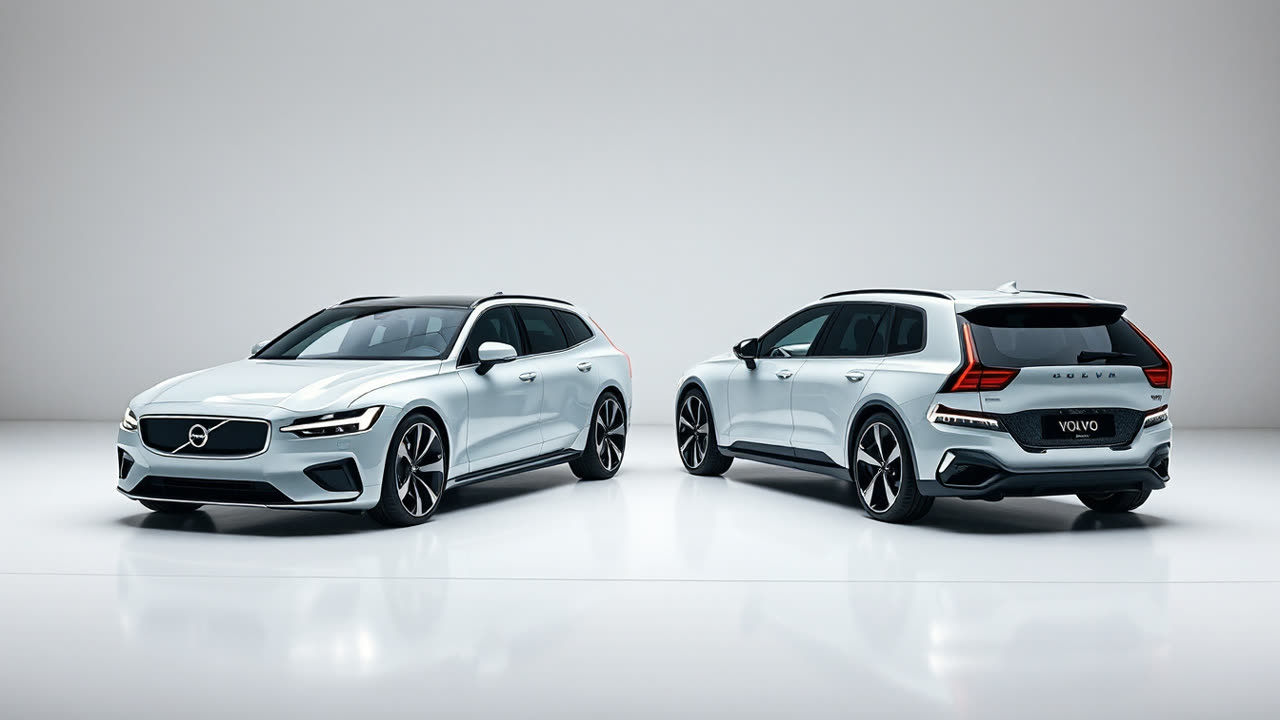
Volvo is reportedly planning a significant strategic shift for the U.S. market, aiming to introduce two new electric vehicles (EVs) around the $50,000 price point by 2028, notably moving beyond its current SUV-only lineup to include a sedan and a wagon. This comes as the automaker recently ceased production of its last U.S.-bound wagon, the V60 Cross Country, in April 2026, and its last sedan, the S90, in 2025, leaving its American portfolio entirely comprised of SUVs for the 2027 model year. The reintroduction of non-SUV body styles, particularly the long-absent wagon, signals a bold pivot for Volvo, which has largely catered to the overwhelming American preference for SUVs, with models like the XC60 outselling all its sedans and wagons significantly in 2025.
This move is a calculated risk, seeking to carve out a niche in a burgeoning, yet competitive, EV market. The new electric sedan, potentially dubbed "ES60," and an "EV60" wagon (with a possible Cross Country variant) would leverage Volvo's advanced third-generation Scalable Product Architecture (SPA3), which debuted with the EX60 crossover and features an 800-volt architecture for faster charging and improved range. The flexibility of the SPA3 platform, with its cell-to-body construction, allows for lower-riding vehicles that don't compromise on battery packaging or interior space, directly addressing a common criticism of "SUV-like" EV designs. While these models are already under development for the European market, their adaptation for the U.S. is reportedly not a significant challenge.
The decision to target the low $50,000s is crucial. Volvo's current EV offerings in the U.S. include the compact EX30, which starts around $38,950 to $40,345 but can reach up to $49,545 for higher trims, and the larger EX90, starting around $76,695 to $78,090. The proposed new EVs would slot neatly between these, offering a more premium option than the EX30 without the significant price jump to the EX90. This pricing strategy positions Volvo to compete with established electric sedans like the Tesla Model 3, which ranges from $38,380 to $56,380, and the entry-level BMW i4 eDrive40, starting at $57,900. By offering non-SUV alternatives in this price bracket, Volvo could attract buyers looking for more traditional body styles with luxury amenities and advanced EV technology.
The significance of this strategy extends beyond merely diversifying Volvo's product portfolio. It represents a calculated attempt to capitalize on shifting consumer sentiments and a potential "wagon renaissance" within the EV space. While SUVs have dominated sales for years, evidenced by the V60 Cross Country's relatively modest 3,630 units sold through November 2025 compared to the XC60's 36,069 units in the same period, there's an undercurrent of demand for practical, lower-slung vehicles. Enthusiasts have long lamented the disappearance of wagons, and an electric offering could tap into this latent demand, offering a blend of performance, utility, and a distinctive aesthetic that SUVs often lack. Furthermore, the exit of Polestar from the U.S. market after the 2027 model year due to tariff issues could create a vacuum for Geely-owned brands to fill, and Volvo's new EVs might strategically occupy some of that space.
The outlook for Volvo's re-entry into the sedan and wagon segments is cautiously optimistic. The company itself has modest sales targets, forecasting around 10,000 combined annual sales for the two new EVs in the U.S. This realistic expectation acknowledges the prevailing SUV trend but also suggests confidence in capturing a segment of the market that values design and driving dynamics beyond the ubiquitous crossover. The advanced 800-volt architecture and SPA3 platform promise competitive charging speeds and range, which are critical differentiators in the EV market. If Volvo can deliver on the promise of a premium, technologically advanced, and well-priced electric sedan and wagon, it could redefine its brand identity in America, proving that a diversified EV lineup, beyond just SUVs, has a viable future. The success of this venture will largely depend on effective marketing that highlights the unique benefits of these body styles—superior driving dynamics, efficient packaging, and a fresh aesthetic—to an American audience increasingly open to electric vehicles but still heavily swayed by SUV popularity.