Wabtec FLXDrive Electric Locomotive Proves Industrial Readiness in Year-Long BHP Mine Trial
The 4,400 hp Wabtec FLXDrive electric locomotive has completed nearly a year of rigorous operation at BHP's Jimblebar iron ore mine, unequivocally demonstrating its readiness for prime-time heavy-haul applications and marking a pivotal moment for rail decarbonization.
✨ This content was summarized and interpreted by AI; it may contain errors — please verify accuracy with the original sources. Learn more
Listen to this story
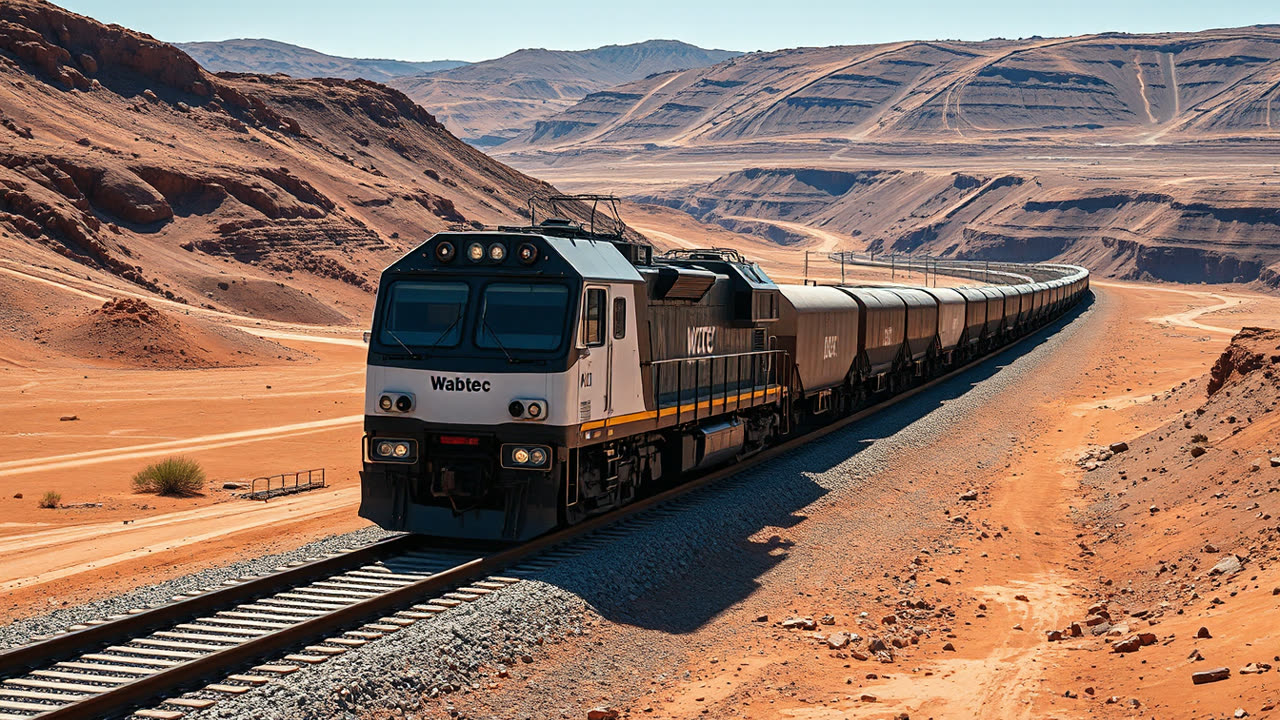
The 4,400 hp Wabtec FLXDrive electric locomotive has completed nearly a year of rigorous operation on a dedicated track line at BHP's Jimblebar iron ore mine in Australia, unequivocally demonstrating its readiness for prime-time heavy-haul applications. This extended real-world deployment by one of the world's largest mining companies marks a pivotal moment for rail decarbonization, moving battery-electric locomotives from pilot programs to proven, industrial-scale solutions. The locomotive, which integrates a substantial battery array with regenerative braking capabilities, has reportedly cut fuel consumption and emissions by double-digit percentages during its trial, a critical metric for an industry heavily reliant on diesel power.
This operational milestone carries profound implications for both the mining sector and the broader rail industry. For mining, the FLXDrive represents a tangible pathway to achieving ambitious Scope 1 and Scope 2 emissions reduction targets, directly addressing investor pressure and increasing regulatory scrutiny. The Jimblebar mine, located in Western Australia's Pilbara region, presents an ideal proving ground due to its controlled environment and consistent heavy loads, allowing for precise measurement of performance and efficiency gains. The locomotive's ability to regenerate energy during descents, effectively recharging its batteries and reducing the load on its diesel engines (if configured as a hybrid) or extending its all-electric range, translates directly into lower operational costs through reduced fuel expenditure. This economic advantage, coupled with the environmental benefits, positions the FLXDrive as a compelling alternative to traditional diesel-electric workhorses, potentially accelerating the electrification of vast, isolated industrial rail networks globally. The successful integration into BHP's existing infrastructure also signals a lower barrier to adoption for other mining giants and freight operators.
The FLXDrive represents a significant leap from prior generation diesel-electric locomotives, which, while efficient, are inherently tied to fossil fuels and their associated price volatility and environmental impact. A typical heavy-haul diesel locomotive can consume thousands of liters of fuel daily, emitting substantial quantities of CO2, NOx, and particulate matter. In contrast, the FLXDrive, even in its hybrid configurations, significantly reduces these outputs, and in a fully battery-electric setup, eliminates direct emissions entirely. Compared to nascent rival technologies, such as hydrogen fuel cell locomotives which are still largely in prototype or early trial phases, the FLXDrive leverages a more mature battery technology base, offering a quicker path to widespread commercial deployment. While companies like Siemens Mobility and Alstom are exploring various electric and hybrid solutions, Wabtec's nearly year-long, high-profile operational validation at Jimblebar places it at the forefront of practical, heavy-duty battery-electric rail traction. The modularity of the FLXDrive system, allowing for varying battery capacities and integration with existing diesel locomotives as "lead" or "trail" units, provides flexibility for operators to incrementally transition their fleets.
Looking ahead, the successful Jimblebar trial is expected to catalyze broader adoption of the FLXDrive technology. Wabtec has already announced plans for further deployments, including a collaboration with Roy Hill, another major iron ore producer in the Pilbara, to deploy a 7 MWh FLXDrive battery-electric locomotive, anticipated to be the world's largest battery-electric locomotive upon delivery. This indicates a clear trajectory towards even larger battery capacities and longer all-electric ranges, addressing concerns about operational continuity in extensive rail networks. The next phase will likely involve refining charging infrastructure, potentially integrating renewable energy sources directly at loading and unloading points to create a truly green logistics chain. Further advancements in battery energy density and charging speeds will be crucial for expanding the FLXDrive's applicability beyond dedicated loops to more complex, open-network freight operations where range anxiety and rapid turnaround times are paramount. The long-term outlook suggests a gradual but inexorable shift towards electrified heavy-haul rail, with the FLXDrive poised to be a foundational technology in this global energy transition for freight.