Waymo Launches Robotaxi Service in Munich, Expanding into European Market
Waymo is set to launch its fully autonomous robotaxi service in Munich, Germany, marking a significant expansion into the European market and leveraging Germany’s progressive regulatory framework for autonomous vehicles, a move that intensifies global competition and promises a new era of urban mobility.
✨ This content was summarized and interpreted by AI; it may contain errors — please verify accuracy with the original sources. Learn more
Listen to this story
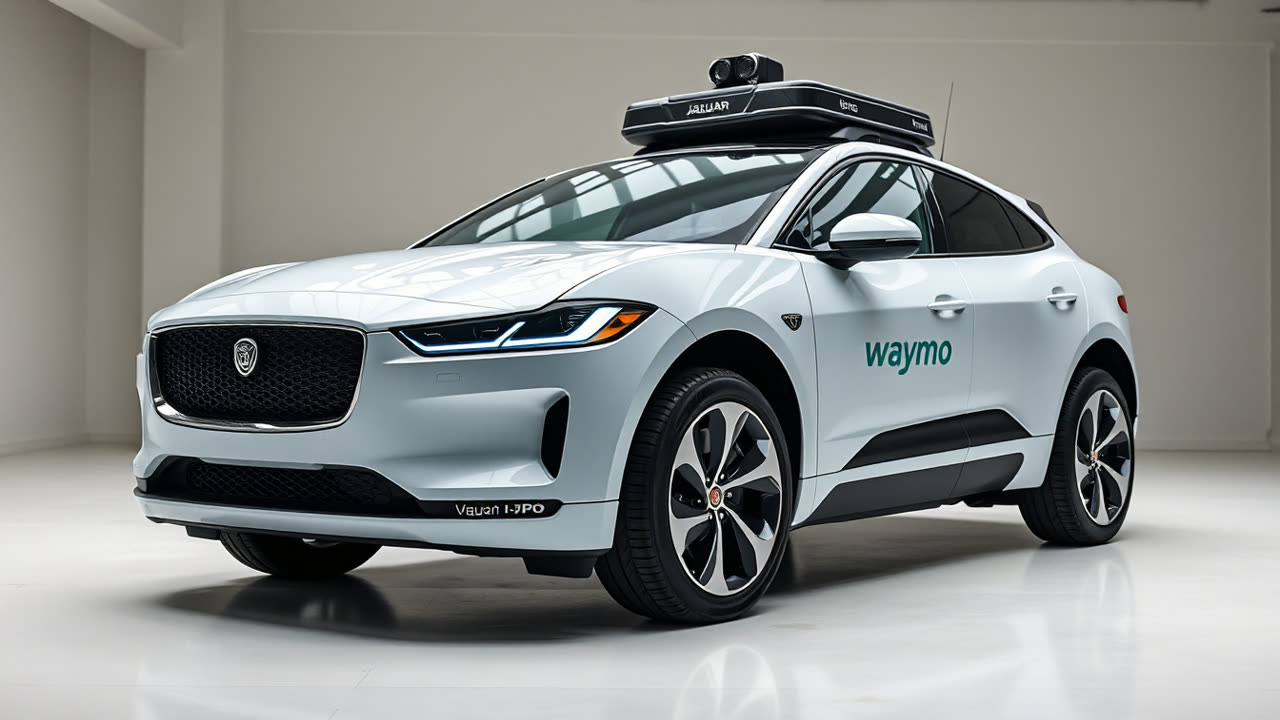
Waymo is set to launch its fully autonomous robotaxi service in Munich, Germany, marking a significant expansion into the European market and leveraging Germany’s progressive regulatory framework for autonomous vehicles. This move, confirmed by Waymo on August 25, 2026, will initially see a fleet of Waymo's fifth-generation Driver-equipped Jaguar I-PACE vehicles operating within designated zones across Munich, with plans for gradual expansion. The deployment represents a strategic pivot for Waymo, which has largely concentrated its commercial operations in select U.S. cities like Phoenix, San Francisco, and Los Angeles, and underscores the growing global race for autonomous mobility dominance.
Germany's proactive stance on autonomous vehicle legislation has made it an increasingly attractive proving ground and commercial launchpad for AV developers. The country's "Act on Autonomous Driving," enacted in 2021 and further refined through subsequent ordinances, specifically permits Level 4 autonomous vehicles to operate without a human safety driver in defined public areas, under technical supervision. This robust legal framework, which provides clear guidelines for approval, liability, and data protection, stands in contrast to the more fragmented and often slower regulatory adoption seen in many other major economies, including parts of the United States and the United Kingdom. This regulatory clarity significantly de-risks deployment for companies like Waymo, offering a predictable path to commercialization that is often absent elsewhere.
The entry of Waymo into Munich carries profound implications for urban mobility and the broader automotive industry. For users, it promises a new paradigm of transportation: consistent availability, potentially lower per-mile costs compared to traditional taxis in the long run, and enhanced safety due to the elimination of human error, which is responsible for over 90% of road accidents. Waymo's extensive real-world testing, accumulating tens of millions of autonomous miles, suggests a robust safety record, though public acceptance and trust remain critical hurdles for widespread adoption in a new market. The service could particularly benefit tourists navigating unfamiliar cityscapes and residents seeking reliable, late-night transport options. However, potential challenges include public apprehension regarding job displacement for taxi and ride-share drivers, and the initial integration complexities with existing public transit infrastructure.
Industrially, Waymo’s Munich launch intensifies competition within the burgeoning European autonomous vehicle market. While companies like Mobileye have been actively testing and developing AV technology in Germany, partnering with local players such as Volkswagen and Mercedes-Benz for mapping and Level 3 conditional automation systems, Waymo's Level 4 driverless deployment sets a new benchmark. Mercedes-Benz, for instance, has gained regulatory approval for its Level 3 DRIVE PILOT system in Germany, allowing drivers to legally disengage in specific highway conditions. Waymo's direct commercial robotaxi service, however, competes more directly with traditional ride-hailing giants like Uber and Bolt, forcing them to accelerate their own autonomous strategies or deepen partnerships. This move will also pressure European automakers, many of whom are investing heavily in their own AV divisions, to either accelerate their development timelines or consider strategic alliances to compete with the established technological lead of companies like Waymo.
Compared to its prior generations, Waymo's current Driver technology, featuring an advanced sensor suite of lidar, radar, and cameras, coupled with sophisticated AI and machine learning algorithms, offers enhanced perception capabilities in diverse weather conditions and complex urban environments. The fifth-generation system boasts improved object detection at greater distances and more nuanced prediction of pedestrian and cyclist behavior, crucial for navigating dense European city centers. This technological leap provides a significant advantage over early AV prototypes, which struggled with unpredictable scenarios and required extensive geo-fencing. The integration into the all-electric Jaguar I-PACE also aligns with Munich's growing emphasis on sustainable urban transport, offering an environmentally friendlier alternative to conventional internal combustion engine taxis.
Looking ahead, Waymo's Munich deployment is likely a precursor to broader European expansion. Success in Germany, particularly in a complex city like Munich, could serve as a blueprint for navigating diverse regulatory landscapes and public perceptions across the continent. The company will undoubtedly gather invaluable data on European driving behaviors, infrastructure nuances, and localized regulatory interpretations, feeding directly into further technological refinement and operational scaling. We can anticipate increased pressure on other European nations to harmonize their AV regulations to attract similar investments, potentially leading to a more unified European framework for autonomous driving by the end of the decade. As Waymo refines its service and potentially introduces larger vehicle formats or even autonomous delivery solutions, Munich could become a critical node in a future pan-European robotaxi network, fundamentally reshaping urban mobility and logistics across the continent.