Waymo Restarts San Antonio Robotaxi Service After Flood Incident
Five months after one of its autonomous vehicles was swept away by floodwaters, Waymo has reactivated its ride-hailing service in San Antonio, signaling enhanced safety measures and a renewed push for operational resilience.
✨ This content was summarized and interpreted by AI; it may contain errors — please verify accuracy with the original sources. Learn more
Listen to this story
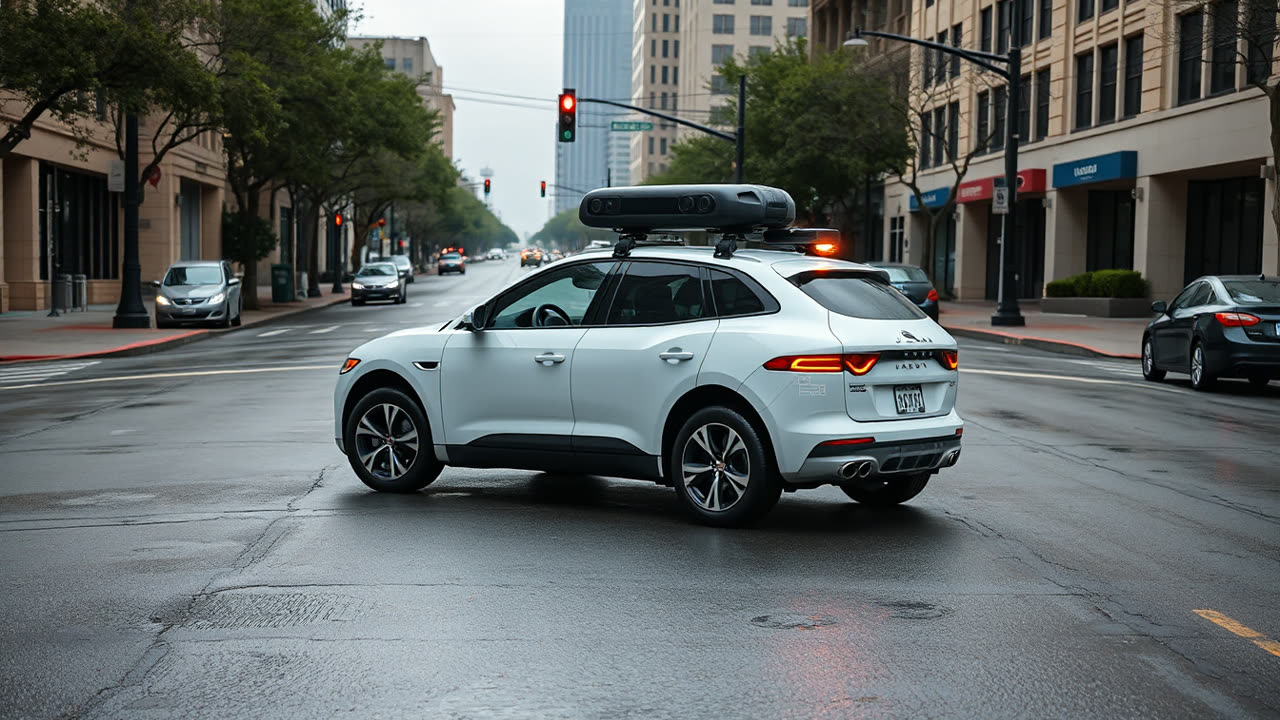
Waymo has reactivated its autonomous ride-hailing service in San Antonio, Texas, five months after a significant flooding incident in April 2026 saw one of its Jaguar I-Pace robotaxis swept away by floodwaters, raising renewed questions about the operational resilience and safety protocols of autonomous vehicles in extreme weather conditions. The restart, effective September 17, 2026, marks a critical step for the Alphabet-owned company, which had suspended all operations in the city following the April 24 event where a driverless vehicle, fortunately unoccupied, was overwhelmed by rapidly rising water on a San Antonio street. This incident, while resulting in no injuries, underscored the persistent challenges autonomous systems face in dynamically interpreting and reacting to unpredictable environmental hazards that even human drivers often struggle with, leading to a period of intense review and adaptation for Waymo.
The resumption of service in San Antonio, a city prone to flash floods, is not merely a return to business as usual; it represents Waymo's public affirmation of enhanced safety measures and refined operational parameters designed to mitigate future risks. While specific details on the technological upgrades implemented have not been fully disclosed, industry observers anticipate that Waymo has integrated more sophisticated real-time weather monitoring, improved hydrological mapping into its operational design domain (ODD), and potentially revised protocols for dynamic service suspension or route alteration during adverse weather advisories. The company's decision to restart suggests confidence in these adjustments, which are crucial for building public trust and demonstrating the robustness of its Level 4 autonomous technology. This incident and the subsequent pause highlight the ongoing tension between rapid deployment and the meticulous, safety-first approach required for widespread autonomous vehicle adoption.
For users, the return of Waymo's service provides a convenient, albeit now more scrutinized, transportation option in San Antonio. However, the five-month hiatus likely fostered a degree of public skepticism, particularly concerning the reliability of robotaxis during inclement weather. Waymo's challenge now is to not only deliver flawless service but also to transparently communicate its safety advancements to rebuild and strengthen user confidence. The incident serves as a stark reminder that while autonomous vehicles promise enhanced safety by eliminating human error, they introduce new vectors of risk related to sensor limitations, software interpretation, and the sheer unpredictability of natural phenomena.
Within the broader autonomous vehicle industry, Waymo's San Antonio experience offers a pivotal case study. Competitors like Cruise, which faced its own operational suspensions and regulatory scrutiny in San Francisco following a series of incidents, are keenly watching. The industry as a whole is grappling with how to scale operations responsibly while navigating public perception and regulatory demands that intensify with every safety-related event. Waymo's initial response to the San Antonio flood, by suspending service, demonstrated a commitment to safety, but the prolonged restart period underscores the complexity of engineering solutions for edge cases. Rivals are likely evaluating their own adverse weather strategies, recognizing that robust performance in all reasonable conditions, including heavy rain and potential flooding, is non-negotiable for sustained growth and public acceptance. For instance, while companies like Mobileye and Zoox continue to advance their autonomous systems, the San Antonio incident reinforces that sensor fusion and AI prediction models must become even more sophisticated to accurately perceive and react to environmental anomalies that challenge even the most advanced human drivers.
Looking ahead, the San Antonio restart will serve as a critical test for Waymo's enhanced flood mitigation strategies. Success here could bolster confidence among regulators and potential customers in other expansion markets. Conversely, any further incidents, particularly those related to weather, could severely impede Waymo's ambitious growth plans and reinforce public apprehension about the readiness of autonomous technology for widespread deployment. The industry is moving towards stricter regulatory frameworks, with some jurisdictions considering mandatory real-time environmental awareness systems and more stringent testing protocols for adverse conditions. Waymo's experience in San Antonio will undoubtedly inform these evolving standards. Furthermore, the push for truly all-weather autonomous capabilities will likely accelerate, driving innovation in sensor technology, predictive modeling, and the development of more dynamic operational design domains that can intelligently adapt to rapidly changing environmental conditions. The path to fully autonomous mobility is paved not just with technological breakthroughs, but with the painstaking, iterative process of learning from every challenge, especially those posed by the unpredictable forces of nature.