Waymo's Purpose-Built Ojai Autonomous Vans Now Fully Available to All Riders in San Francisco, Phoenix, and Los Angeles
Waymo solidifies its leadership in autonomous mobility with the full public rollout of its sixth-generation Ojai robotaxi, a purpose-built vehicle designed for enhanced rider experience, operational efficiency, and significantly reduced costs.
✨ This content was summarized and interpreted by AI; it may contain errors — please verify accuracy with the original sources. Learn more
Listen to this story
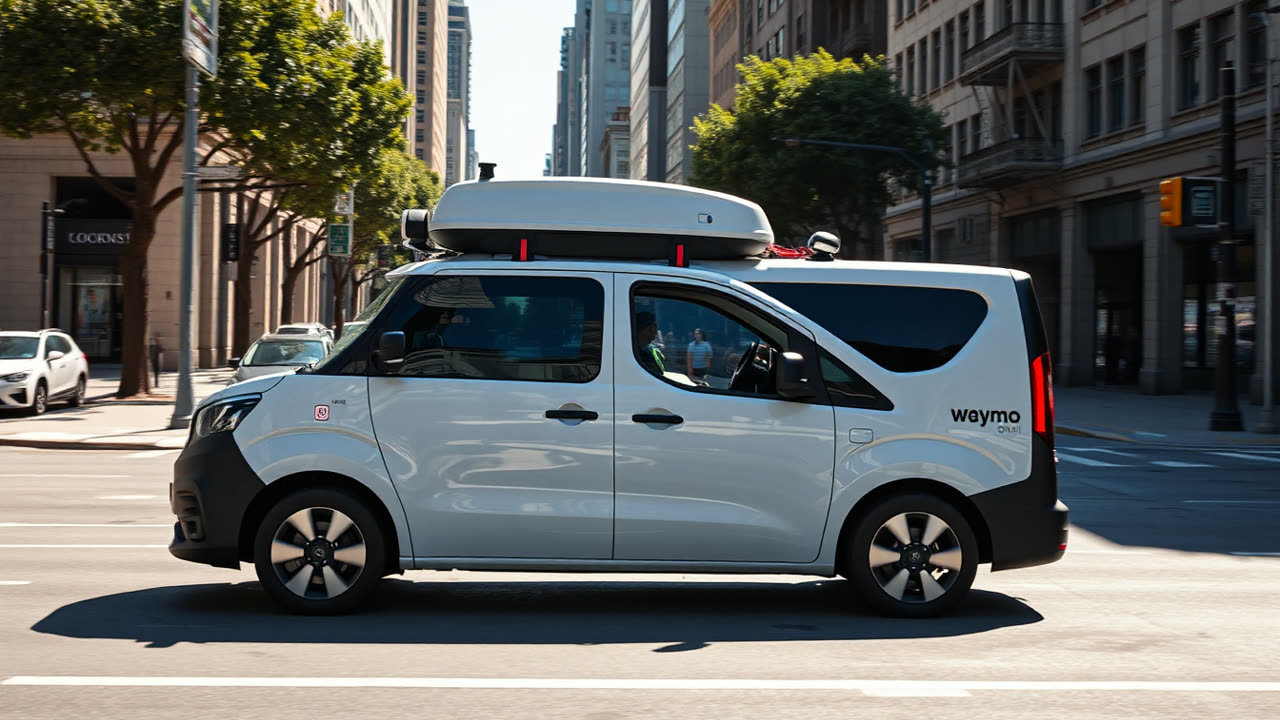
Waymo’s custom-built Ojai autonomous vans are now fully available to all riders in San Francisco, Phoenix, and Los Angeles, marking a significant expansion of the company's driverless ride-hailing service. This full rollout, which began for employees in February 2026 and for select public riders in June 2026, solidifies Waymo's position as a leader in commercial autonomous mobility. The Ojai, Waymo’s sixth-generation robotaxi, represents a pivotal shift from retrofitted vehicles to a purpose-built design, promising enhanced rider experience and operational efficiency.
The Ojai vans, manufactured by Zeekr and outfitted with Waymo’s proprietary technology in Mesa, Arizona, are a major leap forward in autonomous vehicle (AV) design. Unlike the modified Jaguar I-Pace SUVs previously used, the Ojai features a spacious, van-like interior with a low step, flat floor, and higher ceiling, making entry and exit easier and offering more legroom. Accessibility features, including embedded braille and seat-integrated handles, are integrated directly into the vehicle's design. Passengers can customize their ride experience via three large LED screens, controlling temperature and entertainment. The vehicle runs on an 800-volt architecture with a 93 kWh lithium-ion battery and is powered by a 268 horsepower electric motor.
Crucially, the Ojai integrates Waymo's sixth-generation "Waymo Driver" system, which boasts updated sensors and a high-resolution 17-megapixel imager, capable of capturing millions of data points. This advanced hardware stack reduces the sensor count by 42% compared to the fifth-generation system, from 29 cameras to 13, and five LiDARs to four, while simultaneously increasing capability. This streamlined configuration drives down manufacturing costs, with the base Zeekr vehicle costing around $32,000, significantly less than the $150,000-$200,000 cost of an outfitted Jaguar I-Pace. This cost reduction is vital for achieving sustainable per-ride unit economics at scale. The sixth-generation Driver is also designed for improved performance in diverse environments, including snowier conditions, opening doors for expansion into markets like Chicago.
This full rollout in three major metropolitan areas signifies Waymo's commitment to scaling its operations and underscores a critical maturation point for the autonomous vehicle industry. Waymo has consistently demonstrated a strong safety record, with its Driver involved in 94% fewer crashes causing serious or fatal injuries and 82% fewer injury-causing crashes compared to human drivers across over 220 million fully autonomous miles through March 2026. These statistics, regardless of fault, highlight a significant public safety benefit, preventing an estimated one serious-injury-or-worse crash every eight days. The California Public Utilities Commission (CPUC) recently approved Waymo to expand its services across 18 counties, including San Diego and Sacramento, and communities in Marin, Napa, Orange, and Riverside counties, tripling its potential service area around Los Angeles and San Francisco. This regulatory green light, alongside the Ojai's cost-effectiveness, positions Waymo for aggressive expansion.
The impact on users is immediate and tangible. The Ojai's enhanced spaciousness and accessibility features cater to a broader demographic, improving the ride-hailing experience for individuals with disabilities and those traveling with luggage. For the industry, Waymo's sustained progress and demonstrable safety record put considerable pressure on rivals. While Waymo operates revenue-generating robotaxi services at scale, competitors like Tesla, with its Full Self-Driving software, are still primarily focused on unsupervised consumer releases, accumulating far fewer driverless miles. Tesla reported 1.28 million active FSD subscriptions in Q1 2026, but almost all those miles involve a driver who remains responsible for the vehicle. Cruise, once a prominent competitor, suspended operations in October 2023 following a series of incidents and by December 2024, General Motors stopped funding its robotaxi business, pivoting to integrate Cruise technology into advanced driver-assistance systems for personal vehicles. This leaves Waymo with a significant operational lead in the robotaxi sector.
The regulatory landscape, particularly in California, is evolving to accommodate the growing presence of autonomous vehicles. Starting July 1, 2026, new regulations allow law enforcement to issue traffic violation notices directly to AV companies for infractions, closing a previous legal gray area. Repeat violations can lead to suspension or revocation of operating permits, placing a high premium on robust safety performance. Simultaneously, California has begun permitting heavy-duty autonomous truck testing, with companies like Aurora and Kodiak receiving initial approvals, though this faces strong pushback and litigation from groups like the Teamsters union, citing job security and safety concerns.
Looking ahead, Waymo's national expansion plans include Denver, Las Vegas, and San Diego, with a goal to offer 1 million trips per week by the end of 2026, a fourfold increase from late 2025 levels. Sacra estimates Waymo's annualized revenue hit $355 million in February 2026, with an average revenue per ride of $15-$17, positioning its fares approximately 15% below traditional ride-hailing services. Alphabet CEO Sundar Pichai has indicated Waymo may begin generating profits by 2027, driven by improved unit economics with fleet scale and reduced sensor costs. Industry analysts project Waymo could capture 10% of the U.S. rideshare market by 2030, representing a potential $300 billion revenue opportunity. While challenges remain, including navigating a patchwork of state and local regulations and maintaining public trust, the Ojai rollout signifies Waymo’s strong trajectory toward establishing autonomous ride-hailing as a mainstream, profitable transportation solution. The rapid scaling of purpose-built, cost-effective vehicles, coupled with a proven safety record, positions Waymo to fundamentally reshape urban mobility in the coming years.