Waymo's San Francisco Service Halts Due to Power Outage, Exposing AV Industry's Infrastructure Vulnerability
Waymo's San Francisco autonomous ride-hailing service experienced a roughly one-hour pause on July 18, 2026, directly attributed to a power outage, revealing a critical vulnerability in the nascent industry's operational resilience.
✨ This content was summarized and interpreted by AI; it may contain errors — please verify accuracy with the original sources. Learn more
Listen to this story
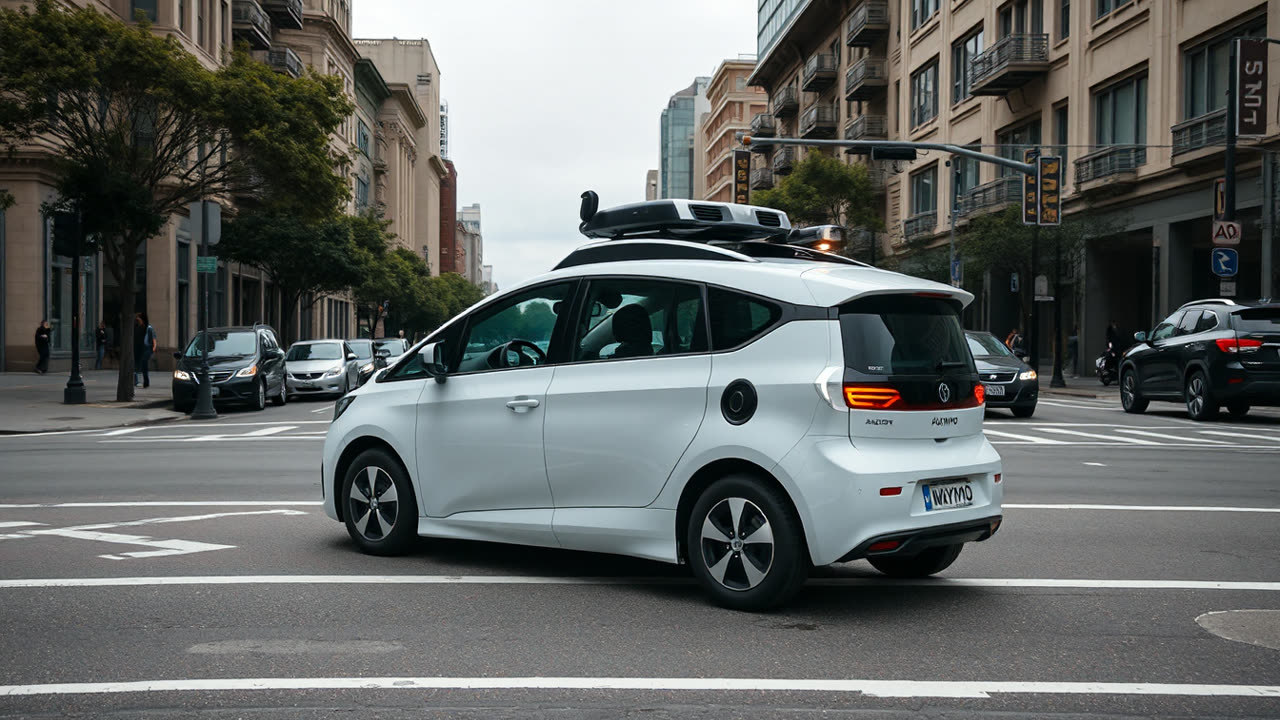
Waymo's San Francisco autonomous ride-hailing service experienced a roughly one-hour pause on July 18, 2026, directly attributed to a power outage, marking a critical vulnerability in the nascent industry's operational resilience. This recent disruption underscores a persistent challenge for fully autonomous vehicle (AV) deployment: the reliance on robust, uninterrupted external infrastructure, extending beyond the vehicles themselves. While the service quickly resumed, the incident raises significant questions about the scalability and reliability of AV networks in dense urban environments, particularly as cities grapple with aging power grids and increasing climate-related disruptions.
The impact on users, though brief in this instance, highlights the fragility of relying on driverless cars for essential transportation needs. For a service designed to offer continuous, on-demand mobility, even a one-hour interruption can translate into missed appointments, delayed commutes, and a erosion of trust, especially for those who depend on the service for critical travel. Waymo, which has been steadily expanding its operational design domain (ODD) in San Francisco, including night-time and challenging weather conditions, positions its service as a reliable alternative to human-driven taxis and ride-shares. However, such infrastructure-induced pauses expose a fundamental difference: human drivers can often navigate around local power issues or communicate directly with passengers, whereas a fully autonomous system's response is dictated by its underlying network connectivity and operational protocols. This incident could lead to a dip in user confidence, as potential riders might factor in the risk of unpredictable service unavailability when choosing their transport option.
From an industry perspective, this event is not an isolated anomaly but rather a recurring symptom of the complex interplay between advanced robotics and real-world infrastructure. Waymo has faced similar power-related challenges before, including a notable incident in Phoenix in early 2025 where a regional power fluctuation temporarily impacted a portion of its fleet, causing some vehicles to pull over and await remote assistance. Such incidents highlight that while Waymo's vehicles are equipped with redundant on-board systems and fail-safes, their ability to operate effectively is intrinsically linked to external factors like consistent cellular coverage, GPS signal integrity, and, crucially, stable power for both vehicle charging and the extensive data centers that support their AI and mapping operations. Rivals like Cruise, which recently re-entered the San Francisco market after a significant safety-related pause, also grapple with these infrastructure dependencies, though their public incidents have more frequently involved software glitches or perception challenges rather than widespread external power issues. The industry as a whole is investing heavily in redundant communication systems and localized power solutions, but the sheer scale of urban infrastructure makes comprehensive immunity challenging.
The implications for the broader AV industry are profound. As AV companies move from pilot programs to widespread commercial deployment, the need for "always-on" reliability becomes paramount. This requires not only robust vehicle technology but also resilient operational infrastructure. Companies like Waymo are exploring solutions such as localized microgrids for charging depots, enhanced satellite communication backups, and partnerships with city planners to integrate AV needs into smart city infrastructure development. However, these are long-term, capital-intensive endeavors. The recent San Francisco pause serves as a stark reminder that even with billions invested in R&D, the weakest link can sometimes be the most mundane: a regional power grid fluctuation. This could accelerate the push for more localized edge computing capabilities within AV systems, reducing their real-time reliance on centralized data centers for every decision, thus making them more robust to temporary communication or power interruptions.
Looking ahead, the AV industry must adopt a more holistic approach to resilience, moving beyond vehicle-centric safety to encompass systemic operational stability. This includes advocating for infrastructure upgrades, developing more sophisticated prediction models for potential outages, and establishing clearer protocols for service recovery and passenger communication during disruptions. Regulatory bodies, increasingly scrutinizing AV operations, will likely demand higher standards for service availability and contingency planning. Waymo, with its extensive operational experience, is well-positioned to lead in developing these resilience strategies. However, continued incidents like the one in San Francisco will necessitate not just technological fixes within the vehicles, but also a collaborative effort with utility providers and municipal authorities to fortify the foundational infrastructure upon which the future of autonomous mobility depends. The next phase of AV deployment will not just be about perfecting the drive, but about ensuring the entire ecosystem can withstand the unpredictable realities of urban life.