Waymo Secures Landmark Approval for Massive California Robotaxi Expansion
Waymo has secured unprecedented approval from the California Public Utilities Commission (CPUC) to dramatically expand its robotaxi service, now spanning 18 counties from Sonoma in the north to San Diego in the south, marking the largest geographical expansion in the company's history and enabling it to charge for rides across this vast new operational design domain.
✨ This content was summarized and interpreted by AI; it may contain errors — please verify accuracy with the original sources. Learn more
Listen to this story
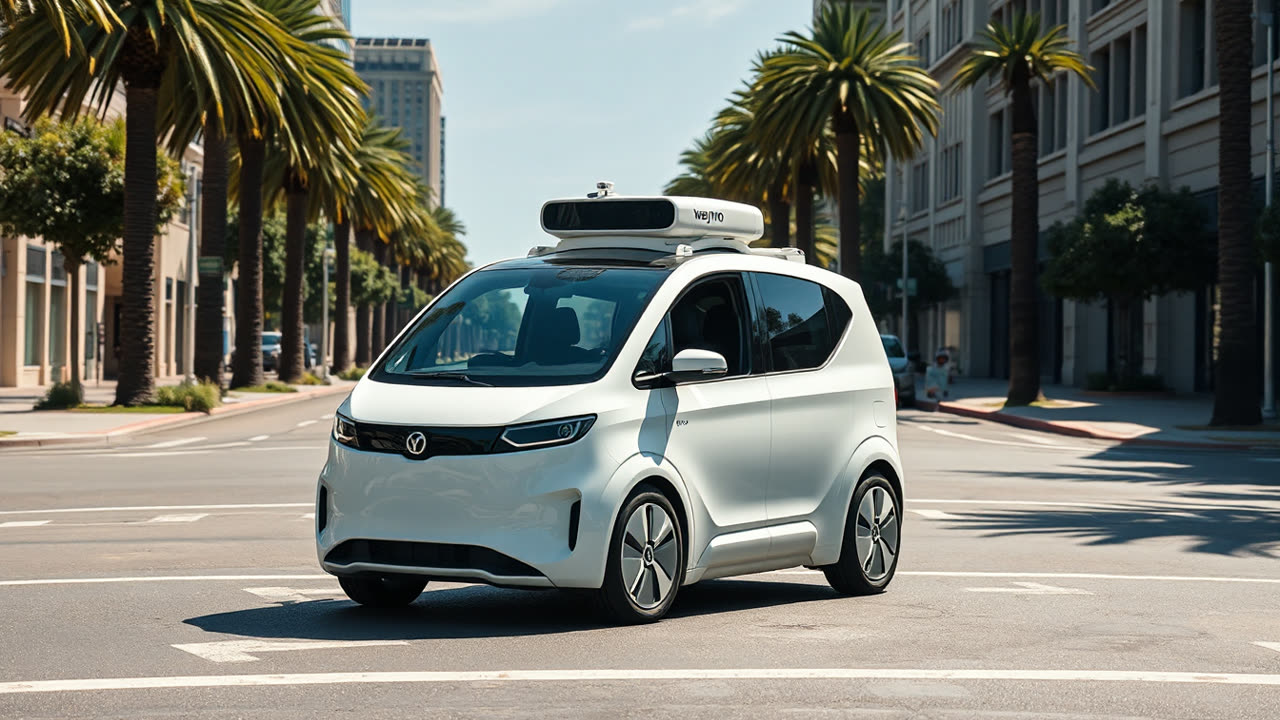
Waymo has secured unprecedented approval from the California Public Utilities Commission (CPUC) to dramatically expand its robotaxi service, now spanning 18 counties from Sonoma in the north to San Diego in the south, marking the largest geographical expansion in the company's history and enabling it to charge for rides across this vast new operational design domain. This regulatory green light, announced August 14, 2026, solidifies Waymo's position as a leading contender in the burgeoning autonomous vehicle (AV) industry, granting it the crucial ability to scale revenue generation beyond its previously limited operational zones.
This approval is a profound turning point, not merely for Waymo but for the entire autonomous vehicle sector, signaling a renewed confidence from regulators after a turbulent period for robotaxi operators. For users, the expansion promises a significant increase in accessibility to on-demand autonomous transportation, potentially offering a safer and more consistent alternative to traditional ride-hailing services in major urban and suburban centers across California. The impact on urban mobility could be transformative, reducing reliance on personal vehicles in these areas, easing traffic congestion, and potentially decreasing parking demand, though the full extent of these benefits will depend on adoption rates and the density of Waymo's deployment. Industrially, this move intensifies the race for market dominance, placing immense pressure on competitors to accelerate their own expansion plans and demonstrate comparable safety and reliability metrics to regulators and the public. The ability to charge for services across such a wide area is critical for Waymo's long-term financial viability, allowing it to move closer to profitability and justify the billions invested in its technology.
Waymo's journey to this point has been characterized by a methodical, safety-first approach, contrasted sharply with some rivals' more aggressive, and at times controversial, deployment strategies. Prior to this approval, Waymo's commercial operations in California were largely confined to San Francisco and parts of Los Angeles, with a more extensive paid service in Phoenix, Arizona. Its operational framework, built on over 20 million miles driven on public roads and billions of simulated miles, emphasizes a rigorous testing and validation process for its fifth-generation Driver system. This cautious methodology appears to have resonated with the CPUC, particularly in the wake of significant setbacks faced by competitors like Cruise. Cruise, which had rapidly expanded its operations in San Francisco, saw its California operating permit suspended in late 2023 following a series of high-profile incidents, including one where a pedestrian was dragged by one of its vehicles. This regulatory crackdown on Cruise underscored the critical importance of public trust and robust safety protocols, inadvertently strengthening Waymo's case for broader deployment by highlighting its comparatively unblemished safety record and transparent engagement with authorities.
The 18-county expansion represents a significant leap from Waymo's previous, more geographically constrained "service areas," moving towards a model that could eventually cover entire metropolitan regions. This contrasts with the prior generation of AV deployment, which often involved limited pilot programs or geo-fenced zones with human safety drivers. Waymo's fully autonomous service, without human safety operators in the vehicle, signifies a maturation of the technology and regulatory acceptance of its safety claims under specific operational conditions. The company's consistent reporting of disengagement data to the California Department of Motor Vehicles (DMV) has also contributed to its credibility, detailing instances where human intervention was required, providing a transparent look at its system's performance. This level of transparency and consistent, positive safety metrics are key differentiators against rivals who have struggled with public perception and regulatory scrutiny.
Looking ahead, this approval sets the stage for a period of rapid scaling for Waymo, but also for heightened competition and continued regulatory evolution. Waymo will likely prioritize a phased rollout within these 18 counties, focusing initially on high-demand urban and suburban corridors where its service can most effectively augment existing transportation options. The company's next challenge will be to manage the logistical complexities of deploying thousands of vehicles, establishing charging infrastructure, and building out customer support services across such a vast territory. Competitors, having observed Waymo's success, will undoubtedly intensify their lobbying efforts and technological development to catch up, potentially leading to a renewed wave of investment and innovation in the AV sector. However, the CPUC's stringent oversight, likely influenced by past incidents, suggests that future expansions for any AV operator will continue to demand demonstrable safety, reliability, and public engagement. The ultimate success of robotaxis across California will hinge not just on technological prowess, but on winning over a skeptical public and seamlessly integrating into the state's diverse transportation ecosystem, a task Waymo is now uniquely positioned to lead.