Waymo Secures Massive California Robotaxi Expansion, Targets 1 Million Weekly Rides
Waymo has secured approval from the California Public Utilities Commission (CPUC) for its most significant expansion yet, authorizing paid driverless robotaxi services across 18 California counties, stretching from Sonoma down to San Diego.
✨ This content was summarized and interpreted by AI; it may contain errors — please verify accuracy with the original sources. Learn more
Listen to this story
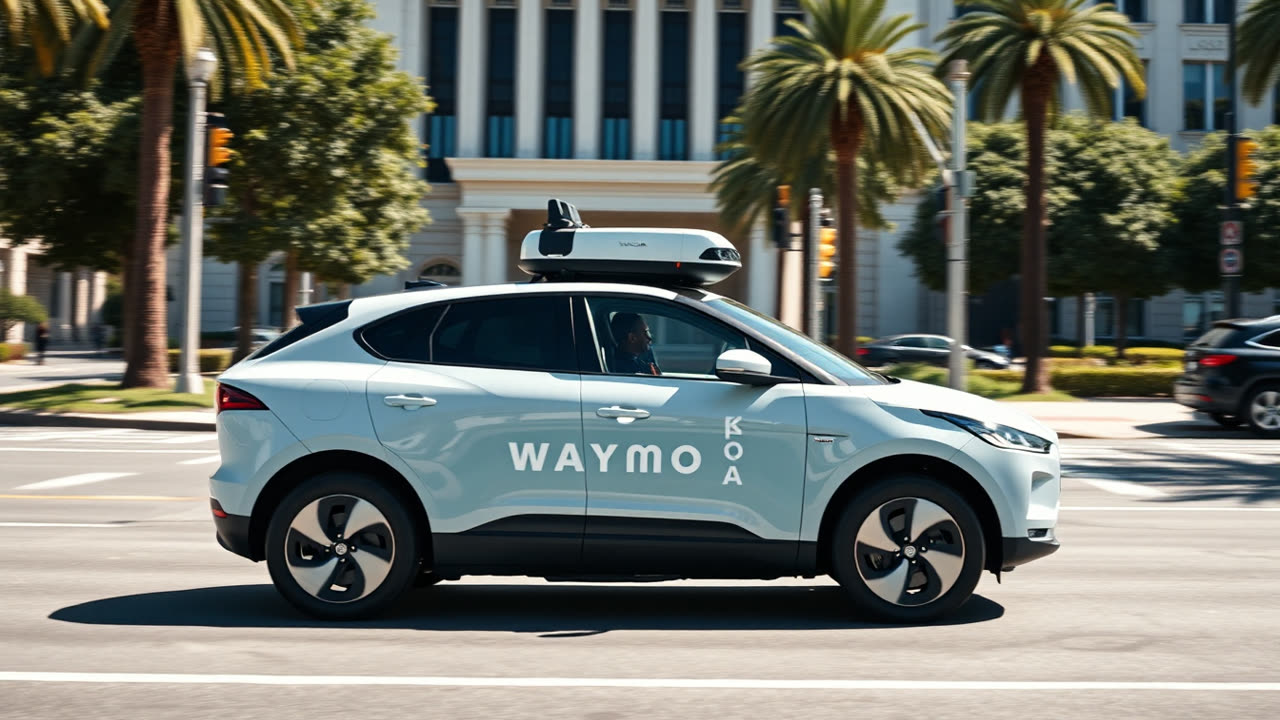
Waymo has secured approval from the California Public Utilities Commission (CPUC) for its most significant expansion yet, authorizing paid driverless robotaxi services across 18 California counties, stretching from Sonoma down to San Diego. This broad regulatory clearance, issued on August 14, 2026, allows Waymo to charge for fully driverless rides throughout the entire Bay Area and Los Angeles, alongside opening new markets in Sacramento and San Diego. The company aims to achieve one million paid rides per week by the end of 2026, a substantial leap from the approximately 500,000 weekly paid rides it reported as of March 2026 across 10 U.S. cities. This aggressive target is supported by a rapid scaling of its fleet, which currently stands at around 3,000 vehicles, primarily Jaguar I-Paces and the newer, purpose-built Ojai robotaxis.
This westward expansion is not merely an incremental increase in Waymo's footprint; it represents a critical inflection point for the entire autonomous vehicle (AV) industry, particularly in the highly competitive ride-hailing sector. The permit’s unusually permissive operational scope, covering all speed limits, freeways, highways, city streets, rural roads, parking lots, and even rail crossings, day and night, in rain, fog, and hail (excluding widespread snow or ice), grants Waymo a regulatory advantage no U.S. rival currently possesses. This comprehensive approval allows Waymo to deploy its Level 4 autonomous technology in diverse and complex environments, moving beyond geo-fenced pilot zones to truly integrated urban and inter-urban mobility. For users, this means enhanced accessibility, potentially shorter wait times, and a safer alternative to human-driven vehicles, given Waymo's reported 88% reduction in property-damage claims and 92% reduction in bodily-injury claims compared to human drivers over 25.3 million fully autonomous miles. The expansion also signals a shift in the ride-hailing market, where autonomous fleets are already beginning to influence driver activity, with data showing a decline in trips per hour for human drivers in cities where robotaxis operate. Waymo's annualized revenue run rate is projected to approach $1.6 billion if it hits its one million weekly rides target, based on an average ride price of $15-17. This financial trajectory, combined with its recent $16 billion funding round in February 2026 that valued the company at $126 billion, underscores investor confidence in Waymo's path to profitability and market dominance.
In stark contrast, General Motors' Cruise, once a prominent contender in the robotaxi space, has faced significant setbacks. GM ceased funding its money-losing Cruise division in December 2024, pivoting away from the robotaxi business to focus instead on developing partially automated driver-assist systems like its Super Cruise technology for personal vehicles. This dramatic shift followed a series of operational challenges, including a high-profile incident in October 2023 where a Cruise robotaxi ran over and dragged a pedestrian in San Francisco who had been struck by a human-driven hit-and-run vehicle. The incident led to a suspension of Cruise's operations and a regulatory investigation, ultimately resulting in GM abandoning its plans to scale the robotaxi service. While GM's Chief Product Officer, Sterling Anderson, has indicated that the company's personal autonomy technology could eventually converge with robotaxi capabilities, the immediate focus is on Level 3 "eyes-off" highway driving, with a planned introduction on the Cadillac Escalade IQ in 2028. GM had invested over $10 billion in Cruise, yet the subsidiary accumulated more than $10 billion in operating losses with less than $500 million in revenue before the strategic retreat. This stark divergence highlights Waymo's more mature and robust approach to Level 4 autonomy, emphasizing extensive real-world testing (over 20 million autonomous miles) combined with billions of miles in simulation, a strategy that appears to foster greater regulatory and public trust compared to Cruise's more aggressive, and ultimately problematic, deployment.
Looking ahead, Waymo's dominant position in California, the largest robotaxi market in the U.S., sets the stage for intensified competition and accelerated technological advancement. While the rollout will be gradual and safety-guided, Waymo's immediate focus on launching rider-only service in San Diego and validating technology in Sacramento signals a methodical, yet determined, expansion. Challenges remain, including public acceptance, navigating varying local regulations, and managing operational incidents, such as a recent software recall involving 3,871 vehicles for entering closed freeway construction zones. However, the company's continuous investment in its 6th-generation "Driver" technology, designed for adaptability across platforms like the Zeekr Ojai minivan and Hyundai IONIQ 5, positions it for efficient scaling and improved unit economics. The broader autonomous vehicle market, valued at approximately $104.6 billion in 2026 and projected to reach $378.4 billion by 2033, is increasingly driven by demand for autonomous ride-hailing services. Waymo's expansion, alongside its planned international launches in London and Tokyo, will likely pressure other players like Amazon's Zoox and even Tesla, which, despite its narrative, operates a comparatively small fleet of 25 unsupervised Model Y vehicles in Texas. The industry is moving from proving autonomy to proving city-by-city repeatability and operational muscle. Waymo's current trajectory suggests it is becoming a formidable transportation company, increasingly able to compete with traditional ride-hailing services in dense urban pockets, and its sustained growth will continue to shape the future of urban mobility.