Waymo to Launch Robotaxi Service in Singapore by 2028
Alphabet's autonomous driving subsidiary, Waymo, is set to launch its first major international commercial robotaxi service in Singapore by 2028, marking a significant escalation in its global expansion.
✨ This content was summarized and interpreted by AI; it may contain errors — please verify accuracy with the original sources. Learn more
Listen to this story
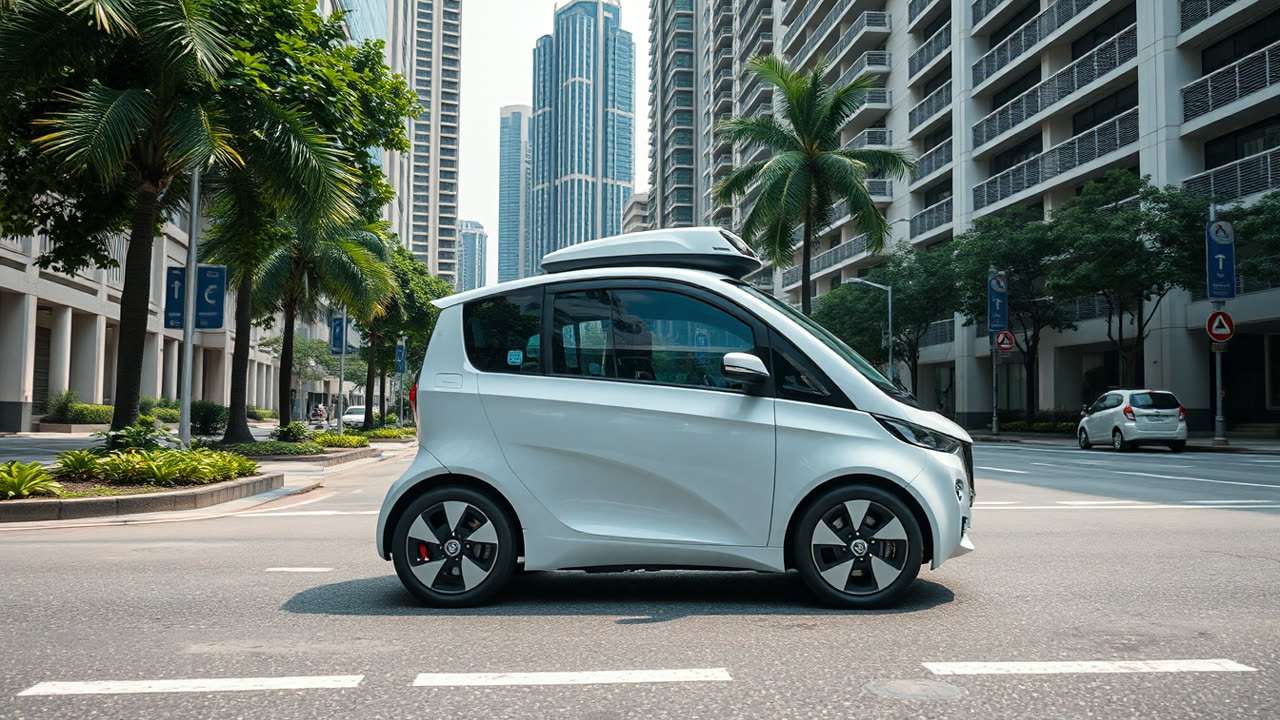
Waymo, Alphabet's autonomous driving subsidiary, has announced its ambitious plan to launch a robotaxi service in Singapore by 2028, with its self-driving vehicles slated to begin arriving in the city-state in the "coming months." This move marks a significant escalation in Waymo's international expansion efforts, planting a flag in one of Asia's most technologically advanced and densely populated urban environments.
The decision to enter Singapore is a strategic masterstroke, underscoring Waymo's confidence in its Level 4 autonomous driving technology and its ability to navigate complex regulatory landscapes. Singapore, renowned for its "Smart Nation" initiatives and proactive stance on autonomous vehicle testing, offers a unique proving ground. The country's meticulously planned infrastructure, high public transport ridership, and government support for cutting-edge technology create an ideal ecosystem for robotaxi deployment. For users, this could translate into a new paradigm of urban mobility, offering on-demand, potentially more efficient, and safer transportation options that complement the existing robust public transit network. The tightly controlled traffic conditions and relatively disciplined driving culture in Singapore may also present fewer immediate challenges compared to other bustling megacities, potentially accelerating the path to widespread adoption and profitability.
From an industry perspective, Waymo's Singapore entry is a powerful statement about the maturation of autonomous vehicle technology and the intensifying global race for market dominance. While Waymo currently operates commercial services in Phoenix and San Francisco, and recently expanded to Los Angeles, its international footprint has been minimal. Singapore represents its first major overseas commercial launch, signaling a readiness to scale its operations beyond its established U.S. strongholds. This expansion will likely force competitors like Cruise (which recently faced significant operational challenges and scaled back in some U.S. cities), Baidu Apollo, and a host of emerging local players to re-evaluate their own global strategies and accelerate their development timelines. The data gathered from operating in Singapore's unique conditions—ranging from its tropical climate to its specific road layouts—will be invaluable, feeding back into Waymo's AI models and refining its driving capabilities for diverse global scenarios.
Waymo's technology, developed over more than a decade, leverages a sophisticated array of sensors including LiDAR, radar, and cameras, processed by advanced AI algorithms to perceive the environment and predict the behavior of other road users. This system has allowed Waymo to accumulate billions of miles driven in real-world and simulated environments, contributing to a safety record that often surpasses human driving statistics in its operational areas. In contrast to many rivals still in advanced testing phases, Waymo has been operating fully driverless commercial services for several years, demonstrating a higher degree of readiness and operational experience. Its Phoenix service, Waymo One, launched in 2018, and its expansion into San Francisco and Los Angeles has steadily grown its operational scale and complexity. This lengthy track record provides a significant competitive advantage as it enters new markets, offering a proven operational model rather than just a technological promise.
Looking ahead, Waymo's Singapore launch in 2028 will serve as a critical barometer for the global scalability of robotaxi services. Success there could unlock further expansion into other Asian megacities facing similar urban mobility challenges, such as Seoul, Tokyo, or even parts of China, where local competition is fierce but the market potential immense. Key challenges will include adapting to local user preferences, integrating seamlessly with existing transport infrastructure and payment systems, and continuously engaging with regulators to ensure public trust and safety. The pricing model will also be crucial; Waymo will need to balance profitability with affordability to attract a broad user base in a city with excellent public transport options. Ultimately, the next few years will likely see a significant acceleration in the deployment of Level 4 autonomous vehicles in controlled urban environments worldwide, driven by the competitive pressures and technological advancements that Waymo's bold move into Singapore exemplifies. The journey from a niche technology to a ubiquitous mode of transport hinges on these pioneering international ventures, and Singapore is poised to be a pivotal chapter in that narrative.