Waymo Unveils Next-Gen Autonomous Driving 'Brain' with Quadrillion Operations Per Second
Waymo's latest 'Waymo Driver' compute platform, processing one quadrillion operations per second, marks a monumental leap in on-board autonomous processing, drastically enhancing safety and real-time decision-making for its robotaxi fleet and underscoring a critical industry shift towards robust in-car intelligence essential for scaling self-driving services globally.
✨ This content was summarized and interpreted by AI; it may contain errors — please verify accuracy with the original sources. Learn more
Listen to this story
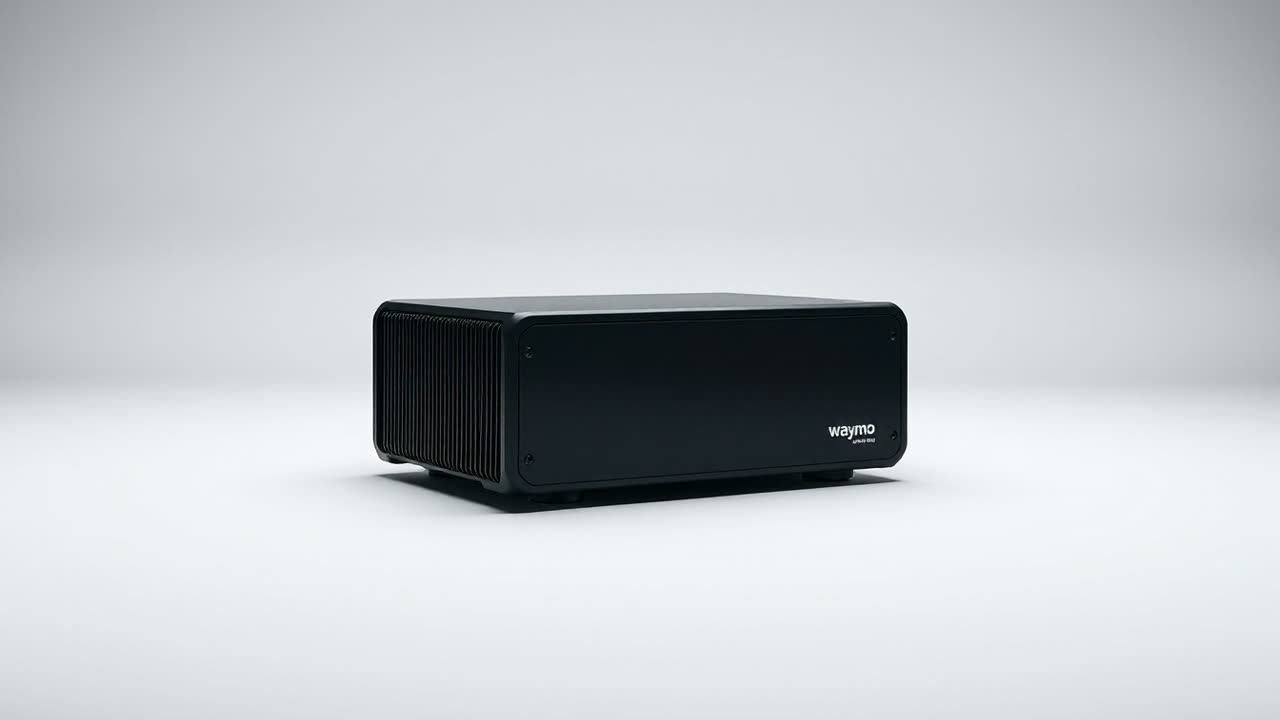
Waymo's latest generation of autonomous driving hardware, known internally as "Waymo Driver," integrates a custom-designed compute platform that processes an astounding one quadrillion operations per second, a computational feat essential for navigating complex urban environments. This immense processing power, housed in a compact unit typically found in the vehicle's trunk, represents the culmination of years of iterative development since the company first publicly detailed its "brain" in 2018, a system that was already performing 100 trillion operations per second at that time. The evolution of this compute architecture underscores a fundamental shift in the robotaxi industry: the relentless pursuit of on-board processing capabilities to handle the deluge of data from an increasingly sophisticated sensor suite, rather than relying heavily on cloud-based processing for real-time decision-making.
The significance of Waymo's robust in-car compute system extends far beyond raw numbers; it directly impacts the safety, reliability, and scalability of its autonomous operations. By minimizing latency inherent in cloud communication, the on-board "brain" enables near-instantaneous sensor data interpretation and predictive modeling, crucial for reacting to dynamic road conditions and unpredictable human behavior. This localized processing power allows Waymo's vehicles to build and maintain a real-time, high-definition map of their surroundings, identifying pedestrians, cyclists, other vehicles, and traffic infrastructure with unparalleled accuracy. The system reportedly incorporates custom-designed chips and off-the-shelf components, optimized for both performance and energy efficiency, a critical balance given the power demands of such a high-performance computer. While specific power consumption figures for the latest iteration are proprietary, earlier generations were designed with thermal management and efficiency as key considerations, indicating a continued focus on operational longevity and reduced strain on vehicle batteries.
This architectural choice offers a distinct advantage in the competitive autonomous vehicle landscape. Rivals like Cruise, also operating extensive robotaxi services, similarly emphasize robust on-board compute, often leveraging custom ASICs (Application-Specific Integrated Circuits) to achieve high efficiency for AI inference tasks. Tesla, on the other hand, has famously developed its own full self-driving (FSD) chip, designed specifically for neural network processing, which it integrates into its consumer vehicles. While Tesla's approach aims for broad consumer adoption, Waymo's strategy is laser-focused on a commercial robotaxi service, demanding a higher safety threshold and redundancy across all hardware and software layers. The sheer computational capacity of Waymo's system allows it to run multiple redundant perception and prediction models simultaneously, cross-referencing outputs to enhance safety and fault tolerance. This multi-layered approach to validation is a cornerstone of Waymo's safety case, differentiating it from solutions that might prioritize cost or power efficiency over absolute robustness.
The development of this advanced compute platform is also a testament to Waymo's vertical integration strategy. Unlike some competitors who might rely more heavily on third-party suppliers for core autonomous driving components, Waymo has invested heavily in developing its own hardware and software in tandem. This allows for tighter integration, better optimization, and greater control over the entire autonomous stack, from the silicon up to the driving algorithms. This comprehensive approach minimizes compatibility issues and unlocks performance gains that might be unattainable with a more modular, vendor-dependent strategy. The ability to fine-tune hardware to specific software requirements is particularly critical for machine learning workloads, where small architectural differences can lead to significant performance discrepancies.
Looking ahead, the evolution of Waymo's "brain" will likely continue on several fronts. Further advancements in energy efficiency will be paramount as robotaxi fleets scale, impacting operational costs and environmental footprint. The integration of next-generation sensor technologies, such as higher-resolution lidar and radar, and more advanced thermal cameras, will further increase data input, demanding even greater computational throughput. There will also be a growing emphasis on "edge AI" processing, pushing more sophisticated decision-making capabilities to the vehicle itself, reducing the need for constant communication with a central data center for map updates or complex scenario analysis. As Waymo expands its operational design domains and tackles more challenging weather conditions or novel urban layouts, the compute platform will need to adapt, potentially incorporating specialized processing units for specific tasks like adverse weather perception or proactive hazard prediction. The continued refinement of this powerful on-board intelligence is not just about faster processing; it's about enabling a truly ubiquitous, safe, and economically viable autonomous transportation future.