WETOX D2 Adapter Achieves World's First Next-Gen V2X Certification, Unlocking V2L for Millions of Teslas and Mach-Es
The WETOX D2 adapter has secured the world's first Next-Gen V2X certification, specifically ISO 15118-20, from SGS, a global leader in inspection, verification, testing, and certification.
✨ This content was summarized and interpreted by AI; it may contain errors — please verify accuracy with the original sources. Learn more
Listen to this story
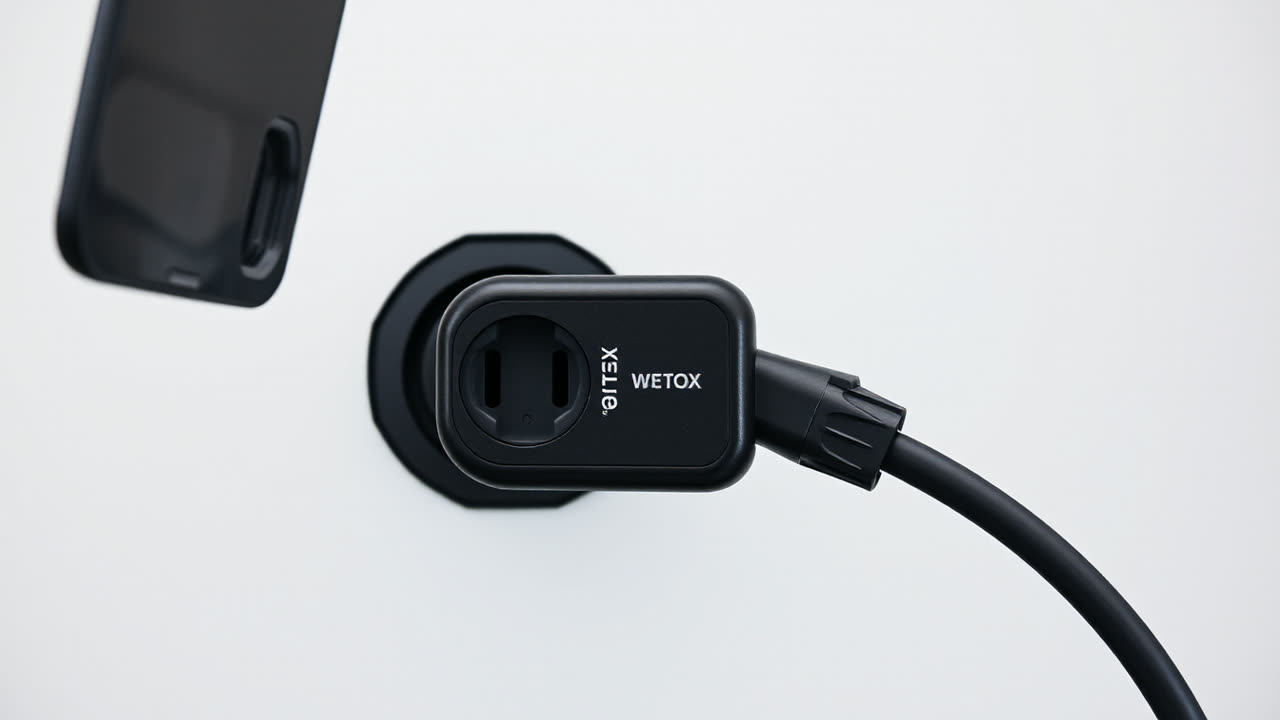
The WETOX D2 adapter has secured the world's first Next-Gen V2X certification, specifically ISO 15118-20, from SGS, a global leader in inspection, verification, testing, and certification. This landmark achievement immediately unlocks vehicle-to-load (V2L) capabilities for millions of existing Tesla and Ford Mustang Mach-E vehicles that were not originally equipped with native bidirectional power functionality. The D2 adapter utilizes the vehicle's native charge port, offering dual NEMA 5-15 outlets on its North American Charging Standard (NACS) version, capable of delivering a continuous 3.6kW of power, while its CCS2 counterpart for European markets provides a robust 6.6kW peak and 6.0kW continuous output. This certified solution is designed with an IPX5 waterproof rating, a custom-molded internal structure for durability, and a "full-chain" waterproof design extending to its 3-meter extension power strip, which boasts an IPX6 rating. Crucially, WETOX offers a global product insurance plan that covers accidental damage and explicitly guarantees against voiding the EV's warranty, addressing a significant concern for owners using aftermarket solutions.
This certification is more than just a product launch; it represents a pivotal shift in the utility and perception of electric vehicles, transforming them from mere transportation into indispensable mobile power stations. For users, the immediate impact is profound: a Tesla or Mach-E can now reliably power essential home appliances during an outage, run tools at a remote job site, or provide electricity for extensive camping setups. This directly addresses a long-standing desire among EV owners for greater energy independence and resilience, particularly given the increasing frequency of extreme weather events causing grid instability. The ability to monitor and control discharge limits and set power-off timers via an accompanying app enhances user convenience and safety. Furthermore, the D2's claimed 40% efficiency advantage over other V2L adapter brands suggests a more sustainable and effective use of the vehicle's battery.
From an industry perspective, WETOX D2's certification democratizes V2L, extending its benefits to a vast installed base of EVs, including popular Tesla models like the Model S, 3, X, and Y, that previously lacked this feature. While Tesla recently introduced a native V2L outlet adapter for some refreshed Model Y Premium trims, offering 2.4kW, it still leaves a significant portion of its fleet without native support, making WETOX's broader compatibility and higher power output for NACS (3.6kW) a compelling alternative. The move also puts pressure on other automakers to accelerate their own V2L and V2X integrations or risk ceding ground to certified aftermarket providers. Many 2026 EV models do offer V2L, with leaders like the Ford F-150 Lightning providing up to 9.6kW, and Hyundai Ioniq 5 offering 3.6kW, but widespread native V2L across all models and segments remains inconsistent. This certification from SGS, an authority whose reports carry unparalleled legal validity globally, legitimizes external DC V2X discharging solutions, moving them from "unofficial workarounds" to a regulated, standardized framework.
The ISO 15118-20 standard, while still gradually rolling out in vehicle software ecosystems, is recognized as the universal benchmark for V2X power output by major automakers like Volkswagen, Mercedes-Benz, BMW, and General Motors. WETOX's early certification in this next-generation protocol, even as its current V2L application on Teslas uses the established ISO 15118-2, strategically future-proofs its technology as the global V2X ecosystem evolves. This is crucial because portable V2L is merely the entry point of a much broader DC V2X vision encompassing Vehicle-to-Home (V2H) for whole-home backup and Vehicle-to-Grid (V2G) for grid balancing and energy arbitrage. The ability to extract high-voltage DC directly through the vehicle's fast-charging port and convert it externally offers an optimal balance of design costs, thermal efficiency, and power output.
Looking ahead, this certification signals an accelerating trajectory for V2X technologies. The global V2L market, valued at USD 3.20 billion in 2025, is projected to surge to USD 42.83 billion by 2035, growing at a compound annual growth rate of 30.73%. North America is anticipated to dominate this market, holding a 39.4% share in 2026. The widespread availability of certified V2L solutions will undoubtedly boost consumer demand for multi-functional EVs, further driving this growth. As more vehicles become V2X-capable, their role in supporting grid stability, integrating renewable energy sources, and providing financial returns to owners through V2G services will become increasingly significant. WETOX's commitment to unlocking V2L compatibility for new EV models every quarter via over-the-air (OTA) updates underscores the evolving software-centric nature of this technology and its potential to adapt to future vehicle platforms and evolving standards. This move sets a new precedent for how aftermarket solutions can not only fill gaps left by OEMs but also drive the entire industry towards a more connected, resilient, and energy-independent future.