Why Bluetooth Headsets Still Fall Short for Serious Gaming
Bluetooth headsets' inherent audio latency significantly degrades the gaming experience for serious players, forcing them to choose between convenience and the crucial sub-20ms performance offered by 2.4GHz wireless and wired connections, a dilemma that will persist until widespread adoption of the promising, but currently limited, LE Audio technology.
✨ This content was summarized and interpreted by AI; it may contain errors — please verify accuracy with the original sources. Learn more
Listen to this story
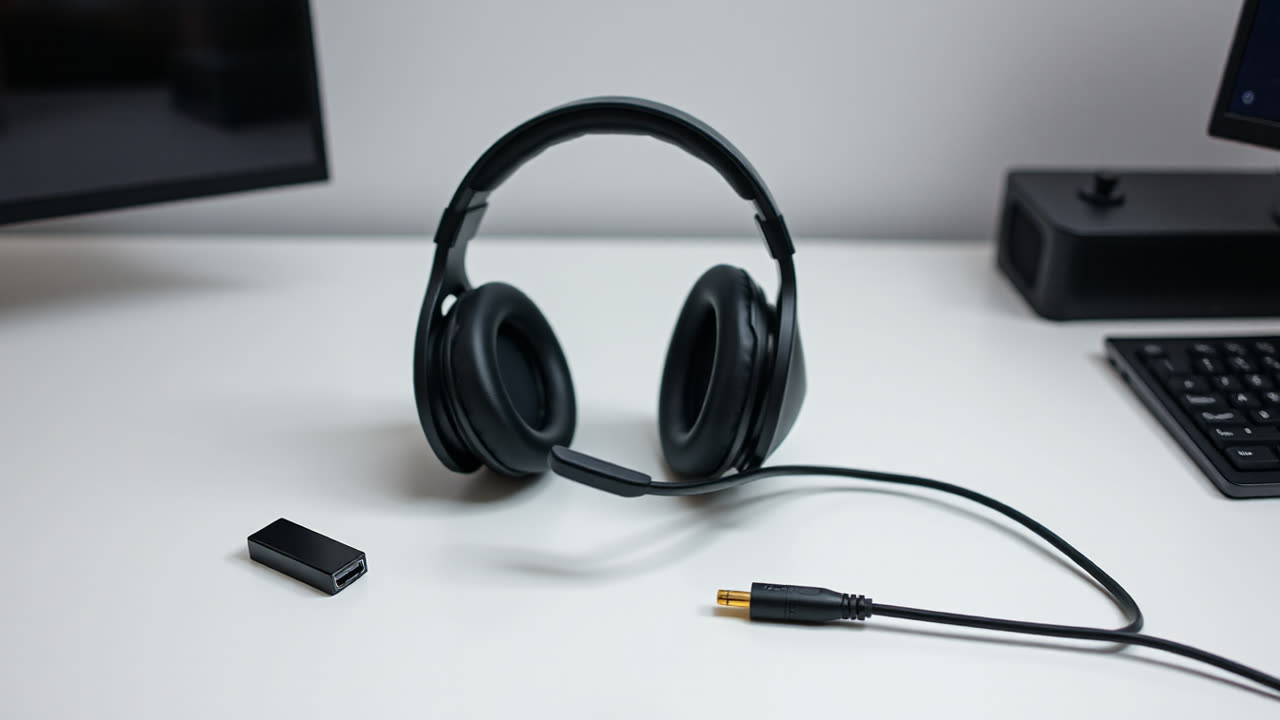
For serious gamers, the allure of a Bluetooth headset often dissolves into frustration, as its inherent audio latency can significantly degrade the gaming experience, particularly in fast-paced or competitive titles. While convenient for everyday use, Bluetooth's typical latency range of 40ms to 200ms, and sometimes even 150-300ms with standard codecs, creates a noticeable delay between on-screen action and the corresponding sound. This lag, which can effectively double a player's reaction time to audio cues, stands in stark contrast to the near-zero delay offered by wired connections and the sub-20ms performance of dedicated 2.4GHz wireless headsets.
This fundamental difference in latency matters profoundly to users. In competitive gaming, where milliseconds dictate victory or defeat, a delayed gunshot sound or the faint rustle of enemy footsteps arriving late can cost a player a crucial advantage. Even for casual players, desynchronized audio can break immersion, making games feel less responsive and less enjoyable. The human auditory response time typically falls between 170 and 220ms, meaning even the lower end of Bluetooth's latency can be perceptible and detrimental to gameplay. Beyond latency, Bluetooth headsets often contend with more interference, resulting in a less stable signal and potentially lower audio quality compared to 2.4GHz alternatives, which benefit from more dedicated bandwidth.
The industry has long recognized these limitations, leading to a bifurcation in the wireless headset market. Dedicated 2.4GHz wireless headsets, which utilize a USB dongle to establish a direct, proprietary connection, have become the de facto standard for serious wireless gaming. Brands like Turtle Beach, SteelSeries, Audeze, and Logitech consistently offer 2.4GHz options, with models such as the Audeze Maxwell and Logitech G Pro X lauded for their near-zero lag performance. These headsets often support higher-quality audio transmission due to increased bandwidth, and modern versions boast impressive battery lives, with some, like the Stealth 700 Gen 3, offering up to 80 hours on a single charge. This dedicated approach prioritizes speed and stability, making 2.4GHz the preferred choice for PC and console gamers seeking untethered performance without compromise.
In comparison, wired headsets remain the gold standard for absolute zero latency and uncompressed audio quality, making them indispensable for professional esports players and those who prioritize every millisecond. While they sacrifice mobility, wired connections eliminate concerns about battery life, pairing, and wireless interference. The gaming headset market in 2025 still saw wired solutions holding a significant 61.20% market share, largely due to their zero-latency assurance and attractive entry pricing, though wireless models are growing at a 12.56% CAGR. This demonstrates a persistent demand for the reliability and performance that only a physical connection can guarantee.
Looking ahead, the landscape of wireless audio for gaming is poised for significant evolution, primarily driven by Bluetooth LE Audio and its Low Complexity Communications Codec (LC3). LE Audio, building on Bluetooth Low Energy, promises to deliver substantially lower latencies, with typical audio latency around 20-30 milliseconds using LC3, and even as low as 5-15 milliseconds with the advanced LC3plus codec. This represents a dramatic improvement over traditional Bluetooth's performance and could bring Bluetooth headsets much closer to the responsiveness of 2.4GHz solutions. Furthermore, LC3 is designed for better audio quality even at lower bit rates and offers improved energy efficiency, potentially doubling battery life compared to Classic Bluetooth.
The adoption of LE Audio, however, faces hurdles. While Windows 11 supports LE Audio, and some Qualcomm chipsets are capable, the overall market penetration of compatible devices and headsets remains limited as of September 2024, with manufacturers not yet heavily promoting the feature. Apple and Linux users currently lack support, and broad interoperability across thousands of devices, a hallmark of traditional Bluetooth, is still developing for LE Audio. The Bluetooth Special Interest Group (SIG) is actively pushing for its adoption, seeing significant potential in gaming, multi-stream audio, and public broadcast capabilities like Auracast.
Ultimately, while the promise of a truly low-latency, universally compatible Bluetooth gaming headset is on the horizon with LE Audio, the current reality dictates a clear hierarchy. For competitive and discerning gamers, 2.4GHz wireless headsets offer the best balance of freedom and performance, consistently delivering sub-20ms latency and robust audio. Wired headsets remain the uncontested champion for zero-lag precision. Bluetooth, in its current widespread implementation, remains best suited for casual listening and multi-device convenience, a secondary feature rather than a primary choice for a truly immersive and responsive gaming experience. The gaming headset market, valued at $3.07 billion in 2026 and projected to reach $4.82 billion by 2031, continues to prioritize low latency and high-fidelity audio, driving innovation in both dedicated wireless and next-generation Bluetooth technologies.