Wi-Fi 7 Routers: The Branding Confusion and Missing Features
Many 'Wi-Fi 7' routers on the market may not deliver the full promised standard due to lax branding and certification bypasses, leaving consumers with incomplete features.
✨ This content was summarized and interpreted by AI; it may contain errors — please verify accuracy with the original sources. Learn more
Listen to this story
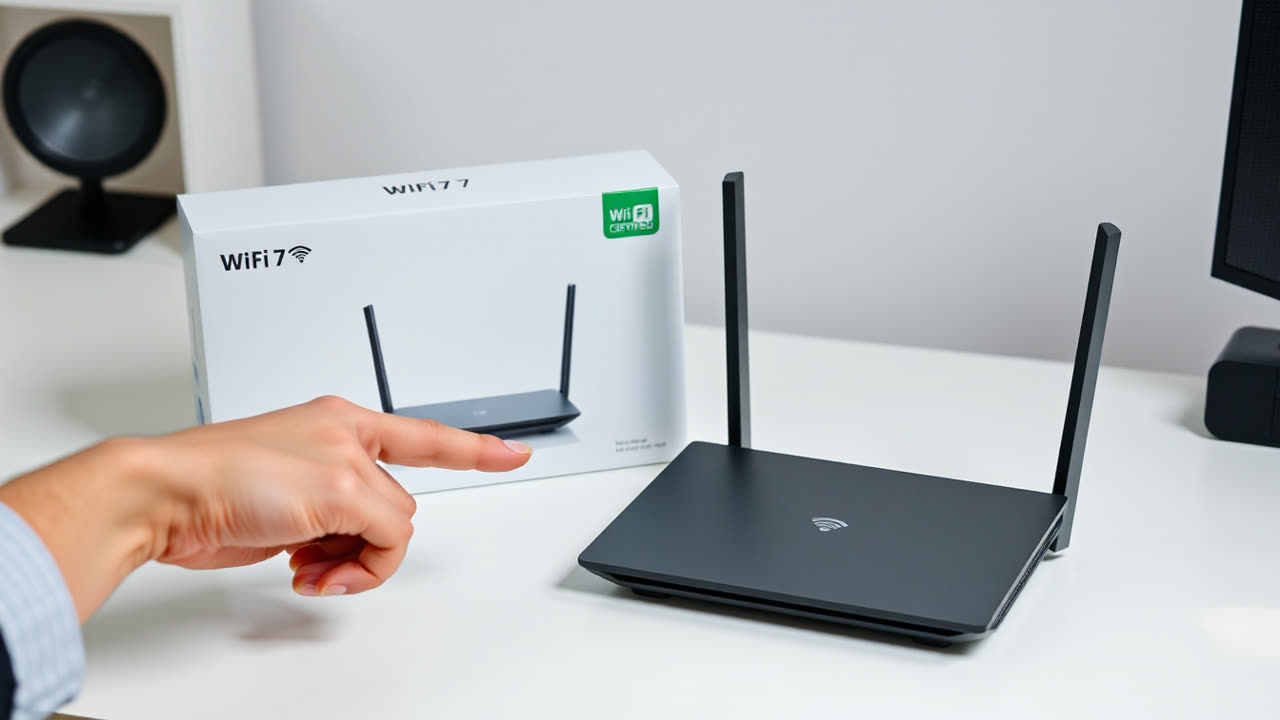
Many routers hitting the market under the "Wi-Fi 7" banner may not deliver the full promised standard, a critical issue stemming from lax branding and the complexities of wireless technology evolution. While the Wi-Fi Alliance officially launched its "Wi-Fi Certified 7" program in January 2024, based on the IEEE 802.11be standard, devices bearing the "Wi-Fi 7" or even unhyphenated "WiFi 7" label were available much earlier, often without the full feature set. The IEEE 802.11be standard itself was officially published in July 2025.
This creates significant confusion for consumers. The hyphenated "Wi-Fi" is a trademark of the Wi-Fi Alliance, signifying that a product adheres to its certification requirements, including mandatory features. However, brands opting for the unhyphenated "WiFi 7" can bypass these stringent certification processes, potentially omitting crucial elements of the standard. A prime example is Multi-Link Operation (MLO), a cornerstone of Wi-Fi 7 that enables devices to simultaneously transmit and receive data across 2.4 GHz, 5 GHz, and 6 GHz bands for drastically improved throughput, reduced latency, and enhanced reliability. MLO is a mandatory feature for "Wi-Fi Certified 7" devices, yet some "WiFi 7" products may lack it or implement it poorly.
Consumers purchasing these routers might be paying a premium for promised advancements like 320 MHz channels and 4K-QAM modulation without receiving the complete package. Furthermore, the immediate benefits of Wi-Fi 7 are often limited by the current lack of compatible client devices and the need for multi-gigabit internet service plans. Adding to the complexity, a recent FCC ban on the sale of new foreign-made routers has introduced an unexpected bottleneck in the US market.
Ultimately, this situation underscores the perennial challenge of Wi-Fi standards: marketing frequently outpaces certified innovation. Buyers must exercise vigilance, scrutinizing product specifications for the "Wi-Fi CERTIFIED 7" badge and confirming the inclusion of core features like MLO before investing in what might otherwise be an underperforming "future-proof" upgrade. The industry needs to prioritize clarity and consistent adherence to standards to foster genuine consumer confidence.