Wing and Walmart to Bring Drone Delivery to Denver and Seattle by 2027
Alphabet's Wing and retail giant Walmart are set to expand drone delivery services to the densely populated urban markets of Denver and Seattle in 2027, leveraging a five-pound payload capacity to transform last-mile logistics for quick, small-item orders.
✨ This content was summarized and interpreted by AI; it may contain errors — please verify accuracy with the original sources. Learn more
Listen to this story
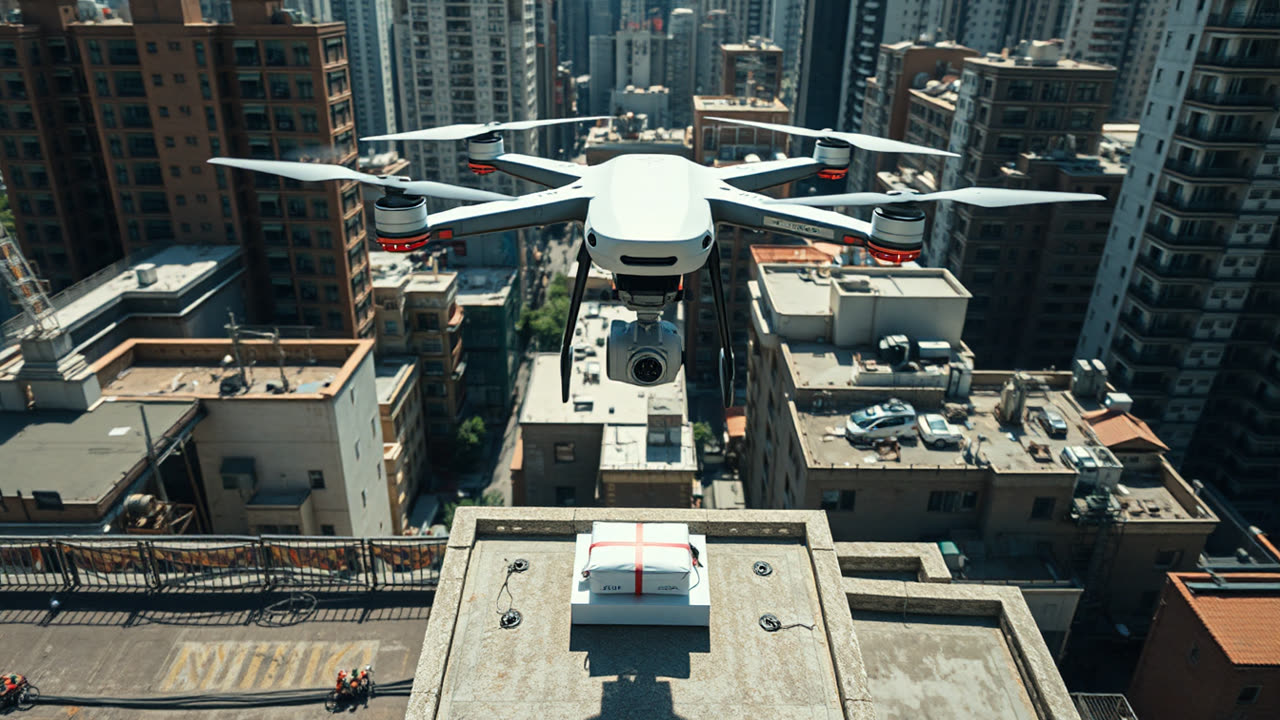
Wing, an Alphabet subsidiary, and retail giant Walmart are set to expand drone delivery services to the densely populated urban markets of Denver and Seattle in 2027, leveraging a five-pound payload capacity to transform last-mile logistics for quick, small-item orders. This strategic expansion signals a critical inflection point for autonomous aerial delivery, moving beyond initial suburban trials into complex metropolitan environments where the promise of speed and efficiency holds immense potential for both consumers and the broader retail ecosystem. The 2027 timeline allows for further technological refinement and crucial regulatory navigation, positioning these two major players to capture a significant share of the rapidly evolving instant-delivery market.
The move into Denver and Seattle, two major U.S. cities, is a calculated escalation of Wing's and Walmart's existing drone delivery footprints. Wing has been operating commercial drone delivery services in locations like Frisco, Texas, and Christiansburg, Virginia, since 2019, delivering items ranging from groceries to over-the-counter medicines. Walmart, for its part, has aggressively pursued drone delivery, having completed over 20,000 drone deliveries across seven states by late 2023, primarily through partnerships with DroneUp, Wing, and Zipline. The 5-pound payload, while seemingly modest, is strategically designed for high-frequency, low-weight, urgent convenience items—think forgotten ingredients, medical essentials, or impulse purchases—which represent a significant portion of quick commerce demand. This capacity aligns with the average weight of many fast-food orders or small grocery top-ups, carving out a niche distinct from traditional, heavier parcel delivery.
This expansion matters profoundly for several reasons. For consumers, it promises unparalleled delivery speed, potentially reducing wait times from hours to minutes for essential or urgent items, fundamentally altering purchasing habits and expectations for instant gratification. The convenience factor for urban dwellers, often facing traffic congestion and limited mobility, is substantial. For the retail industry, it represents a bold step towards fully automated logistics, offering a potential path to significantly lower delivery costs per item compared to traditional vehicle-based methods, especially as economies of scale are achieved. By reducing reliance on human drivers for specific delivery types, companies can mitigate labor shortages, fuel costs, and environmental impact. Furthermore, the integration of drones into existing supply chains could lead to the development of micro-fulfillment centers or drone-specific hubs within urban areas, optimizing inventory placement and further accelerating delivery times. The data gathered from these metropolitan deployments will be invaluable for refining route optimization, airspace management, and customer experience, setting new benchmarks for the industry.
Compared to rivals, Wing’s approach, backed by Alphabet's technological prowess, emphasizes a highly automated, centralized air traffic control system for its fleet, aiming for safety and scalability. Amazon Prime Air, another major contender, has also made strides, recently expanding its drone delivery service to parts of Arizona and California with a similar 5-pound capacity, demonstrating a shared vision for the immediate future of drone logistics. Zipline, known for its extensive medical supply deliveries in Africa and recent expansion into retail in the U.S., often utilizes larger, fixed-wing drones for longer distances and heavier payloads, presenting a complementary but distinct use case. Walmart’s multi-partner strategy, in contrast to Amazon’s largely in-house development, allows it to rapidly scale and adapt by leveraging the strengths of different drone operators, reducing its own R&D burden while accelerating market penetration. This diversified approach could prove more resilient and adaptable to varying regulatory environments and technological advancements. The prior generation of drone delivery was largely confined to trials in less complex, often rural or suburban environments, proving the basic viability. The 2027 push into Denver and Seattle signifies a leap into dense, complex airspace, demanding more sophisticated navigation, obstacle avoidance, and community acceptance.
Looking ahead, the success of Wing and Walmart's 2027 urban expansion will hinge on several critical factors. Regulatory frameworks, particularly from the Federal Aviation Administration (FAA), will need to evolve to accommodate widespread drone operations in controlled airspace, addressing concerns about safety, noise pollution, and privacy. Public perception and acceptance will also play a crucial role; managing community concerns through transparent communication and demonstrating clear benefits will be vital. Technologically, advancements in battery life, payload capacity, and autonomous navigation for adverse weather conditions will further unlock drone delivery's potential. We can anticipate a gradual expansion beyond the initial 5-pound limit for specific goods, potentially integrating with larger drone networks or even ground robots for the final few feet of delivery. The data and operational insights gained from Denver and Seattle will likely inform future rollouts in other major cities, paving the way for drone delivery to become a commonplace, rather than novel, aspect of urban life by the end of the decade, fundamentally reshaping how goods move through our cities.