Wired vs. Wireless Xbox Controllers: The Enduring Debate
The choice between wired and wireless Xbox controllers fundamentally impacts gaming performance, convenience, and hardware design, with each offering distinct advantages and drawbacks.
✨ This content was summarized and interpreted by AI; it may contain errors — please verify accuracy with the original sources. Learn more
Listen to this story
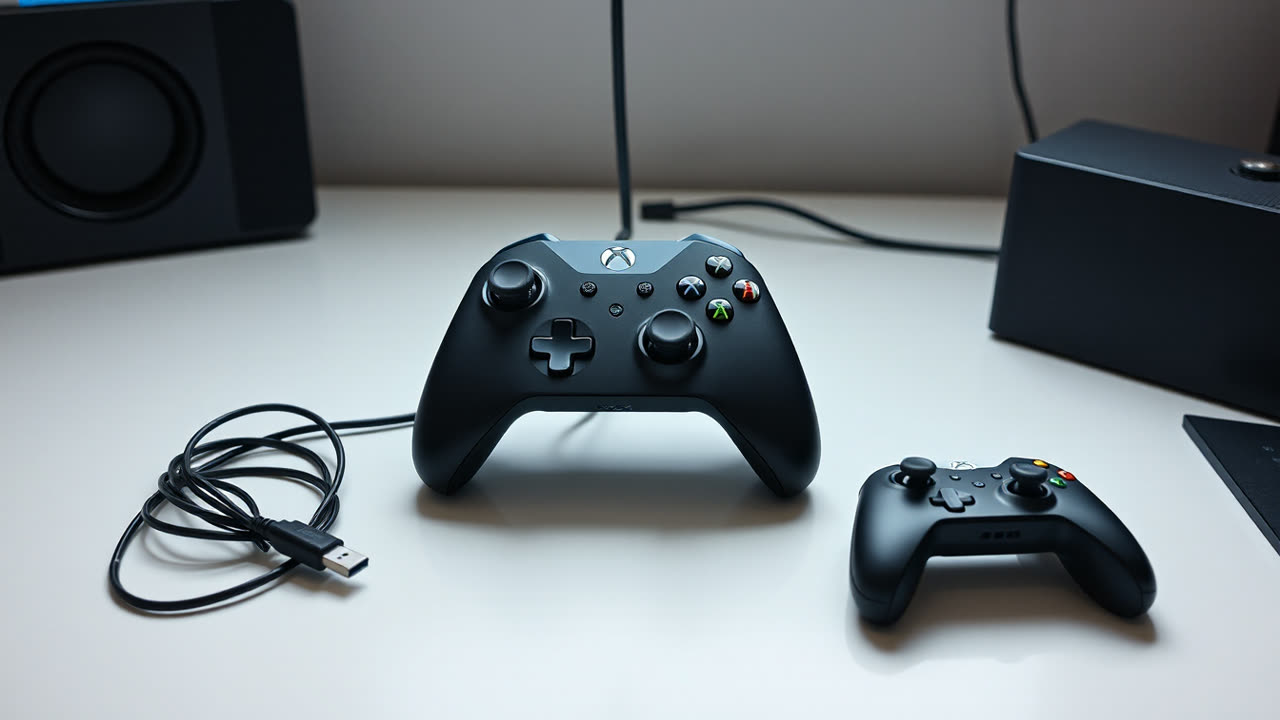
The persistent debate over wired versus wireless Xbox controllers, a decision often relegated to personal preference, fundamentally impacts gaming performance, convenience, and hardware design, with implications extending from competitive esports to casual living room sessions. While the freedom of movement offered by wireless connectivity remains a significant draw, eliminating the physical tether of a cable, it introduces the critical challenge of power management, typically relying on AA batteries or rechargeable packs that necessitate regular monitoring and replacement or recharging, potentially interrupting gameplay at crucial moments. Modern wireless Xbox controllers, particularly those designed for the Xbox Series X|S, utilize a proprietary Xbox Wireless protocol rather than standard Bluetooth for lower latency and more stable connections, a distinct advantage over many third-party wireless options. However, even with these advancements, the inherent nature of wireless transmission means susceptibility to environmental interference from other devices operating on similar frequencies, which can introduce micro-stutters or momentary disconnections, albeit rarely.
Conversely, wired controllers offer an undeniable advantage in input reliability and latency, as the direct USB connection bypasses the complexities of wireless signal transmission, ensuring a consistent and virtually lag-free experience. This minimal latency, often measured in milliseconds, is paramount for professional gamers and those playing titles demanding ultra-precise timing, such as fighting games or competitive first-person shooters, where even the slightest delay can mean the difference between victory and defeat. The most compelling benefit of wired controllers, however, is their perpetual power supply; they draw power directly from the console or PC, eliminating any concern about battery life, charging cycles, or the environmental impact of disposable batteries. This "plug-and-play" simplicity means no unexpected power outages mid-game and no need to invest in separate rechargeable battery solutions.
The trade-off for this reliability and continuous power comes in the form of physical constraints and potential hazards. A wired connection restricts player movement to the length of the cable, which, while often generous, can still feel limiting in larger play spaces or when sitting further from the screen. Furthermore, cables themselves pose tripping hazards, can become tangled, or suffer wear and tear over time, potentially leading to connection issues or outright failure. The aesthetic appeal of a clean, cable-free gaming setup is also a significant factor for many users, pushing them towards wireless solutions despite their drawbacks.
From an industry perspective, the proliferation of wireless controllers has become the default for console manufacturers, with the Xbox Series X|S and PlayStation 5 both shipping with wireless controllers as standard. This shift reflects a broader consumer preference for convenience and mobility. Microsoft has, however, maintained support for wired play, with all official Xbox wireless controllers capable of operating in a wired mode when connected via a USB-C cable, effectively offering a hybrid solution that mitigates some of the wireless drawbacks. This flexibility allows users to switch to a wired connection for competitive play or when batteries run low, without needing a separate controller. The premium Xbox Elite Wireless Controller Series 2 further exemplifies this hybrid approach, offering both robust wireless performance and a high-quality braided USB-C cable for wired connectivity, catering to professional users who demand the best of both worlds.
Looking ahead, the evolution of controller technology will likely continue to blur the lines between wired and wireless performance. Advancements in wireless protocols, such as ultra-wideband (UWB) or even more sophisticated proprietary radio frequencies, could further reduce latency to near-imperceptible levels, diminishing one of the primary advantages of wired connections. Simultaneously, battery technology is constantly improving, with higher capacities and faster charging times becoming standard, potentially alleviating battery anxiety. The integration of kinetic charging or more efficient low-power modes could also extend playtime significantly. Furthermore, the increasing adoption of cloud gaming platforms might lead to a renewed focus on minimal input lag, as the latency inherent in streaming adds another layer of delay, making the controller's responsiveness even more critical. While a purely wired controller might become a niche product primarily for esports professionals or those with specific latency concerns, the future points towards increasingly sophisticated hybrid controllers that offer seamless transitions between wireless freedom and wired reliability, ensuring that gamers never have to compromise on performance or convenience.