Wispr Flow Pivots to AI Meeting Notetaker with Bot-Free Approach
Dictation tech firm Wispr Flow is set to aggressively enter the AI meeting intelligence market with a discreet, system audio-capturing notetaker, challenging established players and integrated platform solutions.
✨ This content was summarized and interpreted by AI; it may contain errors — please verify accuracy with the original sources. Learn more
Listen to this story
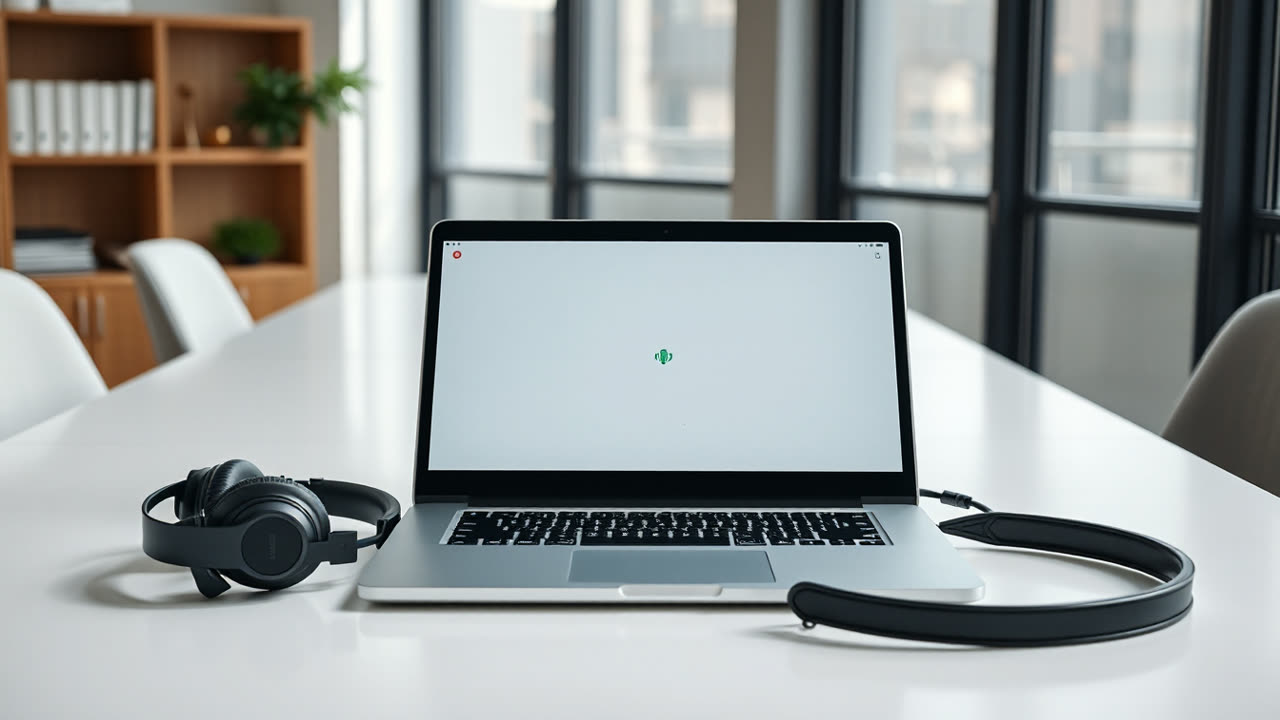
Wispr Flow, a company previously recognized for its advanced dictation technology, is set to introduce an AI-powered meeting notetaker, a strategic pivot revealed through recently updated terms of service effective July 25, 2026. This move signals an aggressive expansion into the burgeoning AI meeting intelligence market, promising features that include transcription, summarization, speaker identification, action item generation, and broader meeting insights. Crucially, Wispr Flow’s Notetaker is designed to operate discreetly, capturing system audio without joining calls as a visible "bot" participant, a significant differentiator in a market increasingly sensitive to privacy and user perception.
This development positions Wispr Flow, reportedly valued at $700 million in its last funding round with aspirations for a $2 billion valuation, to challenge established players by leveraging its core expertise in natural language processing and voice AI. The company's existing product excels at transforming natural speech into polished, formatted text across various applications, supporting over 100 languages with high accuracy and personalized vocabulary learning. Integrating meeting notetaking directly into this ecosystem could offer users a seamless, unified experience that many competitors currently lack.
The launch enters a rapidly maturing market where AI meeting assistants have become indispensable. By 2026, 75% of professionals are using AI notetakers, with Gartner predicting 78% of organizations will have deployed such tools by year-end. These tools are lauded for combating meeting fatigue and the pervasive "action item gap," where nearly half of discussed tasks are never formally captured. Studies indicate that 62% of users save an average of four hours per week with AI meeting assistance, reclaiming significant productive time annually. Furthermore, AI notetakers have even shown a surprising impact on workplace dynamics, with a 2026 study by Read AI finding that women contribute 9% more airtime in meetings where AI notetakers are present, relative to their representation, compared to traditional meetings where men often dominate.
However, the market is highly competitive. Rivals like Otter.ai offer robust solutions with a free tier (300 minutes/month) and paid plans starting at $16.99/user/month for Pro. Otter.ai provides real-time transcription, AI summaries, and action items, and integrates with major conferencing platforms like Zoom, Microsoft Teams, and Google Meet, typically deploying a visible "OtterPilot" bot. Similarly, Fireflies.ai provides unlimited transcription and AI summaries across its plans, with Pro starting at $18/month (or $10/month annually), but its advanced AI features often rely on a credit system, potentially leading to additional costs for heavy users. Fathom, another prominent player, offers a generous free plan with unlimited recording and transcription, though it caps advanced AI summaries and action items at five calls per month, with paid tiers starting at $20/month (or $16/month annually) to remove these limits. These competitors largely rely on bots joining the meeting, a practice that Wispr Flow's system audio capture method aims to circumvent.
Even conferencing platforms themselves are integrating advanced AI. Zoom AI Companion, for instance, offers meeting summaries and action items directly within the Zoom ecosystem, a feature integrated into Zoom Workplace 7.0. Microsoft 365 Copilot, utilizing advanced large language models like GPT-5.6, provides meeting recaps in Teams, demonstrating the trend toward embedded, platform-native AI experiences. These integrated solutions inherently offer a "bot-free" experience from the user's perspective, blurring the lines of competition.
Wispr Flow's "bot-free" approach, currently available on macOS 14.4 or later, directly addresses a significant user concern regarding privacy and the often-disruptive presence of a third-party AI participant in sensitive or client-facing meetings. While transcription accuracy has become largely commoditized among top-tier tools, achieving 90-95%+ accuracy in English, the true differentiators in 2026 lie in how notes integrate into workflows, the user experience (bot vs. bot-free), and the utility of post-meeting actions.
Looking ahead, Wispr Flow’s expansion into meeting notetaking is a calculated step towards its broader vision of becoming a "voice OS" or "full-stack voice company," a concept championed by its founder, Tanay Kothari, who has spoken of chasing the vision of Tony Stark's AI assistant, Jarvis. This implies a future where AI understands user context far beyond simple dictation or single meeting summaries, moving towards proactive insights and personalized intelligence across all digital interactions.
However, challenges remain significant. The accuracy of AI-generated summaries and action items can still be imperfect, potentially missing nuance, sarcasm, or misattributing speakers, which necessitates human review for critical decisions. Data privacy and consent are paramount, with many jurisdictions requiring explicit consent from all participants for recording, and questions persisting about how vendors handle sensitive data for model training and retention. Over-reliance on AI for official records could also lead to overlooked details or a chilling effect on open discussions, particularly in legal or confidential settings. For Wispr Flow, ensuring robust compliance with standards like SOC 2 Type II, ISO 27001, and HIPAA readiness will be critical, especially as its cloud-based processing model for the Notetaker feature means it cannot inherit a local-privacy story.
The next frontier for AI meeting tools will undoubtedly focus on "institutional recall"—the ability to query an organization's entire meeting history for insights—and deeper, more intelligent integrations with project management and CRM systems. Wispr Flow’s existing dictation platform, with its ability to learn personal vocabulary and style, could provide a strong foundation for highly personalized meeting insights and automated follow-up drafts that genuinely resemble a user's writing. By offering a bundled, bot-free solution that leverages its existing transcription strengths, Wispr Flow is poised to carve out a significant niche, but its success will ultimately hinge on flawless execution, robust privacy safeguards, and a clear path to delivering truly transformative meeting intelligence beyond just accurate notes.