World's First Electric Aircraft Fire Truck Operational at Dallas Love Field
The world's first electric aircraft fire truck, capable of hitting 50 mph in under 20 seconds, is now operational at Dallas Love Field Airport, supported by a dedicated 400 kW fast charger, marking a pivotal moment in aviation emergency services.
✨ This content was summarized and interpreted by AI; it may contain errors — please verify accuracy with the original sources. Learn more
Listen to this story
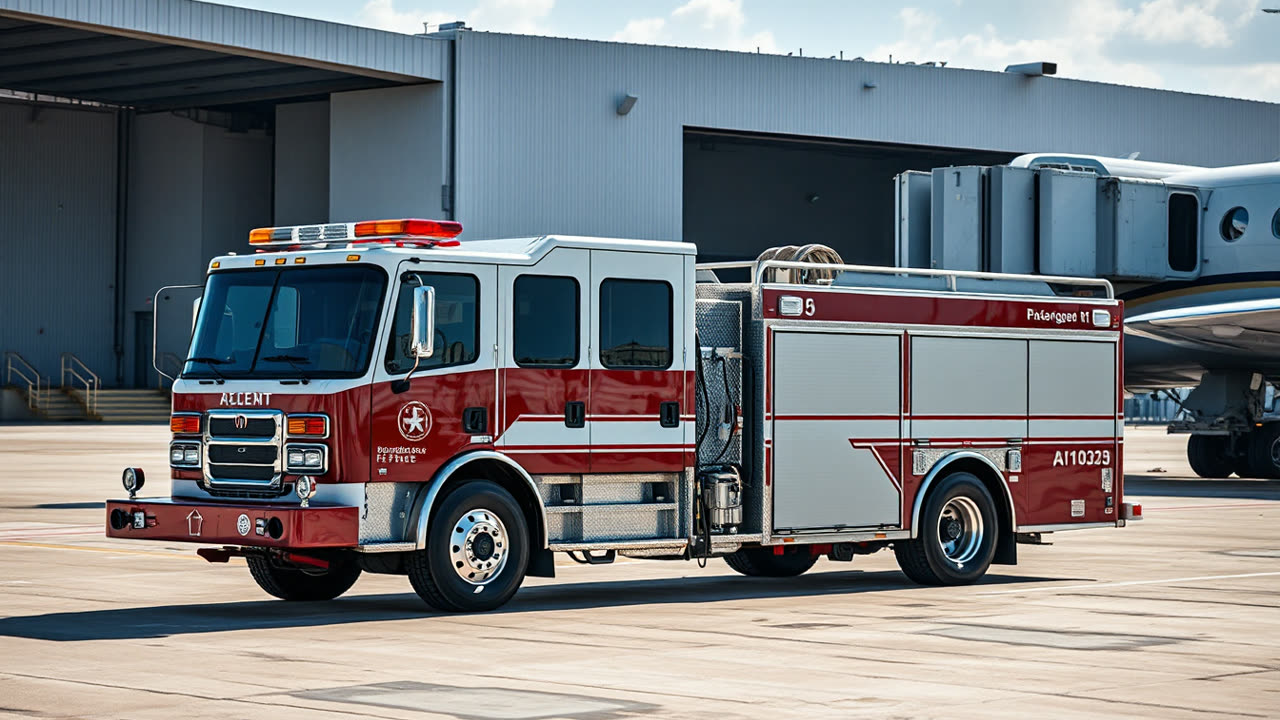
The world's first electric aircraft fire truck, capable of hitting 50 mph in under 20 seconds, is now operational at Dallas Love Field Airport, supported by a dedicated 400 kW fast charger, marking a pivotal moment in aviation emergency services. This significant deployment of the Rosenbauer RT (Revolutionary Technology) model, specifically adapted for Aircraft Rescue and Firefighting (ARFF) duties, transcends mere technological novelty, representing a tangible shift towards sustainable and efficient airport operations. The vehicle’s rapid acceleration, crucial for emergency response, is powered by a robust electric drivetrain, offering a stark contrast to the traditional diesel-powered ARFF vehicles that have long been the industry standard. Its 400 kW charging infrastructure ensures minimal downtime, allowing the truck to be fully recharged swiftly, a critical factor for maintaining constant readiness at a bustling commercial airport.
This integration of advanced electric vehicle technology into a highly specialized and demanding sector like ARFF carries profound implications for both users and the broader industry. For airports and their emergency personnel, the electric ARFF truck promises not only reduced local emissions—a significant step towards improving air quality in and around airport communities—but also a quieter operational environment. The diminished noise pollution from electric vehicles can enhance communication among first responders during critical incidents, potentially improving situational awareness and operational effectiveness. Furthermore, the RT's design, which includes an adjustable ride height and all-wheel drive, provides enhanced maneuverability and accessibility across varied terrains, an essential attribute for navigating complex airport environments and reaching incident sites quickly. This adaptability, combined with its rapid acceleration, directly translates into improved response times, potentially saving lives and mitigating damage in an aircraft emergency. For airport operators, the long-term operational cost savings from reduced fuel consumption and potentially lower maintenance requirements, due to fewer moving parts in an electric powertrain, present a compelling economic argument for adoption, though the initial capital expenditure for such cutting-edge technology remains a key consideration.
The Rosenbauer RT ARFF vehicle stands out in a nascent but growing market for electric emergency vehicles. While other electric fire trucks, like those from Pierce Manufacturing, are emerging for municipal use, Rosenbauer’s focus on the ARFF segment with a purpose-built design highlights a strategic approach to electrifying specialized fleets. Traditional ARFF vehicles, often massive and fuel-intensive, rely on large diesel engines to deliver the necessary power and speed, generating substantial greenhouse gas emissions and particulate matter. The RT, in contrast, offers a zero-emission alternative at the point of operation, aligning with global efforts to decarbonize transportation and infrastructure. Its 400 kW fast-charging capability is particularly noteworthy, as it addresses one of the primary concerns with electric fleet adoption: charging speed and range anxiety. Many early electric heavy-duty vehicles have been limited by slower charging rates, which can impact readiness. By providing a high-power charging solution directly at the point of deployment, Dallas Love Field and Rosenbauer are setting a new benchmark for practical electric fleet integration in mission-critical applications. This rapid charging capability is crucial for ARFF vehicles, which may sit idle for extended periods but must be ready to deploy at maximum performance within seconds.
Looking ahead, the deployment at Dallas Love Field is likely to serve as a crucial real-world proving ground for electric ARFF technology. Success here, measured by reliability, performance in simulated and actual emergencies, and operational cost efficiency, will undoubtedly catalyze broader adoption across the aviation industry. We can anticipate other major airports, driven by sustainability mandates and the proven benefits of early adopters, to begin exploring similar transitions. The data collected from the RT's operation at Dallas Love Field will be invaluable for refining future iterations of electric ARFF vehicles, potentially leading to increased battery capacities for extended range, even faster charging solutions, and further integration of smart technologies for predictive maintenance and operational optimization. Challenges remain, particularly regarding the standardization of charging infrastructure, the overall cost of transition for a global fleet, and ensuring robust performance in extreme weather conditions. However, this pioneering step by Dallas Love Field and Rosenbauer demonstrates a clear trajectory towards a future where emergency services are not only more effective but also environmentally responsible, setting a precedent that will undoubtedly reshape the landscape of airport safety and sustainability for decades to come.