Wuling Bingo EV Rumored to Become Entry-Level Chevrolet for Global Markets
The Wuling Bingo, a compact electric vehicle currently dominating China's budget EV segment, is strongly rumored to be rebadged as an entry-level Chevrolet EV for global markets, including a potential North American launch, signaling a transformative shift in affordable electric mobility.
✨ This content was summarized and interpreted by AI; it may contain errors — please verify accuracy with the original sources. Learn more
Listen to this story
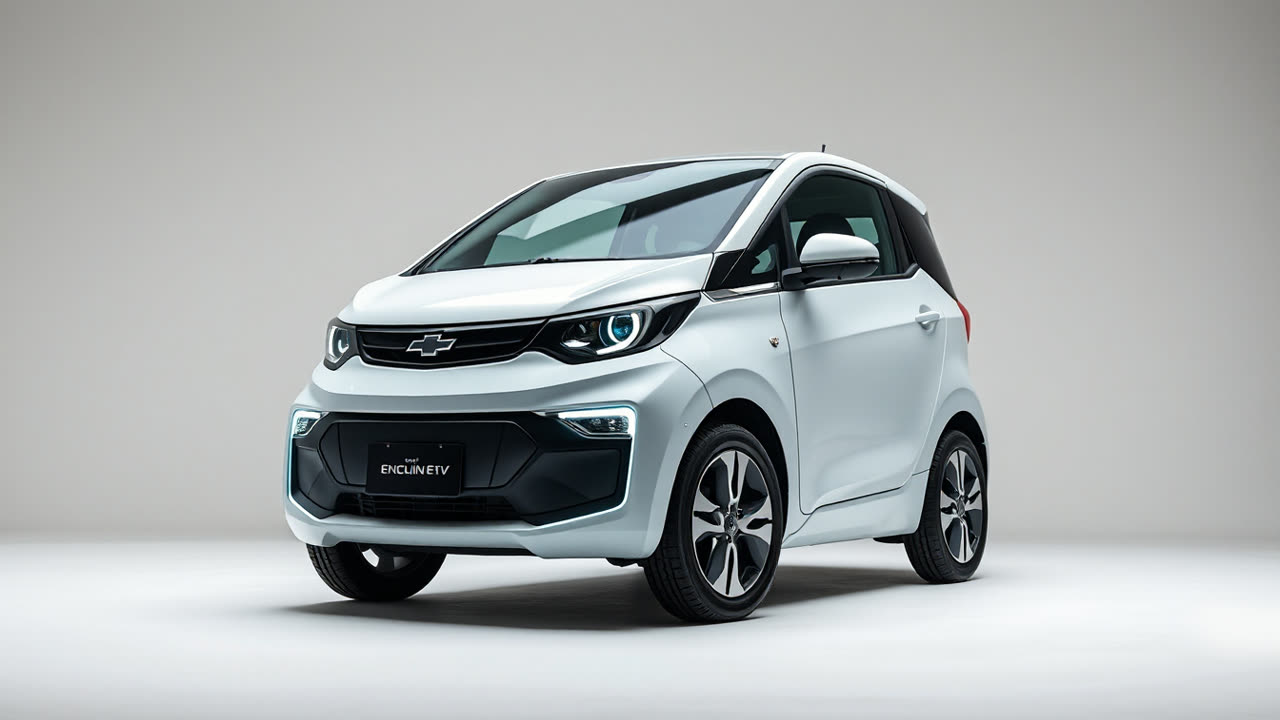
The Wuling Bingo, a compact electric vehicle currently dominating China's budget EV segment, is strongly rumored to be rebadged as an entry-level Chevrolet EV for global markets, including a potential North American launch, signaling a transformative shift in affordable electric mobility. This strategic move by General Motors could finally deliver on the long-promised democratisation of electric vehicles, offering a spiritual successor to the legendary Geo Metro in its mission for hyper-efficiency, albeit in an entirely new, electrified form.
The core news revolves around the Wuling Bingo EV, a product of the SAIC-GM-Wuling (SGMW) joint venture, which has already sold over 250,000 units in China since its introduction in March 2023. Available in China with a starting price of around 59,800 RMB (approximately $8,200 USD), the Bingo offers two battery options: a 17.3 kWh pack providing 203 km (126 miles) of CLTC range, and a larger 31.9 kWh pack extending the range to 333 km (207 miles). Its compact dimensions, measuring 3,950 mm long, 1,708 mm wide, and 1,580 mm high, make it an ideal urban commuter, while its peppy 30 kW (40 hp) or 50 kW (67 hp) electric motor provides sufficient power for city driving. The interior, surprisingly spacious for its class, features dual 10.25-inch screens for infotainment and instrumentation in higher trims, challenging the notion that budget EVs must compromise on modern amenities.
The potential North American introduction of a Chevy-badged Wuling Bingo is significant because it directly addresses the most persistent barrier to EV adoption: upfront cost. While the average transaction price for a new EV in the U.S. currently hovers around $55,000, a Chevrolet Bingo could realistically enter the market at a price point potentially below $20,000, even after factoring in import duties, shipping, and necessary modifications for North American safety and charging standards. This would place it in a virtually uncontested segment, making EV ownership accessible to a much broader demographic, including first-time car buyers, urban dwellers, and multi-car households seeking an affordable second vehicle. For users, this means not only lower purchase costs but also significantly reduced running costs compared to gasoline vehicles, alongside the environmental benefits of zero tailpipe emissions. The impact extends beyond individual consumers, potentially accelerating the transition to a sustainable transportation ecosystem by expanding the total addressable market for EVs.
Industrially, this move represents a calculated risk and a bold statement from General Motors. It underscores GM's commitment to its "EVs for everyone" strategy, filling a critical void below the upcoming Chevrolet Equinox EV and Blazer EV, which are positioned in the mid-to-high $30,000s and above, respectively. By leveraging the established cost efficiencies and production scale of its SGMW joint venture, GM can bring a proven, affordable EV to market much faster and with less R&D investment than developing an entirely new platform from scratch. This strategy also positions GM to directly counter the growing threat of increasingly capable and cost-effective Chinese EVs from brands like BYD and Nio, which are beginning to explore global expansion. Furthermore, it could set a precedent for other legacy automakers to consider similar partnerships or rebadging strategies to compete in the burgeoning budget EV segment, potentially reshaping the competitive landscape and accelerating the global transition away from internal combustion engines.
Comparing the Wuling Bingo to its spiritual predecessor, the Geo Metro, highlights a continuity of purpose despite technological leaps. The Geo Metro, particularly its three-cylinder variants, achieved cult status in the late 20th century for its unparalleled fuel economy, often exceeding 50 MPG, making it a favorite among "hyper-milers". Its minimalist design and low cost made it an accessible entry point into personal transportation. The Bingo, while offering significantly more technology and safety features, embodies the same ethos of efficient, affordable, and practical mobility. In terms of rivals, the North American market currently lacks a direct competitor to a sub-$20,000 EV. The closest alternatives, like the Nissan Leaf or Chevrolet Bolt EV (now discontinued but still available used), typically start at much higher price points or are not new vehicles. Globally, the Bingo competes with other micro-EVs like the BYD Seagull, which could also be a future contender in international markets, but its potential Chevrolet branding gives it an immediate advantage in terms of trust and dealership network in North America.
Looking ahead, the path for a Chevy-badged Wuling Bingo to North America will not be without challenges. Adapting the vehicle to meet stringent U.S. and Canadian safety regulations, including crash tests and airbag requirements, will necessitate engineering modifications. Furthermore, integrating North American charging standards (CCS or NACS) and developing a robust service and parts infrastructure will be crucial for consumer confidence. There's also the question of consumer perception; while GM's branding will undoubtedly help, overcoming potential skepticism towards a vehicle with Chinese origins, especially given current geopolitical tensions and trade policies, will require careful marketing and a strong value proposition. However, if these hurdles are successfully navigated, the introduction of an ultra-affordable Chevrolet EV could dramatically alter the North American automotive landscape. It could catalyze widespread EV adoption, force competitors to innovate in the budget segment, and solidify GM's position as a leader in electric mobility across all price points, potentially opening the floodgates for a new era of accessible, sustainable transportation.