Wyze Cam Pan v3 Confronts Privacy Fears with Physical Lens Shutter
Wyze's latest budget security camera, the Cam Pan v3, directly addresses escalating consumer privacy anxieties by featuring a physical lens that retracts into its housing, offering tangible assurance against unwanted surveillance.
✨ This content was summarized and interpreted by AI; it may contain errors — please verify accuracy with the original sources. Learn more
Listen to this story
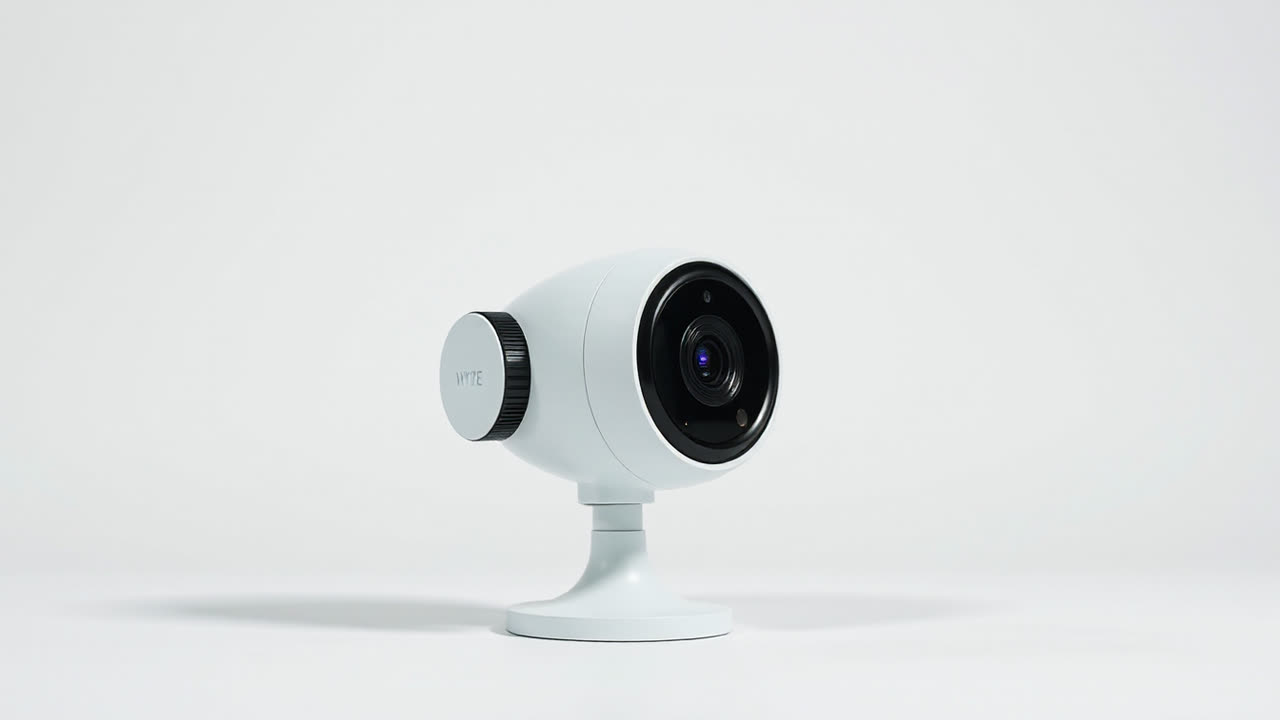
Wyze's latest pan-and-tilt indoor security camera, the Wyze Cam Pan v3, directly confronts escalating consumer privacy anxieties by integrating a physical lens retraction mechanism, a feature now considered paramount in the budget smart home security sector. This iteration, typically retailing around $39.99, distinguishes itself by allowing the camera's lens to physically rotate and hide within its housing, offering a tangible assurance against unwanted surveillance that software toggles cannot replicate. Beyond its privacy shutter, the Cam Pan v3 boasts a 1080p Full HD resolution, 360-degree horizontal rotation, and 180-degree vertical tilt, coupled with improved night vision capabilities and IP65 weather resistance, making it suitable for both indoor and covered outdoor use, a significant upgrade from its predecessors.
The strategic importance of the retracting lens cannot be overstated in a market increasingly wary of digital vulnerabilities. In an era fraught with data breaches and concerns over remote camera hijacking, a physical privacy shutter provides an unequivocal "off" switch, addressing a core psychological need for control over one's personal space. This feature directly impacts user adoption, particularly among privacy-conscious consumers who might otherwise shy away from always-on surveillance devices. For the industry, Wyze's continued emphasis on such features at an accessible price point pressures competitors to innovate beyond mere resolution bumps. While many rivals offer digital privacy modes that simply cut the feed or disable recording, the physical shutter sets a new, albeit low-cost, bar for user trust and transparency. The market impact extends beyond just privacy; Wyze's persistent disruption of traditional security camera pricing, maintaining robust features at sub-$40 levels, forces established players like Arlo and Ring to either reduce their margins on entry-level models or differentiate more strongly on advanced features and ecosystems.
Comparing the Cam Pan v3 to its predecessors and rivals highlights its evolving position. The original Wyze Cam Pan, released in 2018, was a trailblazer for affordable pan-and-tilt functionality, but its privacy options were limited to digital toggles. The Cam Pan v2 introduced color night vision and improved motion tracking, but the v3's IP65 rating and the physical privacy shutter represent the most significant leap in both utility and user assurance. Against competitors, the Cam Pan v3 stands out primarily on its price-to-feature ratio. Eufy's pan-and-tilt cameras, while often offering 2K resolution and local AI processing without subscription, typically start at a higher price point, around $50-$60, and many still rely on software-based privacy zones rather than physical shutters. TP-Link's Tapo series offers competitive pricing and similar pan-and-tilt functionality, often with 2K resolution, but a physical privacy shutter is not a universal feature across their lineup. High-end systems from Arlo and Ring, while offering superior integration into their broader security ecosystems and often higher resolutions or battery-powered options, command significantly higher prices, positioning the Wyze Cam Pan v3 as a compelling choice for consumers prioritizing core functionality and privacy on a budget.
Looking ahead, the demand for physical privacy mechanisms in smart home devices is likely to intensify, moving beyond just cameras to microphones and other sensors. As AI capabilities within these devices become more sophisticated, enabling on-device processing for person detection, pet tracking, and even voice recognition, the need for explicit, physical user control will only grow. Wyze's trajectory suggests a continued focus on democratizing advanced smart home technology, and future iterations could see further enhancements in local AI processing, reducing reliance on cloud subscriptions for basic smart features. We may also see an expansion of the Cam Pan line to include higher resolutions, such as 2K or even 4K, while maintaining the critical privacy shutter and affordable price point. The broader industry will likely respond by integrating similar physical safeguards, recognizing that consumer trust is not just a feature, but a fundamental requirement for the sustained growth of the smart home market. The innovation isn't just in what a camera *can* do, but in how effectively it can *not* do something when commanded, a principle the Cam Pan v3 embodies effectively.