Xbox Elite Series 3 Prototype Leaks with LCD Screen and Direct Wi-Fi
A leaked prototype of the Xbox Elite Series 3 controller reveals a built-in LCD screen, direct Wi-Fi connectivity, and a removable battery, aiming to redefine premium gaming.
✨ This content was summarized and interpreted by AI; it may contain errors — please verify accuracy with the original sources. Learn more
Listen to this story
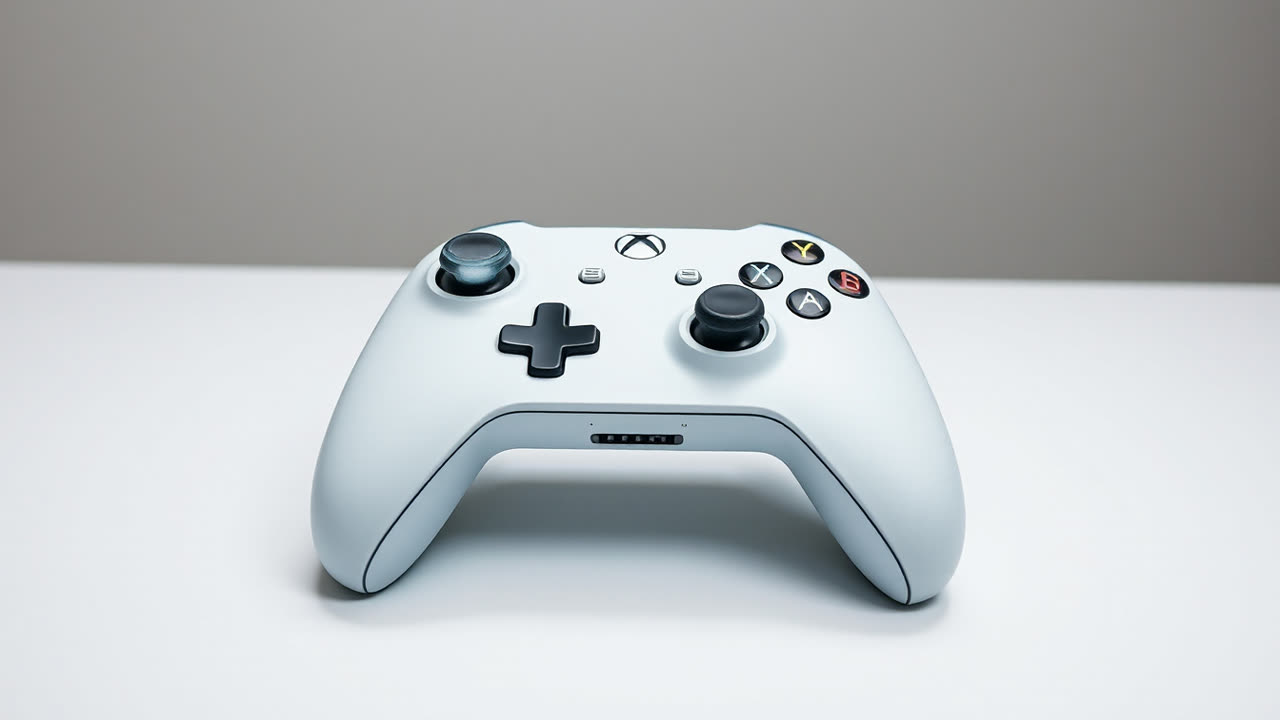
A prototype Xbox Elite Series 3 controller, allegedly purchased by a Redditor on OfferUp for $200, has unveiled a suite of ambitious features, most notably a tiny built-in LCD screen and direct Wi-Fi connectivity, signalling Microsoft's intent to redefine the premium gamepad experience for an increasingly cloud-centric gaming landscape. This leak, which follows earlier regulatory filings in Brazil from May 2026, provides the most comprehensive look yet at the unannounced accessory, revealing a device poised to address long-standing user grievances while pushing the boundaries of controller functionality.
The inclusion of a small LCD screen, positioned adjacent to the pairing button, represents a significant departure from conventional controller design. While its full capabilities remain to be seen, early speculation points to practical applications such as displaying battery life, streamlining device pairing, or even integrating with communication platforms like Discord for at-a-glance notifications. More ambitiously, it could serve as a "Quick-Toggle" for headset volume or even relay "Status Alerts" like a baby monitor notification, transforming the controller into a more integrated hub for a gamer's digital and even domestic life. This innovation aims to reduce the need for players to pause gameplay or navigate console overlays, keeping their focus squarely on the action.
Perhaps the most impactful technical advancement revealed by the leak is the controller's rumored adoption of a dedicated Wi-Fi 6E/7 chip, enabling direct-to-Wi-Fi connectivity. This technology, complemented by a new pair button that can switch between "local" and "cloud" modes, promises to bypass the traditional Bluetooth bottleneck, potentially slashing input latency by up to 20 milliseconds. For competitive players and the growing legion of cloud gamers, this could be a "holy grail," making streamed games feel indistinguishable from locally rendered experiences, a crucial factor for titles where milliseconds dictate victory or defeat. The current Elite Series 2, for instance, exhibits a Bluetooth input lag of 16.7ms, significantly higher than the DualSense Edge's 3.9ms. The Elite Series 3's direct Wi-Fi could dramatically close, or even reverse, this gap for cloud-based scenarios.
Beyond the screen and advanced wireless, the prototype introduces dual scroll wheels located on the bottom of the unit. While their precise function is still a mystery, comparisons to Corsair's Scuf Valor Pro, which uses similar wheels for volume and game/chat mix, suggest they could offer intuitive, on-the-fly adjustments without breaking immersion. Other possibilities include fine-tuning in-game parameters or even adjusting paddle or thumbstick tension, though the latter remains unconfirmed.
Microsoft also appears to be addressing a persistent pain point of the Elite Series 2: its integrated, non-removable battery. The Elite Series 3 prototype features a removable, rechargeable battery with a reported capacity of 1,528 mAh. While this is lower than the Elite Series 2's 2,050 mAh unit, the shift to a replaceable design directly tackles concerns about battery degradation over time, a common complaint among Elite Series 2 owners. This user-friendly change significantly extends the controller's potential lifespan and value proposition, even if overall playtime per charge might see a slight adjustment due to the smaller capacity, potentially offset by improved wireless efficiency.
In terms of ergonomics and customization, the Elite Series 3 retains the core philosophy of its predecessors. The four back paddles appear to be redesigned for a more snug fit and larger, textured grips, enhancing tactile feedback and comfort. Trigger adjusters have been reoriented to move side-to-side, offering a different approach to trigger stops. While the Elite Series 2 famously offered adjustable tension thumbsticks, a feature absent in rivals like the DualSense Edge, it remains to be seen if this crucial customization option carries over to the Series 3, though it is highly anticipated given user preference. The widespread issue of stick drift in the Elite Series 2 also raises hopes for a transition to more durable Hall effect or TMR (Tunnel Magnetoresistance) thumbsticks in the final product.
The competitive landscape for premium controllers is fierce. Sony's DualSense Edge, priced identically at $199.00 in 2026, boasts swappable stick modules to combat drift and offers unique PS5-exclusive adaptive triggers and advanced haptic feedback. However, its battery life of 5 to 8 hours pales in comparison to the Elite Series 2's up to 40 hours. The Elite Series 3's focus on direct Wi-Fi latency reduction and a user-replaceable battery directly targets the DualSense Edge's strengths while reinforcing the Elite line's traditional advantages.
Looking ahead, the Elite Series 3 is widely expected to launch alongside Microsoft's next-generation console, internally codenamed "Project Helix," following a pattern established by prior Elite controller releases. An FCC confidentiality request extending until January 2027 further suggests a release in early 2027. As a prototype, further refinements are probable. This controller isn't just an iteration; it's a strategic move by Microsoft to solidify its position in the high-end accessory market, particularly as cloud gaming becomes a cornerstone of its ecosystem. By addressing key durability concerns, enhancing customization, and aggressively tackling input latency, the Xbox Elite Series 3 is poised to set a new benchmark for what a premium gaming controller can achieve, profoundly impacting how players interact with their games across local and cloud platforms.