Xbox's Open Audio Strategy: Immersive Sound Through Standard Home Theater Gear
Microsoft's Xbox consoles achieve high-fidelity immersive audio by embracing industry-standard AV receiver infrastructure and open formats, offering broad compatibility and a superior gaming experience without proprietary hardware.
✨ This content was summarized and interpreted by AI; it may contain errors — please verify accuracy with the original sources. Learn more
Listen to this story
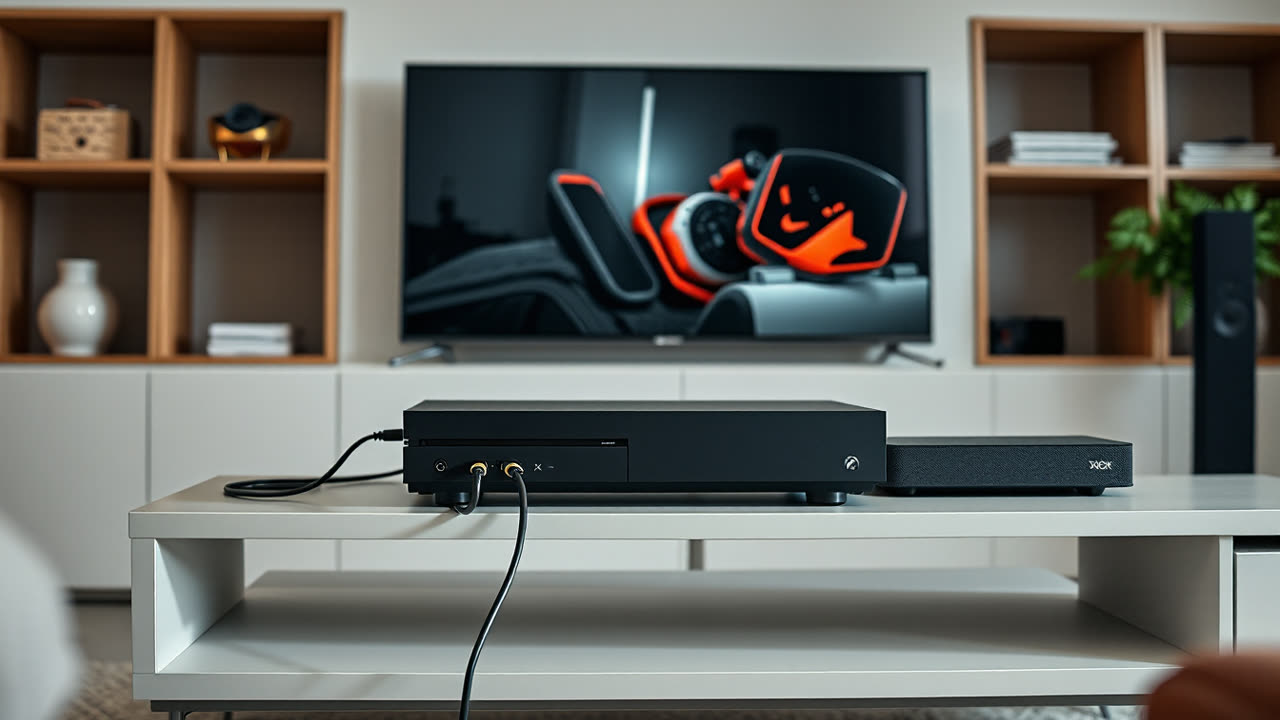
Achieving a truly immersive audio experience on Microsoft's Xbox consoles, from the Xbox One to the latest Series X|S, remains remarkably accessible, primarily leveraging established AV receiver infrastructure rather than proprietary hardware ecosystems. The core setup for 5.1 surround sound typically involves a single HDMI cable connecting the Xbox directly to an HDMI-capable AV receiver, which then routes video to the display and decodes the multi-channel audio. For older setups lacking HDMI passthrough, an optical audio (S/PDIF) connection can still deliver Dolby Digital 5.1 or DTS 5.1, though this method is less common with modern receivers and often lacks support for uncompressed formats or advanced spatial audio. Once connected, users simply navigate to the Xbox's audio settings, selecting "HDMI audio" or "Optical audio" and choosing the appropriate bitstream format, such as Dolby Digital, DTS Digital Surround, or uncompressed 5.1/7.1, depending on the receiver's capabilities and the desired audio fidelity. For an even more advanced experience, Xbox Series X|S consoles support object-based audio formats like Dolby Atmos for Home Theater and DTS:X for Home Theater, which can be enabled after installing the respective apps from the Xbox store and often require a compatible receiver or soundbar.
This straightforward integration of industry-standard audio solutions holds significant implications for both users and the broader gaming industry. For gamers, the ease of setup means a dramatically enhanced experience without proprietary accessories or complex configurations. The transition from stereo to a discrete 5.1 or 7.1 channel setup fundamentally transforms gameplay, offering crucial spatial cues that can mean the difference between victory and defeat in competitive titles. Hearing an enemy approach from the left rear speaker or the precise direction of distant gunfire provides a tactical advantage that stereo simply cannot replicate. Beyond competitive play, narrative-driven games benefit immensely, with rich, layered soundscapes enveloping the player, drawing them deeper into virtual worlds. Environmental sounds, orchestral scores, and character dialogue are rendered with greater depth and precision, elevating emotional impact and realism. The ability to utilize existing home theater equipment also reduces the barrier to entry for high-fidelity audio, making premium sound accessible to a wider audience who may already own compatible AV receivers or soundbars, rather than forcing investment in console-specific audio peripherals.
From an industry perspective, Microsoft’s approach contrasts sharply with Sony’s more proprietary focus on the PlayStation 5’s Tempest 3D Audio Engine, which aims to deliver highly immersive audio through any headphones and is increasingly integrated into specific PS5-compatible soundbars. While Tempest is a powerful, dedicated audio solution, Xbox’s strategy of embracing open standards and established home theater technology offers broader compatibility and flexibility. The Xbox Series X|S natively supports uncompressed PCM 7.1, Dolby Digital, DTS, Dolby Atmos, and DTS:X, ensuring compatibility with a vast array of audio systems. This multi-codec support means that whether a user has a decades-old optical-only receiver or a cutting-edge eARC-enabled soundbar, their Xbox can likely deliver a multi-channel experience. This flexibility encourages hardware innovation across the entire audio industry, as manufacturers are not limited to developing products for a single console's proprietary audio pipeline. Instead, they can focus on general advancements in HDMI 2.1, eARC, and object-based audio decoding, knowing their products will be compatible with Xbox and other entertainment platforms. The sustained support for HDMI eARC (Enhanced Audio Return Channel) on Xbox Series X|S further simplifies connections by allowing high-bandwidth, uncompressed audio, including Dolby Atmos, to be sent from the console to a TV and then back to an eARC-compatible soundbar or receiver via a single HDMI cable, streamlining cable management and enhancing audio fidelity.
Looking ahead, the trajectory of gaming audio on Xbox will likely continue to emphasize open standards and advanced spatial audio formats. While 5.1 and 7.1 discrete channel setups remain the gold standard for dedicated home theaters, the rise of object-based audio like Dolby Atmos and DTS:X represents the next frontier. These technologies move beyond fixed channels, allowing sound designers to place individual "objects" of sound in a 3D space, which are then rendered dynamically by the audio system, often utilizing height channels for a truly hemispheric soundfield. The Xbox's robust support for these formats positions it well for future audio innovations, as game developers increasingly leverage these tools to create more believable and reactive soundscapes. We can anticipate further refinements in wireless audio transmission, potentially enabling more seamless and lower-latency wireless surround sound setups that reduce cable clutter without compromising audio quality. Furthermore, as AI and machine learning continue to evolve, there's potential for real-time audio upmixing and personalization, adapting the sound profile to individual room acoustics or player preferences. The future of Xbox audio will likely be less about revolutionary proprietary engines and more about democratizing access to the highest fidelity, most immersive audio experiences through continuous integration with evolving open standards and cutting-edge home theater technology.