Xgimi Titan Noir Max Redefines Home Cinema with Reference-Grade 4K Triple-Laser Projector
Xgimi's flagship Titan Noir Max projector delivers unparalleled 4K image quality with deep blacks and vibrant colors, previously exclusive to professional systems, now accessible to home users at a revolutionary price point.
✨ This content was summarized and interpreted by AI; it may contain errors — please verify accuracy with the original sources. Learn more
Listen to this story
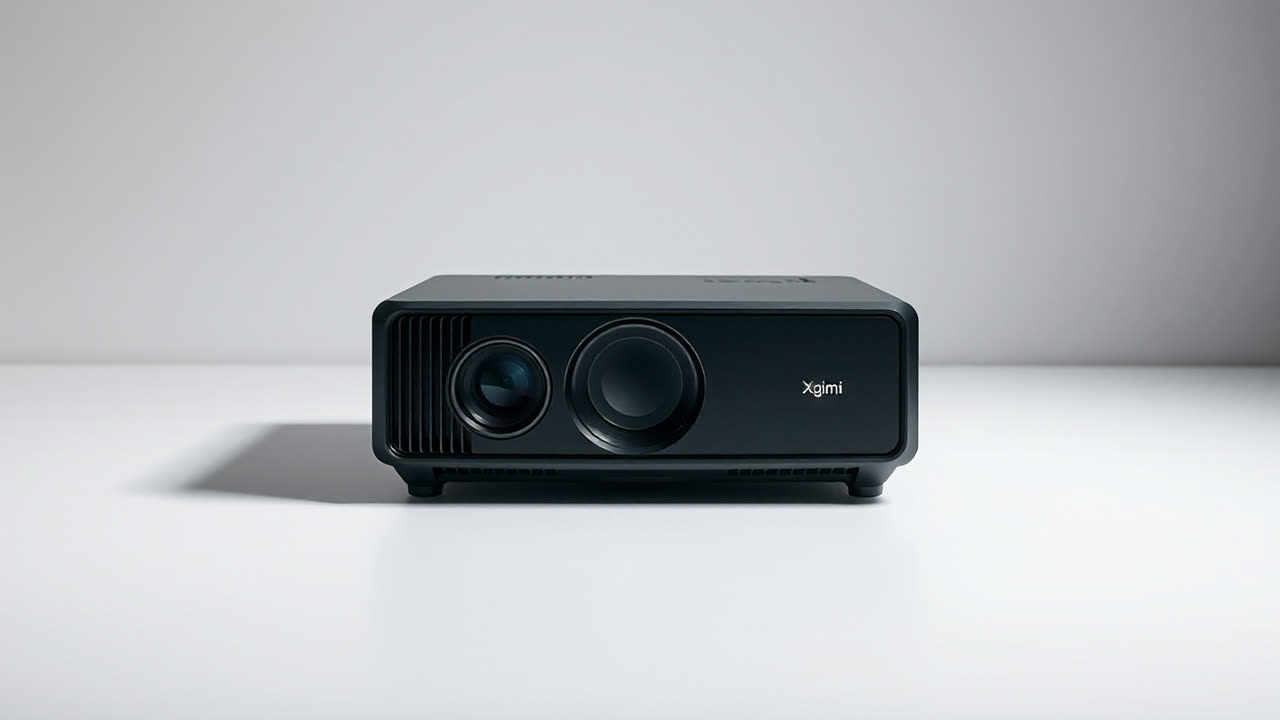
The Xgimi Titan Noir Max Home Projector (2026) has redefined expectations for consumer-grade home cinema, delivering reference-grade image quality with exceptionally deep black levels and vibrant color reproduction at a price point that undercuts traditional high-end rivals. Launched in March 2026, the Titan Noir Max, the flagship of Xgimi's new Titan Noir series, quickly garnered significant attention, raising over $15 million on Kickstarter with nearly 5,000 backers by June 2026, demonstrating strong consumer demand for its advanced features.
At its core, the Titan Noir Max leverages a powerful RGB triple-laser light source, capable of producing up to 7,000 ISO lumens, though real-world movie-watching brightness typically settles around 5,000 lumens in accurate modes. This brightness allows for comfortable daytime viewing without needing to fully darken a room, a significant departure from older projector technologies. The projector achieves its striking contrast and inky blacks through a sophisticated dual intelligent iris system with five selectable levels and manual aperture control. This optical light control mechanism, rather than purely digital dimming, allows for a native contrast ratio of up to 10,000:1, which can dynamically reach 100,000:1 with its Dynamic Black Level Enhancement (DBLE) processor engaged. This is a substantial improvement, with some comparisons showing a 6-7x jump in native contrast over previous Xgimi models like the Horizon 20 Max, which had a native contrast of around 1,500:1. The projector utilizes Texas Instruments' latest 0.47-inch SST (Superior Contrast Technology) DLP chip, which, combined with the triple-laser engine, enhances both brightness and contrast, and employs XPR pixel-shifting technology to achieve a full UHD 4K (3840x2160) resolution. It supports a comprehensive range of HDR formats, including Dolby Vision, HDR10+, and is IMAX Enhanced, ensuring compatibility with virtually all premium content.
The Titan Noir Max's impact on users and the industry is profound. For home cinema enthusiasts, it offers a level of image fidelity previously confined to five-figure professional projectors, now accessible at a retail price of $5,999 (with early bird Kickstarter pricing as low as $2,999). This democratizes truly cinematic experiences, making deep blacks and vibrant, accurate colors a reality for a broader audience. The projector's focus on "reference-grade" video quality, eschewing built-in smart TV features, signals a deliberate move by Xgimi to cater to cinephiles who prioritize image performance above all else, preferring to use external streaming devices like an Nvidia Shield. This design philosophy not only streamlines the projector's internal architecture but also ensures its longevity by avoiding outdated integrated software.
Compared to its rivals and prior generations, the Titan Noir Max stands out. While its MSRP of $5,999 positions it against established players like the Sony VPL-XW5000ES and Epson LS12000, reviewers note its ability to match or exceed them in brightness and color gamut coverage. Its use of an RGB triple-laser light source is a significant advancement over older lamp-based projectors, which suffer from brightness degradation and require frequent bulb replacements, and even single blue laser + phosphor systems which have a narrower color gamut. RGB triple-laser technology offers superior color accuracy, wider gamut coverage (nearly 100% of BT.2020), and consistent brightness over its 30,000-hour lifespan. The Titan Noir Max also improves upon Xgimi's own successful Titan 4K projector, which used a larger 0.78-inch DMD chip, by opting for the newer 0.47-inch SST DMD. This seemingly smaller chip, with a micromirror tilt angle of ±14.5 degrees, actually helps reduce stray light and enhances the separation between light and dark areas, leading to deeper blacks and better image control. Furthermore, its gaming performance is exceptional, offering 1ms input lag at 1080p/240Hz and 3ms at 4K/60Hz, with VRR and AMD FreeSync support, making it a compelling option for serious gamers. This low latency significantly outperforms competitors like the Valerion VisionMaster Max, which registers 15ms.
Looking ahead, the Xgimi Titan Noir Max represents a significant inflection point in the home projector market. The global home theater projector market is projected to reach $11.52 billion by 2035, growing at a CAGR of 6.8% from $6.33 billion in 2026, with 4K projectors driving over 40% of premium purchases and laser-based light sources seeing over 25% adoption growth. The Titan Noir Max, with its emphasis on optical precision, dual-iris control, and robust color performance, is setting a new benchmark for what consumers can expect from a "prosumer" projector. Its impressive optical zoom (0.98-2.0x) and massive lens shift capabilities (±130% vertical, ±50% horizontal) offer unparalleled installation flexibility, a crucial factor for dedicated home theater setups. This removes the need for distorting digital keystone correction, preserving image quality. While some initial firmware bugs have been noted, such as inconsistent 2.1x zoom behavior and issues with 24p playback, these are typically addressable via updates. The market trend toward higher brightness, advanced gaming features, and superior contrast, particularly with RGB triple-laser technology, positions Xgimi well for continued leadership. The Titan Noir Max signals a future where premium home cinema is less about prohibitive cost and more about accessible, uncompromising performance.