Xiaomi Unleashes SkyNomad EREV SUVs, Challenging Market Leaders with Aggressive Pricing
This strategic pivot marks Xiaomi's inaugural foray into extended-range electric vehicles (EREVs), targeting family consumers in China's booming NEV market.
✨ This content was summarized and interpreted by AI; it may contain errors — please verify accuracy with the original sources. Learn more
Listen to this story
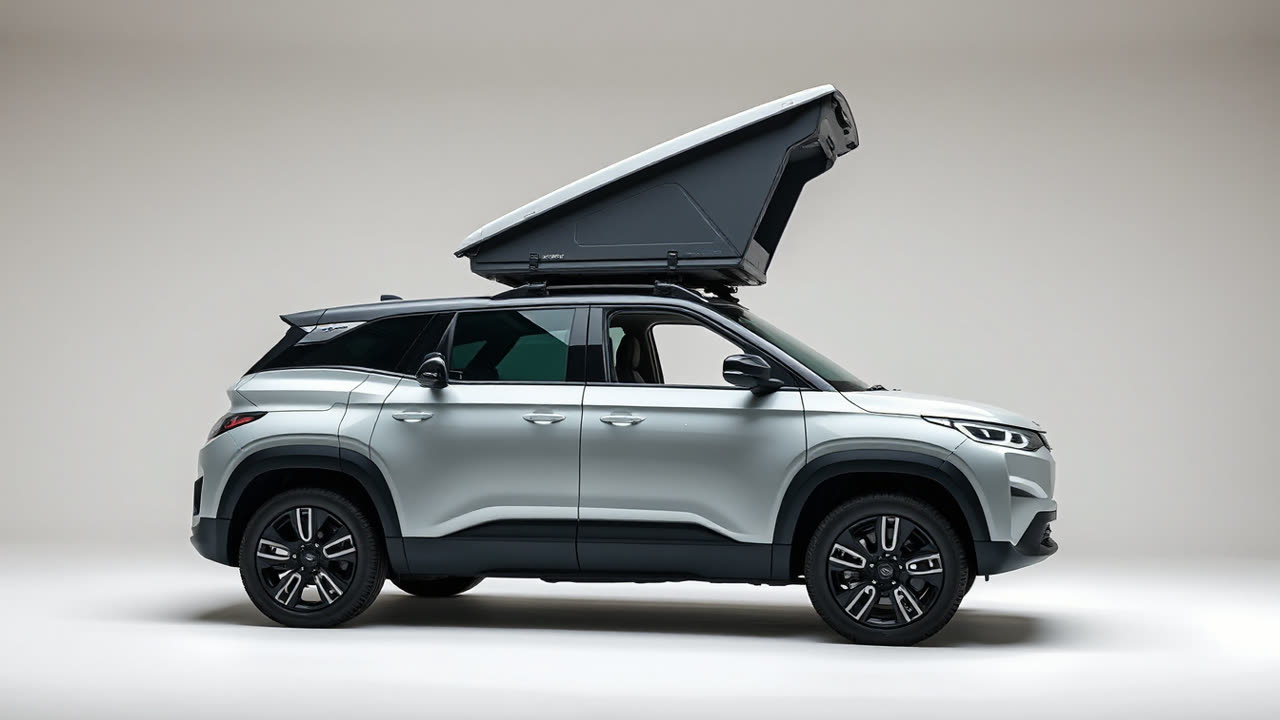
Xiaomi has dramatically expanded its automotive ambitions with the launch of the SkyNomad SUV family in China, a lineup of four extended-range models entering the fiercely competitive market at an aggressive starting price of RMB 209,900, or approximately $31,275. This strategic pivot marks Xiaomi's inaugural foray into extended-range electric vehicles (EREVs), a significant departure from its previous battery-electric vehicle (BEV) offerings like the SU7 sedan and YU7 SUV. The move is designed to capture a larger segment of China's burgeoning new energy vehicle (NEV) market, particularly targeting family-oriented consumers seeking both electric driving and the convenience of gasoline-powered range extension.
The SkyNomad lineup comprises four models: the five-seat rear-drive N70 Pro (RMB 209,900), the five-seat all-wheel-drive N70 Max (RMB 239,900), the seven-seat N90 Max flagship (RMB 269,900), and the innovative N90 Max Studio, featuring a factory-integrated electric pop-up roof for camping, priced at RMB 299,900. This pricing strategy immediately undercuts established EREV flagships such as the Li Auto L9 and Huawei-backed AITO M9, both of which start above RMB 250,000. The base N70 Pro, a 4.96-meter five-seat SUV, offers a 52 kWh LFP battery pack providing 351 km of pure-electric CLTC range and a combined range of 1,351 km. Higher trims, like the N90 Max, boast a 76 kWh battery, a 310 kW dual-motor all-wheel-drive system, 464 km of CLTC electric range, and an impressive combined range of 1,705 km. All SkyNomad variants utilize a 1.5-liter turbocharged range extender that supports China's 92-octane gasoline and can charge from 20% to 80% in as little as 18 minutes.
This aggressive entry into the EREV segment is a critical strategic adjustment for Xiaomi. While its SU7 sedan achieved significant early success, topping sales in its segment for four consecutive months and cumulatively surpassing 500,000 deliveries 28.5 months after launch, its sales growth has slowed in 2026. Xiaomi's overall EV deliveries reached 216,322 units in the first seven months of 2026, representing 39% of its ambitious 550,000-unit full-year target. The EREV market in China is currently experiencing robust growth, with wholesale NEV sales estimated at 1.51 million units in August 2026, marking a 16.0% year-on-year increase. EREVs address persistent range anxiety, especially in regions with less developed charging infrastructure, by offering the efficiency of electric propulsion with the flexibility of a gasoline generator. This makes them a compelling option for family SUVs, a segment where Xiaomi is now directly competing with established players like Li Auto, which has built its entire business around EREVs.
Compared to rivals, Xiaomi's SkyNomad offers competitive specifications at a lower price point. The Li Auto L9, for instance, starts at RMB 459,800 (around $66,671) for its 2026 model, offering a 72.7 kWh battery with 420 km of pure electric range and 1,650 km combined range. The Huawei-backed AITO M9, a luxury SUV, starts from RMB 479,800 ($70,800) for its EREV variants. Even the AITO M6, a mid-to-large size SUV, starts at RMB 229,800 ($34,010) for its BEV variants, with EREV versions typically priced higher. Xiaomi's SkyNomad directly challenges these models, providing similar dimensions—the N70 is 4960mm long with a 2,950mm wheelbase, comparable to a Mercedes-Benz GLE—and advanced features at a significantly more accessible price. The interior of the SkyNomad N70, for example, features front seats that rotate 180 degrees, massage functions, and a 16.1-inch central screen, an 8.8-inch LCD instrument cluster, and a 20-inch HUD. The N90 Max also showcases an advanced intelligent driving system powered by a 700 TOPS Nvidia Thor chip and Xiaomi HAD XLA cognitive model, incorporating roof-mounted LiDAR, rear-facing solid-state LiDAR, and multiple cameras and radars.
The launch of the SkyNomad series is more than just an expansion of Xiaomi's product line; it's a strategic deepening of its "Human × Car × Home" smart ecosystem. By integrating vehicles with smartphones and smart home devices via Xiaomi HyperOS and AI capabilities, Xiaomi aims to create a seamless, interconnected user experience that few traditional automakers can replicate. This ecosystem play, combined with Xiaomi's reputation for offering advanced technology at competitive prices, positions the SkyNomad to attract a broad consumer base, particularly those already invested in the Xiaomi brand. The company's significant R&D investment, including at least RMB 60 billion over three years in AI, large language models, and embodied intelligence, underscores its commitment to this integrated future.
Looking ahead, the success of the SkyNomad will be crucial for Xiaomi to meet its aggressive 2026 delivery target of 550,000 vehicles and to solidify its position as a major force in the automotive industry. The pre-orders for the SkyNomad series reportedly surpassed 70,000 units in just 72 hours, indicating strong initial market reception. Deliveries are expected to begin between November and December 2026. While Xiaomi is also planning its European market entry in 2027 with its SU7 and YU7 models, the SkyNomad's EREV focus suggests a calculated strategy to dominate the Chinese domestic market first, where such powertrains are highly favored. The rapid evolution of China's NEV market, with NEVs now accounting for over 50% of cumulative sales and more than 60% of monthly new vehicle sales in July 2026, provides a fertile ground for Xiaomi's expansion. However, the intensifying price war and oversupply in the Chinese EV market, which saw wholesale passenger car sales fall 13.1% in the first half of 2026, will test Xiaomi's ability to maintain profitability while scaling production. Xiaomi's ability to leverage its tech ecosystem and deliver on its promise of accessible, intelligent mobility will determine if the SkyNomad can truly redefine the family SUV segment and propel the company towards its ambitious automotive future.