xTool X1 Laser System Unveiled: Five Lasers, Dual Technologies in One Desktop Unit
xTool's upcoming X1 laser system is set to revolutionize desktop fabrication by uniquely integrating five distinct laser types—CO2, Diode, UV, Fiber, and MOPA—within a single modular platform that also combines both gantry and galvo technologies.
✨ This content was summarized and interpreted by AI; it may contain errors — please verify accuracy with the original sources. Learn more
Listen to this story
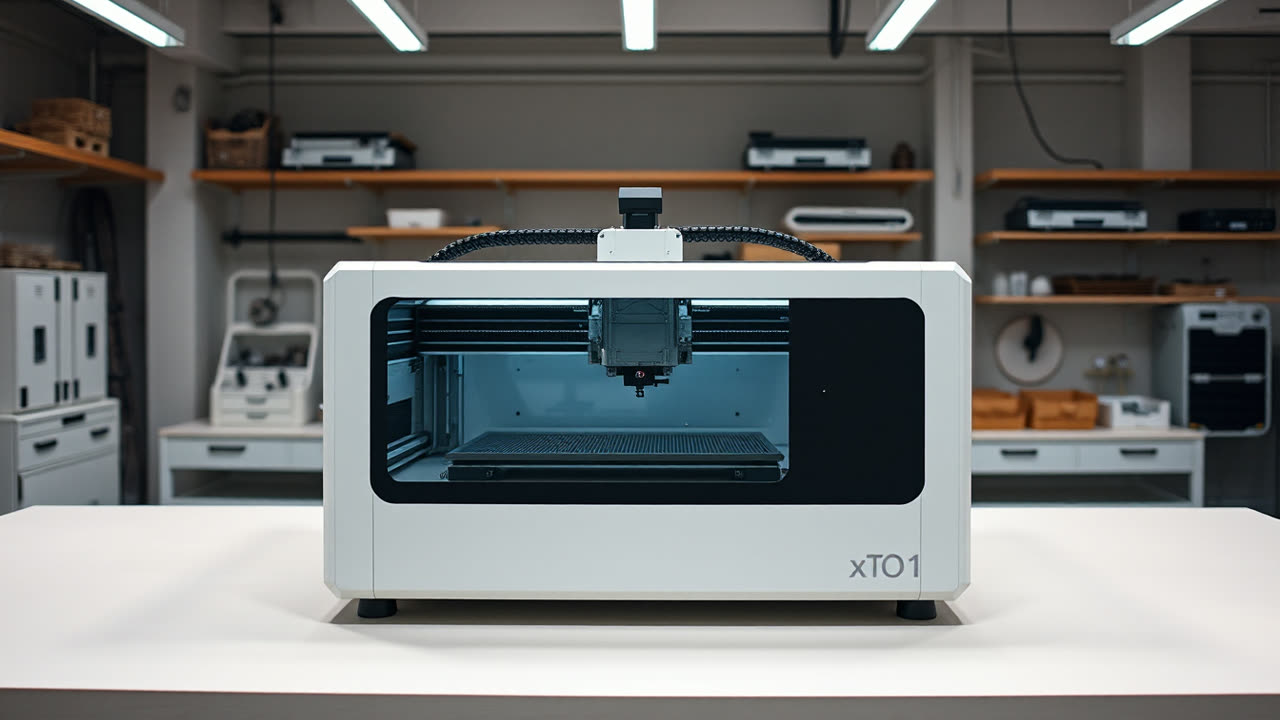
xTool's forthcoming X1 laser system is poised to redefine desktop fabrication, integrating an unprecedented five laser types—CO2, Diode, UV, Fiber, and MOPA—within a single modular platform that uniquely combines both gantry and galvo technologies. This ambitious engineering feat, revealed by the company as its next-generation offering, signals a significant paradigm shift, promising to democratize advanced material processing typically requiring multiple specialized machines. The X1’s ability to swap between these diverse laser sources means users can transition from cutting thick wood and acrylic with a CO2 laser, to intricate engraving on metals with a Fiber or MOPA laser, to precision marking on delicate plastics with a UV laser, all within the same hardware footprint. This versatility directly addresses the long-standing challenge faced by makers, small businesses, and educational institutions, where budget and space constraints often necessitate compromises on material compatibility or force investment in a fragmented ecosystem of single-purpose machines.
The immediate impact of the X1’s modularity and dual-technology approach is a dramatic reduction in the total cost of ownership and operational complexity for users seeking broad material processing capabilities. Instead of purchasing separate CO2, diode, and fiber laser systems, which could easily exceed $10,000 to $20,000 for entry-level models from various manufacturers, the X1 proposes a single investment with swappable heads. This not only saves money but also consolidates maintenance, software integration, and learning curves, making high-end fabrication more accessible. The integration of both gantry and galvo systems is particularly revolutionary; gantry lasers, common in most desktop diode and CO2 machines, offer a larger work area by moving the laser head across X and Y axes, ideal for cutting and large-format engraving. Galvo lasers, conversely, use mirrors to rapidly steer the laser beam, enabling incredibly high engraving speeds and precision, especially on smaller objects and for marking applications like those seen in industrial fiber lasers. By combining these, the X1 theoretically offers the best of both worlds: the expansive work area and cutting power of a gantry system alongside the speed and detail of a galvo, optimizing workflow for projects that demand both large-scale cuts and fine, rapid marking.
This move by xTool, a brand already recognized for its accessible laser cutters like the S1 and P2, represents a direct challenge to both high-end industrial systems and the fragmented prosumer market. Prior generations, including xTool’s own P2 CO2 laser, offered impressive capabilities but typically focused on a single laser type. Rivals like Glowforge, with their popular CO2 lasers, or specialized fiber laser manufacturers, each cater to a specific segment. The X1, however, aims to be a universal solution. While specific power outputs for each laser module haven't been fully detailed, the mere breadth of options suggests a strategic play to capture a wider market share. For instance, a typical 40W CO2 laser might handle materials up to 1/4 inch thick, while a 20W diode laser excels at engraving wood and cutting thin materials. The inclusion of Fiber and MOPA lasers, often found in industrial settings, opens doors for precision metal marking, color engraving on certain metals, and processing of plastics that diode lasers struggle with. UV lasers, known for "cold processing," are ideal for heat-sensitive materials like glass, ceramics, and some plastics without burning or melting.
The analytical value here lies in understanding the shift from specialization to generalization without sacrificing capability. This is not merely about adding more features; it's about fundamentally altering the entry barrier for multi-material processing. Small businesses, for example, can now prototype and produce items ranging from custom metal jewelry to engraved wooden signs and marked plastic components using a single machine, streamlining their operations and expanding their service offerings. Educational institutions can provide students with hands-on experience across a spectrum of laser technologies without needing separate lab setups. This consolidation could also spur innovation in material science, as designers are no longer limited by the constraints of a single laser type.
Looking ahead, the xTool X1’s success hinges on several factors, including the actual performance and ease of swapping modules, the robustness of the integrated gantry-galvo control software, and, critically, its final pricing structure. If xTool can deliver on its promise of high performance across all laser types at a competitive price point, the X1 could become the definitive benchmark for multi-functional desktop fabrication. This innovation also foreshadows a future where modularity becomes the norm, potentially leading other manufacturers to follow suit, pushing the industry towards more integrated, versatile, and user-friendly fabrication tools. We might see further refinements in automated material handling, more sophisticated vision systems, and perhaps even AI-driven material recognition and parameter setting becoming standard. The X1 represents a bold leap, potentially accelerating the convergence of diverse laser technologies into a single, indispensable tool for the modern maker and small-scale manufacturer.