YouTube Reshapes Recommendations with AI-Powered Custom Feeds
YouTube is fundamentally reshaping its core recommendation engine, empowering users to dictate their viewing experience through AI-powered custom feeds, a significant departure from the platform's traditional algorithmic black box.
✨ This content was summarized and interpreted by AI; it may contain errors — please verify accuracy with the original sources. Learn more
Listen to this story
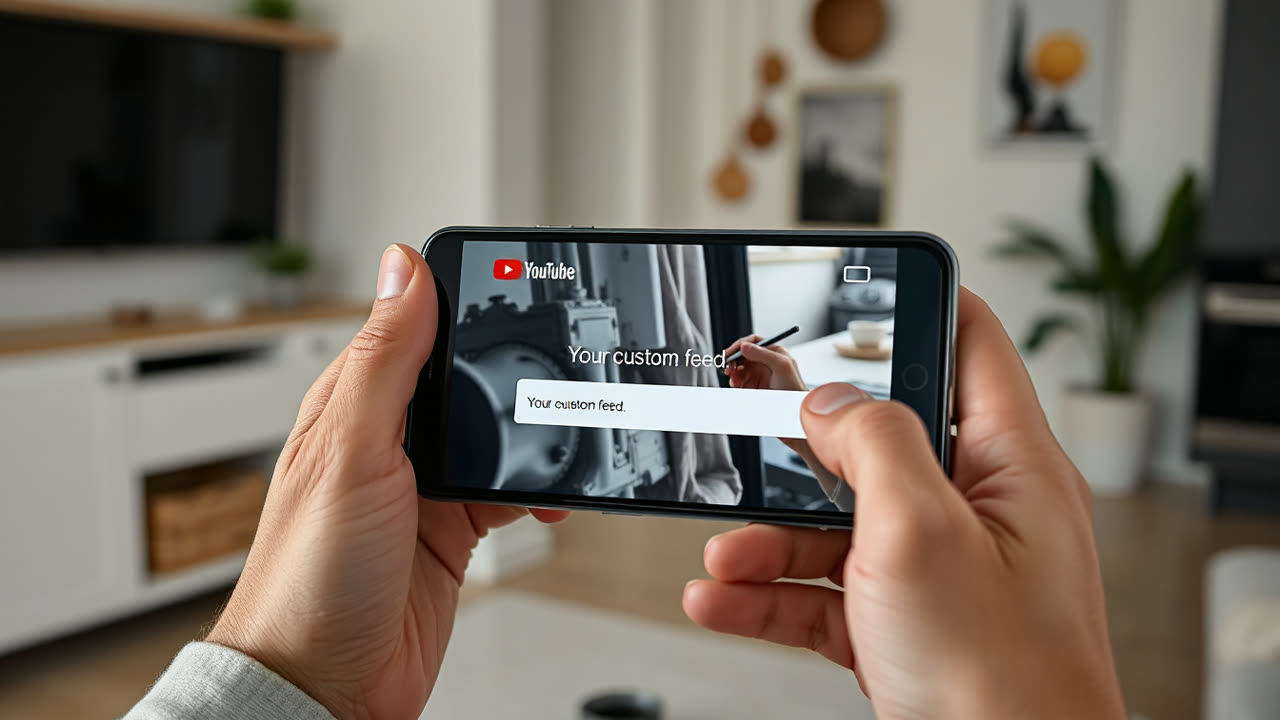
YouTube is fundamentally reshaping its core recommendation engine, empowering users to dictate their viewing experience through AI-powered custom feeds, a significant departure from the platform's traditional algorithmic black box. Rolled out to all US users on mobile and desktop by May 2026, this new feature, dubbed "Your custom feed," leverages Google's advanced Gemini AI to allow users to describe desired video content in natural language prompts, generating personalized, constantly refreshing video streams. This marks a pivotal shift from passive consumption to active curation, granting unprecedented control over the content that populates one's homepage.
To engage with this transformative feature, users simply tap a dedicated "Your custom feed" chip on their YouTube homepage, then input a text prompt detailing their interests, mood, or specific viewing goals. For instance, a user might request "give me something different beyond my usual feed" to escape content monotony or "help me unwind after work with guided meditations under 10 minutes" for a focused viewing session. Gemini AI then processes this prompt, constructing a bespoke feed that users can pin for instant access, and which continually refreshes with new, relevant videos. The system requires users to have their YouTube search and watch history enabled, indicating that even with explicit prompts, underlying behavioral data still informs the AI's selections. Currently, each account can maintain one custom feed, with prompts expiring after 30 days of inactivity, a mechanism to ensure relevance and encourage fresh input.
This move profoundly impacts users by addressing long-standing frustrations with algorithmic overreach and the dreaded "filter bubble." Historically, YouTube's algorithm, responsible for driving an estimated 70% of total watch time, often led to "semantic over-clustering," where a single interaction with a new topic would flood a user's feed with an overwhelming volume of similar content, sometimes referred to as an "obsession". Previous attempts at user control, such as "Not interested" buttons or generic topic chips, offered limited flexibility and often proved ineffective in genuinely altering recommendation patterns. Custom feeds offer a direct, explicit mechanism to break free from these cycles, enabling discovery of niche content and diverse perspectives that might otherwise be suppressed by the default algorithm. While some observers express concern about AI-curated feeds potentially narrowing viewing patterns, this feature, by its very design, aims to offer an escape from such limitations.
For content creators and the broader digital media industry, the implications are substantial. The traditional calculus of optimizing for watch time, click-through rates, and generic SEO keywords is evolving. With users explicitly defining their desired content, creators may need to rethink their marketing strategies, prioritizing clear, descriptive titles, accurate metadata, and authentic content that directly addresses specific user interests rather than relying on broad appeal or "rage baiting" tactics. Gemini AI's deep analysis capabilities, which extend to understanding the nuances of video content—including spoken words, tone, visuals, context, and emotion—further emphasize the importance of genuine quality over superficial metrics. This could level the playing field for smaller creators whose niche content might now be more easily discovered by highly motivated viewers, rather than being buried by channels with higher subscriber counts. Advertisers, too, will likely need to adapt their strategies, moving away from generic algorithmic targeting to more refined approaches that align with these user-defined feeds.
YouTube's foray into user-controlled AI personalization is not an isolated event but part of a broader industry trend. Platforms like TikTok have long set the standard for highly personalized and addictive "For You" feeds, prompting other social media giants to integrate similar features. Reddit, Bluesky, and even TweetDeck X have also introduced capabilities for users to build their own custom feeds, underscoring a growing demand for greater individual agency in content consumption. YouTube's prior algorithm, while sophisticated, often operated with a "pull" rather than "push" dynamic, making recommendations based on implicit signals like watch history and engagement. The new custom feeds, however, introduce an explicit "pull" mechanism, where user intent is directly articulated.
Looking ahead, this innovation is merely one facet of YouTube's expansive AI strategy for 2026. The platform's CEO, Neal Mohan, has outlined plans for a significant expansion of AI features, including tools for creators to generate Shorts using their AI-generated likeness, new music creation functionalities, and an "Ask YouTube" conversational search feature that allows users to query videos in natural language. This shift towards prompt-based interfaces is indicative of a broader technological movement across Google's product ecosystem. While the core recommendation algorithm will continue to operate, custom feeds represent a powerful overlay, blending explicit user commands with implicit behavioral signals. The long-term implications suggest a future where digital content consumption is increasingly tailored, potentially leading to more satisfying user experiences but also raising ongoing questions about content diversity and the potential for new forms of algorithmic influence if not carefully managed.