Zilog Z80 Marks 50th Anniversary with Open-Source Silicon Replacement
The Zilog Z80, an iconic 8-bit CPU, celebrates its 50th anniversary just as an open-source, pin-compatible silicon replacement emerges, promising to revitalize countless legacy systems and fuel new retro-computing innovations after its 2024 discontinuation.
✨ This content was summarized and interpreted by AI; it may contain errors — please verify accuracy with the original sources. Learn more
Listen to this story
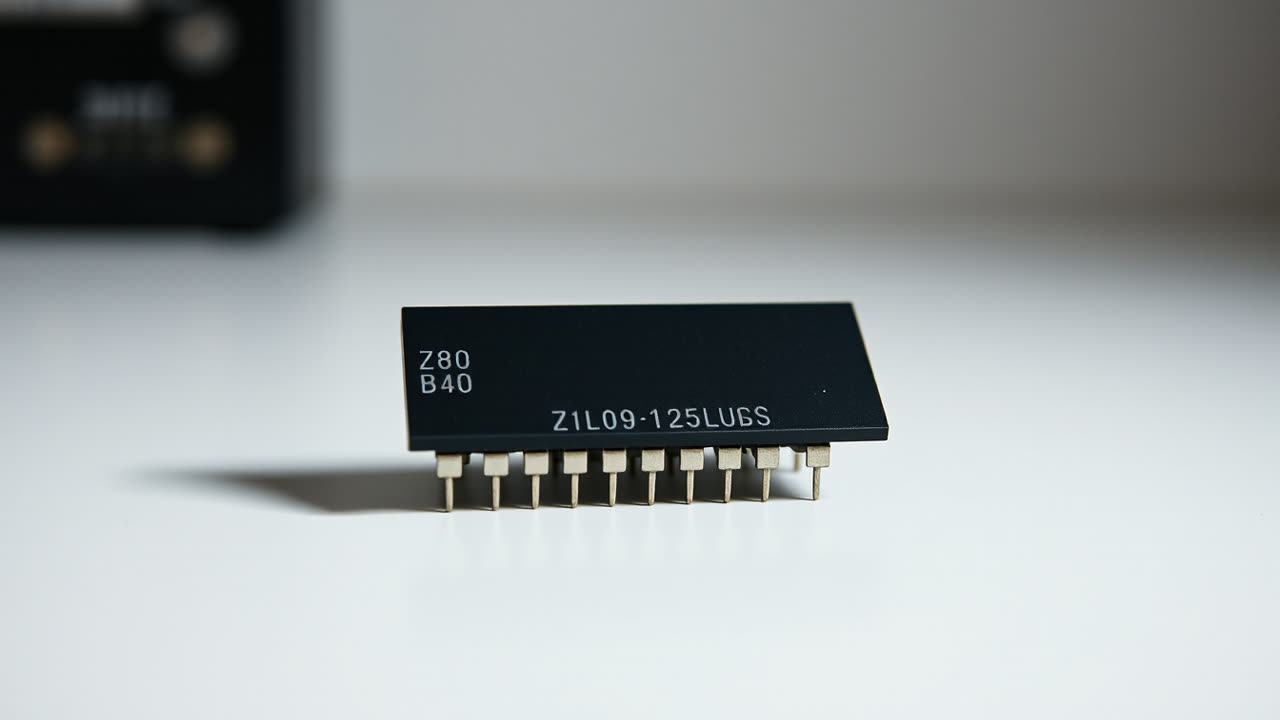
The Zilog Z80, an iconic 8-bit CPU that powered a generation of personal computers, arcade machines, and embedded systems, marks its 50th anniversary this July, just two years after its official discontinuation by Zilog in 2024. This half-century milestone is underscored by a significant development: an open-source, pin-compatible replacement is now moving towards drop-in DIP40 silicon, promising to rejuvenate a vast ecosystem of legacy hardware and introduce new possibilities for retro computing and industrial applications.
Launched in July 1976 by Zilog, a company founded by ex-Intel engineers Federico Faggin and Masatoshi Shima, the Z80 quickly distinguished itself from its predecessor, the Intel 8080. While maintaining binary compatibility with the 8080, the Z80 offered a vastly expanded and more efficient instruction set, including new index registers (IX, IY), block I/O and memory transfer instructions, and a non-maskable interrupt (NMI) line, all contributing to its superior performance and ease of programming. The original Z80 was a marvel of its time, packing approximately 8,500 transistors onto a 4µm process and typically operating at a clock speed of 2.5 MHz, though later versions reached 20 MHz. Its design prowess allowed for a single 5V power supply and a built-in DRAM refresh controller, simplifying system design compared to the 8080's more complex power requirements and memory management. This efficiency and versatility made it the CPU of choice for seminal machines like the TRS-80, Sinclair ZX Spectrum, Amstrad CPC, and the ubiquitous CP/M operating system, effectively defining the 8-bit computing landscape for over a decade. It even found a second life in the Nintendo Game Boy and numerous arcade cabinets, demonstrating its enduring utility.
The discontinuation of the Z80 by Zilog in 2024 left a significant void, particularly for industrial systems, hobbyists, and the burgeoning retro-computing community that still relies on its architecture. This is precisely where the emergence of an open-source alternative becomes transformative. The most prominent effort, the "ZX Uno" project, initially began as an FPGA-based re-implementation for retro-gaming, but its underlying open-source Z80 core has matured into a standalone solution. The move to a dedicated DIP40 silicon package, directly compatible with existing Z80 sockets, is a game-changer. It means that instead of relying on complex FPGA setups or scarce original chips, users can simply swap in a new, modernly manufactured Z80-compatible chip. This ensures the longevity of countless Z80-based systems, from industrial control units (where Z80s are still prevalent due to their robustness and simplicity) to vintage home computers, without requiring extensive hardware modifications.
The project aims to provide a Z80-compatible core that can run at higher clock speeds and potentially integrate modern features while maintaining the critical pin compatibility and instruction set fidelity.
The impact on the industry is multifaceted. For embedded systems and industrial control, where reliability and long-term availability of components are paramount, the open-source silicon offers a crucial lifeline. Many legacy systems, particularly in manufacturing, medical devices, and aerospace, were designed around the Z80 and continue to function effectively. The ability to source new, compatible chips mitigates obsolescence risks and reduces the cost and complexity of maintaining these critical infrastructures. Furthermore, it fosters innovation within this niche, allowing developers to build new Z80-based systems or enhance existing ones with the assurance of a continued supply chain.
For the retro-computing community, the open-source Z80 replacement is nothing short of revolutionary. It democratizes access to Z80 hardware, potentially lowering the barrier to entry for enthusiasts looking to build or repair vintage machines. It also enables the creation of "new old stock" computers, faithful reproductions of classic systems, and opens avenues for new hardware designs that leverage the Z80's simplicity and well-understood architecture. This ensures that the rich history and educational value of 8-bit computing remain accessible for future generations, preventing these foundational technologies from fading into obscurity due to component scarcity.
Comparing the Z80 to its contemporaries, the Intel 8080 laid the groundwork, but the Z80 refined it significantly. The MOS 6502, another dominant 8-bit CPU of the era (found in the Apple II, Commodore 64, and Atari systems), offered a different architectural philosophy, prioritizing fewer registers and a highly efficient instruction set for its time, often achieving similar performance at lower clock speeds. However, the Z80's larger register set, more powerful instruction set, and integrated features often gave it an edge in systems requiring more complex memory management or I/O operations. The open-source Z80 replacement inherently benefits from five decades of accumulated knowledge and modern fabrication techniques, allowing for potential enhancements in speed, power efficiency, and even minor instruction set extensions (if compatibility is maintained) that the original Z80 could never achieve.
Looking ahead, this development signals a broader trend in technology: the increasing viability of open-source hardware, particularly for mature architectures. As proprietary parts become obsolete, community-driven efforts are stepping in to fill the void, driven by passion, necessity, and the increasing accessibility of chip design tools and fabrication processes. The success of the open-source Z80 in DIP40 silicon could serve as a blueprint for similar initiatives for other beloved, discontinued chips. This could lead to a renaissance for various legacy platforms, fostering innovation not just in preservation but also in the creation of entirely new devices that leverage the simplicity and charm of these classic architectures. The Z80's journey from a pioneering chip to a discontinued legend, and now to an open-source renaissance, highlights the enduring power of good design and the vibrant, persistent community dedicated to its legacy.