ZuckOff App Detects Meta's Smart Glasses, Boosting Privacy
A new free app, ZuckOff, empowers smartphone users to detect Meta's Ray-Ban smart glasses up to 100 feet away, leveraging their unique Wi-Fi signals to provide proactive privacy protection against surreptitious recording.
✨ This content was summarized and interpreted by AI; it may contain errors — please verify accuracy with the original sources. Learn more
Listen to this story
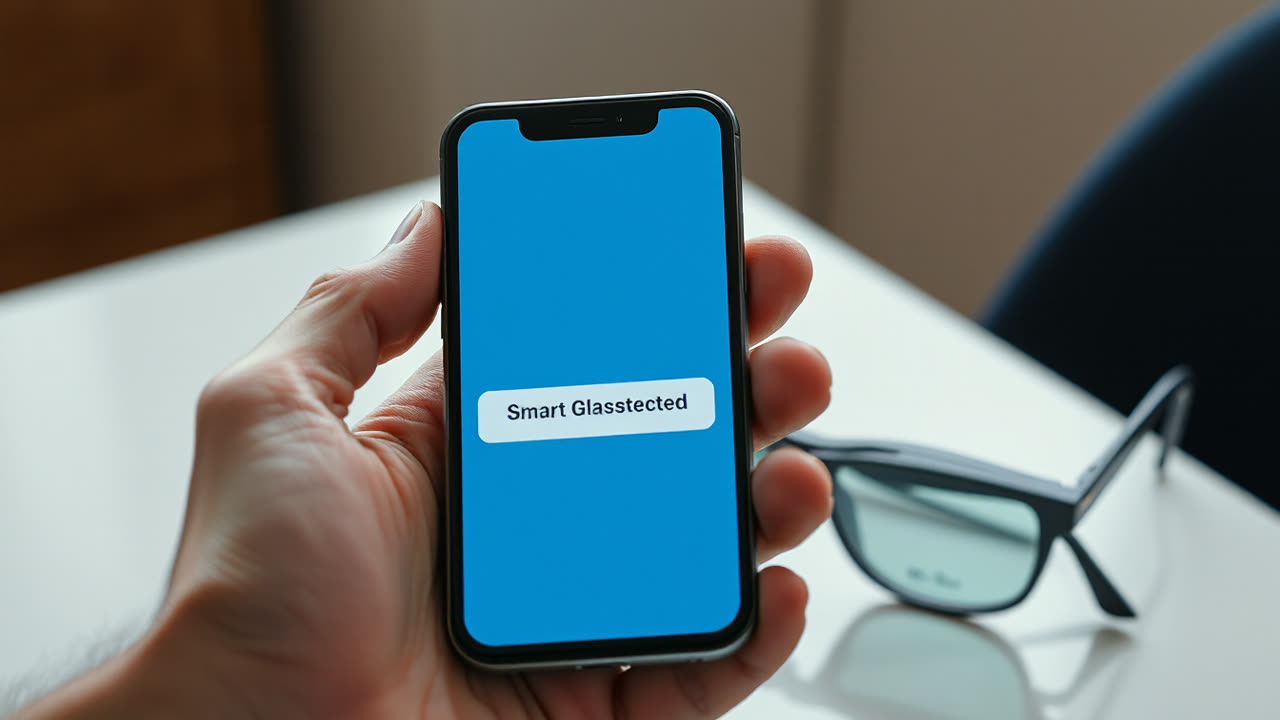
An innovative new application, ZuckOff, empowers smartphone users to detect the presence of Meta's Ray-Ban smart glasses in their vicinity, offering a novel layer of privacy protection against surreptitious recording. Developed by former Google engineer Matthew Guarino, the free app leverages the unique Wi-Fi beacon signals emitted by Meta's smart glasses, even when not actively recording, to alert users to their presence up to a range of 100 feet. This capability directly addresses a critical privacy vulnerability inherent in current smart glass designs: the often-subtle or easily obscured recording indicator light, which frequently fails to adequately inform those being recorded.
The emergence of ZuckOff underscores a growing public and industry concern regarding the pervasive potential for unwanted surveillance enabled by increasingly discreet wearable technology. While Meta's Ray-Ban Stories and the newer Ray-Ban Meta Smart Glasses feature a small white LED indicator that illuminates during video or photo capture, its effectiveness has been widely debated. Critics argue the light is too small, easily missed, or can be intentionally obstructed, rendering it insufficient for truly transparent recording. ZuckOff bypasses this physical limitation entirely by monitoring the digital footprint these devices constantly emit. The app operates by scanning for specific Wi-Fi SSIDs (Service Set Identifiers) broadcast by the Meta glasses, such as "Meta Glasses" or "Ray-Ban Stories," even when the glasses are merely powered on and not actively connected to a phone. Upon detection, the app provides an audible and visual alert, allowing individuals to identify potential recording devices before they themselves are captured.
This technical workaround offers significant analytical value, highlighting a fundamental tension between technological convenience and personal privacy. For users, ZuckOff provides an unprecedented level of agency in environments where smart glasses might otherwise operate with near-invisibility. It shifts the burden of detection from the passive observer – who must scrutinize for a tiny, often distant light – to an active, automated system on their personal device. This empowers individuals to make informed decisions about their interactions and surroundings, potentially fostering greater trust or, conversely, increased vigilance in public spaces. The app’s free availability and straightforward functionality could accelerate its adoption, particularly among privacy-conscious demographics or in sensitive environments like schools, workplaces, or healthcare facilities where recording without consent is strictly prohibited.
From an industry perspective, ZuckOff represents both a challenge and a potential catalyst for innovation. For Meta, it exposes a critical design flaw in their current approach to privacy transparency, forcing a re-evaluation of how their devices communicate their operational status to those around them. While Meta has publicly stated its commitment to privacy and has included the LED indicator as a core feature, the existence and utility of ZuckOff suggest that current measures are insufficient to alleviate public apprehension. This could pressure Meta and other smart glass manufacturers to develop more robust, unambiguous, and perhaps even multi-modal privacy indicators in future iterations – possibly larger, more prominent lights, haptic feedback for those nearby, or even standardized, universally recognizable audio cues. The app also demonstrates the power of independent developers to create solutions that address market gaps and consumer needs overlooked by larger corporations. This could spur a new wave of "privacy tech" tools designed to counteract the growing stealth capabilities of consumer electronics.
Comparing ZuckOff to prior generations of privacy concerns, the app marks a shift from reactive measures to proactive detection. Historically, privacy breaches from recording devices often came to light *after* the fact, through leaked footage or explicit discovery. ZuckOff, however, enables real-time awareness, allowing individuals to preemptively avoid being recorded or to confront the recorder. This proactive stance is crucial in an era where deepfakes and AI-generated content can further complicate the verification of recorded media. While other apps exist to detect hidden cameras using lens flares or network scanning, ZuckOff's specific targeting of Meta's unique Wi-Fi signals makes it highly effective and tailored to a specific, widely available smart glass product.
Looking ahead, the success and adoption of ZuckOff could have several significant implications. Firstly, it might accelerate the "arms race" between privacy-enhancing technologies and surveillance capabilities. As smart glasses become more sophisticated and potentially more discreet, so too will the tools designed to detect them. Secondly, it could influence regulatory bodies globally. If public outcry over smart glass privacy intensifies, governments may be compelled to mandate stricter design requirements for wearable recording devices, potentially standardizing privacy indicators or even requiring explicit, undeniable consent mechanisms for recording in public. Finally, ZuckOff’s existence might subtly reshape public acceptance of smart glasses. If users feel more secure knowing they have a tool to detect unwanted recording, it could paradoxically lower barriers to smart glass adoption by increasing trust. Conversely, widespread use of ZuckOff could underscore the pervasiveness of smart glasses, prompting more people to be wary of public recording. The app is a potent reminder that in the evolving landscape of wearable technology, the balance between innovation and individual privacy remains a dynamic and intensely debated frontier.